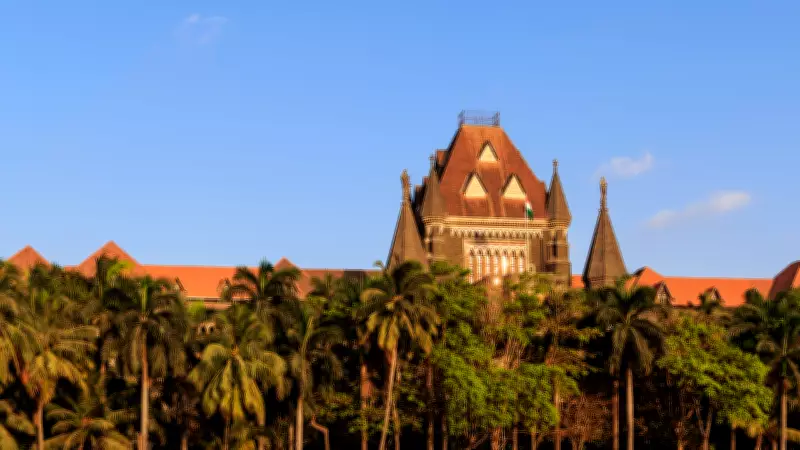
The Bombay High Court has quashed a 2011 order by the Directorate General of Civil Aviation (DGCA) that grounded an Air India pilot, terming it 'illegal and unsustainable' for violating principles of natural justice. The relief came to Jitendra Varma, 15 years after he filed a challenge at the age of 46, alleging he was denied a proper hearing.
Court Ruling and Restoration of License
A division bench of Justices Manish Pitale and Shreeram Shirsat agreed with Varma and restored his Airline Transport Pilot License (ATPL). The court noted that Varma was 'not afforded an opportunity to explain his version before taking the drastic step of suspension of license.' The judgment, pronounced on June 8, the first day after the summer vacation, set aside the March 12, 2011, suspension order. The court gave the DGCA liberty to initiate and complete an inquiry within two months, following rules and procedures, and then pass a reasoned order.
Background of the Case
Varma joined Air India as a trainee pilot after obtaining his commercial pilot license in 1988. He became a co-pilot in 1991 and was confirmed in 1992. For 22 years, he was found competent, passed all tests, and accumulated 7,000 flying hours. He was issued an ATPL from the USA in September 2010 and later from the DGCA. However, in March 2011, following a complaint in Delhi alleging forgery in an ATPL application against another captain, Varma was arrested and released on bail. His license was suspended without any show-cause notice or opportunity to defend the allegations, prompting his challenge before the High Court.

DGCA's Arguments and Court's Observations
The DGCA argued that Varma had obtained the ATPL by submitting a 'forged ATPL result' and that suspension was necessary in the public interest. The High Court observed, 'It will also be pertinent to mention here that Respondent has not produced the so-called forged mark-sheet, which was allegedly submitted by the Petitioner.'
Violation of Rules
The court examined the rules governing pilot disqualification and found a complete violation. Rule 39-A of the Aircraft Rules requires a clearly worded notice and an opportunity to be heard before disqualification. The court stated: 'The Licensing Authority has conspicuously failed to refer to any forged documents or give any reason as to why it has arrived at the said subjective satisfaction of suspending the license of the petitioner.'
The court emphasized that the licensing authority must arrive at a subjective satisfaction based on material placed before it and give reasons for suspension or cancellation. The rules for emergent use of power in public interest were misplaced in this case, as Varma was not a convicted person. The court ruled, 'The petitioner is not a convicted person, therefore the contention of the respondent that it had suspended the license in the public interest does not stand to reason.'