

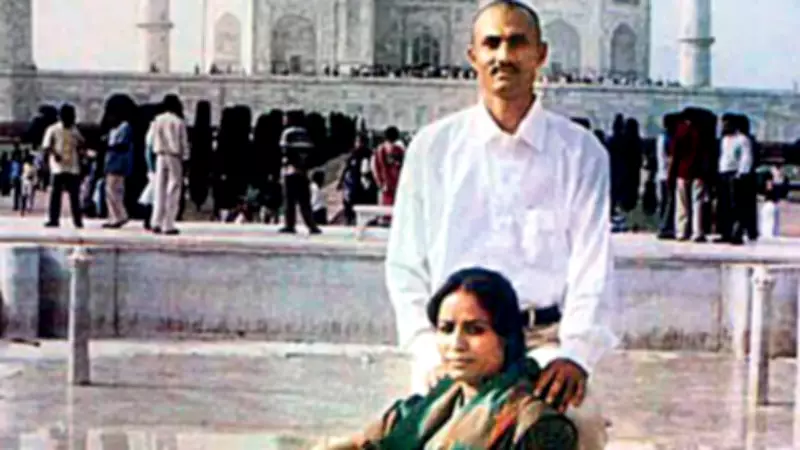
The Bombay High Court on Thursday, May 7, upheld the December 2018 acquittal of 21 police officers in the Sohrabuddin Shaikh fake encounter case, ruling that the prosecution failed to establish the abduction of Shaikh, his wife Kausar Bi, and Tulsiram Prajapati, or their murder in staged encounters.
Key Findings of the High Court
In a 50-page judgment, Chief Justice Shree Chandrashekhar and Justice Gautam Ankhad dismissed appeals filed by Shaikh's brothers, Rubabuddin and Nayabuddin, who had challenged the trial court's acquittal as unreasonable. The court held that the trial court's findings were not perverse and that the prosecution's case lacked credible evidence.
Lack of Evidence for Abduction
The High Court noted that the prosecution did not produce a single witness who could identify the accused as the perpetrators. Of the 210 witnesses examined, 92 turned hostile, failing to support the prosecution's narrative of a fake encounter.

Conspiracy Theory Not Proved
The court observed that the discharge of 16 co-accused by the trial court undermined the conspiracy theory. Senior counsel Amit Desai, representing six acquitted officers, argued that the prosecution's case was politically motivated, aiming to implicate a particular political figure and a select group of police officers.
Dismissal of Intervention Application
The High Court also dismissed an interim application by Mumbai resident Maniar Kumar, who sought to challenge the discharge of former Gujarat minister Amit Shah. The court held that Kumar's application was filed with an oblique motive and at the behest of a political adversary of Shah.
Legal Principles on Acquittal
Citing Supreme Court precedents, the High Court emphasized that a judgment of acquittal cannot be overturned casually. It stated that interference is warranted only in exceptional cases to prevent gross miscarriage of justice.
Background of the Case
The Central Bureau of Investigation (CBI) alleged that Sohrabuddin Shaikh, a dreaded criminal, was abducted along with his wife Kausar Bi and associate Tulsiram Prajapati from a luxury bus near Zahirabad on November 23, 2005. They were allegedly taken to a farmhouse, where Shaikh was killed in a staged encounter. Kausar Bi's body was burnt, and Prajapati was killed in another fake encounter in December 2006.
Defense Arguments
The accused police officers claimed that Prajapati attempted to escape by throwing chilli powder at guards, forcing them to open fire. The defense also highlighted that the prosecution failed to link the weapons used to the accused or establish their presence at the crime scene.
High Court's Observations
- The prosecution failed to prove the abduction or illegal detention of the victims.
- No evidence connected the recovered bullet to any specific weapon issued to the accused.
- Panch witnesses testified that they signed documents at the behest of police officers.
- There was no direct evidence of the encounters or the presence of accused at the scene.
- Mere transmission of thought or desire to commit an unlawful act does not constitute criminal conspiracy.
The High Court concluded that the trial court correctly applied legal principles, and the acquittal stands.






