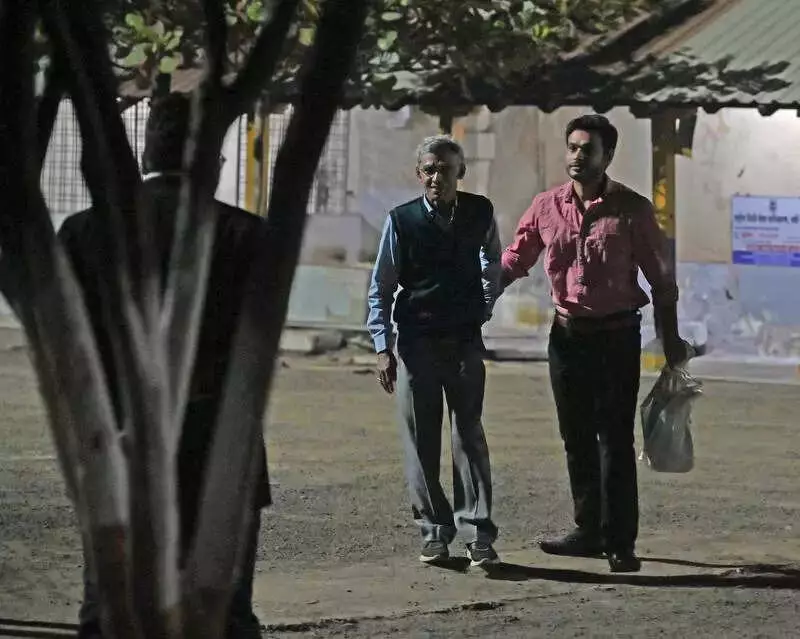
In a significant verdict, former BrahMos Aerospace scientist Nishant Agarwal stepped out of Nagpur Central Prison on Tuesday evening, a free man after seven years behind bars. The scientist, who was acquitted of serious charges of leaking classified missile information to Pakistani intelligence agents, was released following a court order that found the prosecution failed to prove his intent to harm national security.
Court Delivers Justice, Cites Lack of Malicious Intent
A division bench of the Bombay High Court, comprising Justices Anil Kilor and Pravin Patil, delivered the judgment that led to Agarwal's release. The court held that the prosecution could not establish that Agarwal had any intention of compromising India's security. The judges took special note of witness depositions which stated the former scientist had an impeccable service record throughout his career.
Speaking briefly after his release, a relieved Agarwal said, "Finally, justice was delivered to me and my family." He also acknowledged the jail administration, stating, "The jail administration was fair, there's nothing to complain about." He left the prison gates with his father-in-law after offering a brief bow.

Scrutiny of Evidence and Social Media Interactions
The court meticulously examined the evidence against Agarwal. It noted that even though he worked on top-secret BrahMos missile projects and was part of the core team that delivered 70 to 80 missiles to the armed forces between 2014 and 2018, there was no proof he copied or transmitted hyper-sensitive data. The bench pointedly observed that had he intended to transfer confidential documents, "he could have copied those documents onto his personal device."
The case stemmed from allegations that Agarwal interacted on Facebook with Pakistani handlers posing as Indian women. The court found that he had merely accepted friend requests from profiles named 'Pooja Ranjan' and 'Neha Sharma'. His alleged chats with another profile, 'Sejal Kapoor', were found to be related to exploring job opportunities in the UK. The judges clarified that there is no legal restriction on using social media or seeking employment elsewhere.
Impeccable Record and Legal Interpretation of Secrets Act
The verdict heavily relied on Agarwal's stellar professional background. Multiple witnesses, including senior officials, testified to his outstanding performance, with annual reports consistently rating him as "very good" or "outstanding." He had even been recommended for the Young Scientists Award in 2017.
The bench provided a crucial interpretation of the Official Secrets Act. It clarified that under Section 3(2), a presumption of prejudice to state security arises only when both intent and knowledge are conclusively proven. "The character and conduct of the accused must be established before presuming the person's act was against the country's interest," the judges stated, adding that no adverse report was ever filed against Agarwal by the Intelligence Bureau or any other agency.
While acquitting him of the major charges, the court upheld a three-year sentence for a lesser offence: failing to exercise adequate caution on social media. However, since he had already served more time than this sentence, his release was ordered. The court quashed his other convictions, including a severe 14-year sentence under the Information Technology Act for cyber terrorism.