

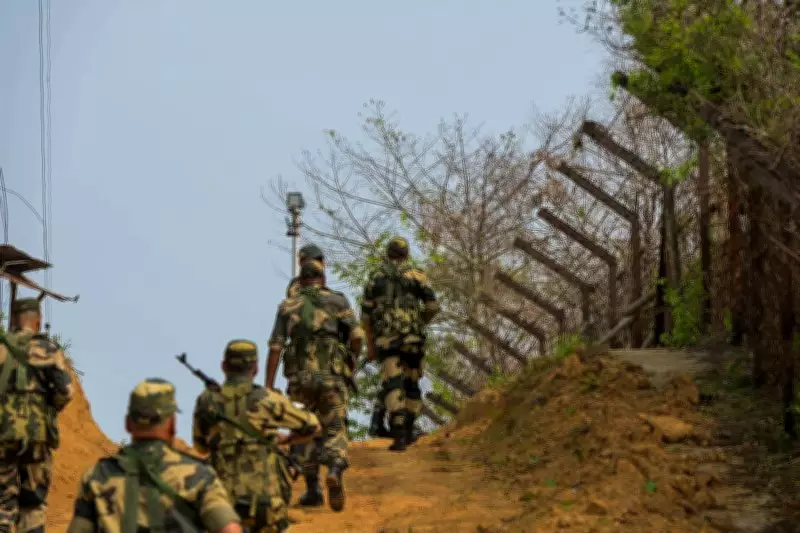
The 57th Director General-level border coordination conference between the Border Security Force (BSF) and the Border Guard Bangladesh (BGB) concluded in New Delhi on Thursday, with the contentious issue of illegal entry of Bangladeshi nationals into India and their deportation taking center stage.
Key Discussions and Political Context
While no press briefing was held, an official statement confirmed that discussions covered illegal, inadvertent, and forcible border crossings as well as border deaths. The issue of pushbacks gained prominence after the BJP's victory in the West Bengal Assembly elections on May 4, where stopping infiltration was a major campaign plank. On May 28, Union Home Minister Amit Shah stated in Gandhinagar that hundreds of people were leaving West Bengal for Bangladesh following the new BJP government's formation.
This meeting was the first between the BSF and BGB after the Bangladesh Nationalist Party (BNP) formed a new government in Bangladesh and the BJP came to power in West Bengal. The changed political dynamics have lent greater urgency to resolving the long-standing issue of illegal migration. The Indian delegation was led by BSF Director General Praveen Kumar, while the Bangladesh delegation was headed by BGB Director General Maj Gen Mohammad Ashrafuzzaman Siddiqui.

Border Fencing in West Bengal
The India-Bangladesh border in West Bengal spans 2,217 km, of which 1,648 km is already fenced. Of the remaining 569 km, approximately 112 km cannot be fenced due to difficult terrain. For the rest, land acquisition is yet to begin for about 149 km, while around 229 km is at various stages of acquisition. At its first Cabinet meeting on May 11, the newly formed BJP government decided to transfer 600 acres within 45 days for border fencing and related infrastructure. By May 28, the West Bengal government had handed over 142.79 acres to the BSF for outposts and barbed-wire fencing.
Repatriation Process
There is no specific treaty or agreement with Bangladesh regarding repatriation of illegal migrants. Details of apprehended suspected illegal migrants are shared with the Bangladesh High Commission through the Ministry of External Affairs for nationality verification. Deportation occurs after nationality confirmation and issuance of travel documents by the High Commission.
Claims and Counter-Claims
Last week, the BGB claimed it had foiled 10 attempts by the BSF to illegally push in around 60 people across various border areas. The BSF denied these allegations, stating that illegal migrants belong to Bangladesh and should return. Responding to a remark by a Bangladesh minister on push-ins, MEA spokesperson Randhir Jaiswal said, “We expect Bangladesh to expedite nationality verification so that repatriation of illegal immigrants can take place in a smooth manner.”
The conference also discussed prevention of assaults on BSF personnel and Indian civilians by Bangladeshi nationals, measures to curb trans-border crimes, prevention of entry of Bangladeshi criminals into India, fence breaching incidents, border fence construction, action against Indian Insurgent Groups in Bangladesh, and border infrastructure issues. Emphasis was placed on sensitizing border populations about the sanctity of the international boundary and promoting public awareness to prevent illegal activities. Both forces reiterated a zero-tolerance policy toward trans-border crimes, insurgent activities, and actions undermining border security.






