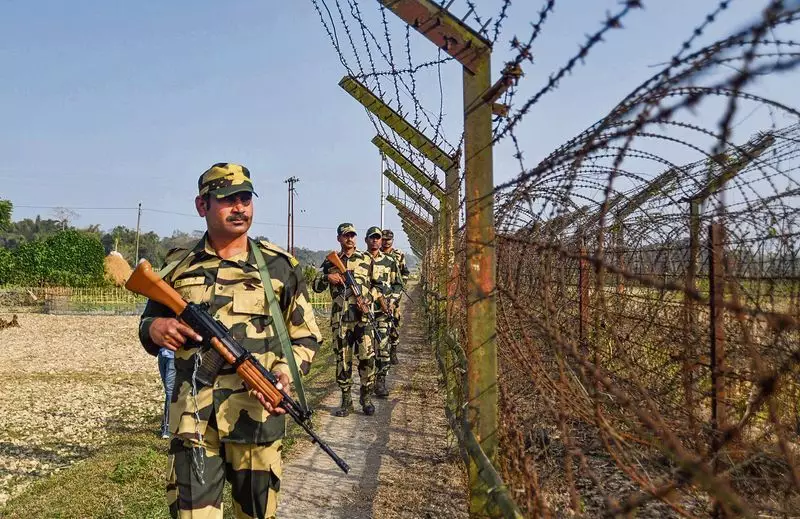
The Border Security Force (BSF) is undertaking a major technological overhaul to significantly strengthen its defensive capabilities along the sensitive international borders in Punjab and Jammu. The force is actively integrating a suite of advanced technologies, including artificial intelligence-powered surveillance, drones, and smart fencing systems, to create a more robust anti-infiltration and anti-smuggling grid.
A Multi-Layered Tech Shield for Vulnerable Frontiers
Senior BSF officials have confirmed that the modernization drive is focused on the Punjab and Jammu sectors, which have long been vulnerable to cross-border threats like infiltration of terrorists and smuggling of narcotics and weapons. The core objective is to minimize human intervention in high-risk monitoring tasks and enhance the force's situational awareness and reaction time.
The technological arsenal being deployed is diverse and sophisticated. It includes a range of surveillance drones for aerial reconnaissance and monitoring of difficult terrain. Furthermore, the BSF is setting up AI-based surveillance systems that can automatically detect and classify suspicious movements, reducing dependence on manual observation. The integration of smart fencing, which can alert troops to the slightest tampering or intrusion attempt, forms another critical layer of this new security architecture.
Focus on Punjab's Riverine and Jammu's Challenging Terrain
The deployment strategies are being tailored to address specific geographical challenges. In the Punjab frontier, which has vast riverine and canal networks, technology is crucial for monitoring areas where physical fencing is impossible. Drones and thermal imaging equipment are being leveraged to keep a constant watch over these water bodies, which are often exploited for illegal crossings.
Similarly, in the Jammu region, with its mountainous and often inhospitable terrain, advanced surveillance tools provide the BSF with eyes in areas that are hard to patrol on foot. The use of these technologies not only improves coverage but also enhances the safety of troops by providing early warnings and reducing the need for constant physical patrols in extremely vulnerable locations.
Beyond Gadgets: Training and Tactical Integration
The BSF's approach is not merely about procuring high-tech equipment. A significant emphasis is being placed on training personnel to operate and maintain these new systems effectively. The force is conducting specialized training programs to ensure its soldiers are proficient in handling drones, interpreting data from AI systems, and responding swiftly to tech-generated alerts.
The ultimate goal is to create a seamless, integrated grid where information from drones, ground sensors, and surveillance cameras is fused in real-time at command centers. This will allow for quicker decision-making and more coordinated responses to any border threat. The move represents a strategic shift from a purely manpower-intensive border guarding model to a technology-augmented one.
Impact on Infiltration and Smuggling Attempts
Officials anticipate that this technological strengthening will lead to a substantial decrease in successful infiltration and smuggling attempts. The enhanced detection capabilities are expected to act as a strong deterrent. While the BSF has consistently performed with high dedication, these new tools are force multipliers that will plug gaps and make the border even more secure.
The ongoing integration of modern systems underscores the BSF's commitment to adapting to evolving security challenges. By leveraging innovation, the force aims to stay ahead of adversaries who also attempt to use technology for nefarious purposes. This tech-forward strategy is poised to redefine border management along these critical frontiers, making them smarter and more impregnable.