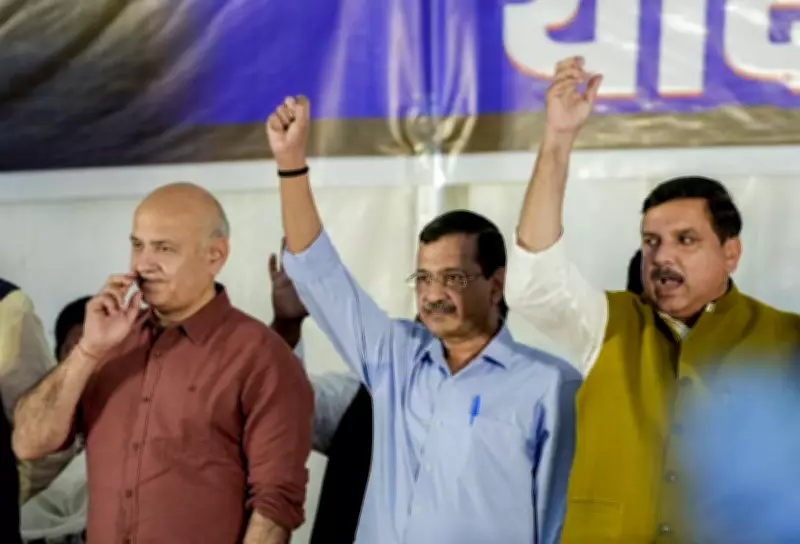
CBI Denounces Lower Court's Acquittal of Kejriwal and Sisodia in Delhi Excise Policy Case
The Central Bureau of Investigation (CBI) has issued a sharp rebuke against a lower court's decision to acquit Delhi Chief Minister Arvind Kejriwal and former Deputy Chief Minister Manish Sisodia in the high-profile Delhi excise policy case. In a strongly worded statement, the federal agency described the court order as "wrong" and asserted that the excise policy case represents the "biggest scam" in recent times, underscoring the gravity of the allegations involved.
Details of the Court's Controversial Acquittal Order
The lower court's ruling, which has sparked significant legal and political debate, cleared Kejriwal and Sisodia of charges related to the formulation and implementation of the now-scrapped Delhi excise policy. The policy, introduced in 2021, was alleged to have been designed to provide undue benefits to private entities, leading to massive revenue losses for the state exchequer and potential corruption at the highest levels of the Delhi government.
Despite the acquittal, the CBI has maintained that the evidence gathered during its investigation points to serious irregularities and malpractices. The agency emphasized that the case involves complex financial transactions and policy manipulations that warrant a thorough judicial review, suggesting that the lower court may have overlooked critical aspects of the evidence presented.

CBI's Stance on the Excise Policy as a Major Scam
Labeling the excise policy case as the "biggest scam," the CBI highlighted that the alleged irregularities are not merely administrative lapses but constitute a systematic attempt to defraud public funds. The agency pointed out that the policy led to a significant shortfall in expected revenue, estimated to run into hundreds of crores of rupees, and involved collusion between government officials and private players to manipulate license allocations and fee structures.
In its criticism, the CBI argued that the lower court's order fails to account for the broader implications of such scams on governance and public trust. The agency reiterated its commitment to pursuing the case vigorously, indicating that it may explore legal avenues to challenge the acquittal, including potential appeals to higher courts to ensure justice is served.
Political and Legal Repercussions of the Case
The acquittal has immediate political ramifications, particularly for Arvind Kejriwal and his Aam Aadmi Party (AAP), which has been embroiled in multiple corruption allegations. While the ruling provides temporary relief to the accused, the CBI's strong condemnation keeps the issue alive in the public discourse, potentially affecting upcoming elections and the party's credibility.
From a legal perspective, the case underscores the challenges in prosecuting high-profile corruption cases in India, where court decisions can be contentious and subject to intense scrutiny. Experts note that the CBI's response reflects a broader pattern of federal agencies clashing with lower judiciary outcomes, often leading to prolonged legal battles that test the resilience of India's anti-corruption framework.
As the controversy unfolds, stakeholders are closely monitoring developments, with calls for transparency and accountability growing louder. The CBI's assertion that this is the "biggest scam" adds pressure on the judicial system to re-examine the evidence, ensuring that such cases are adjudicated with the utmost diligence to uphold the rule of law.