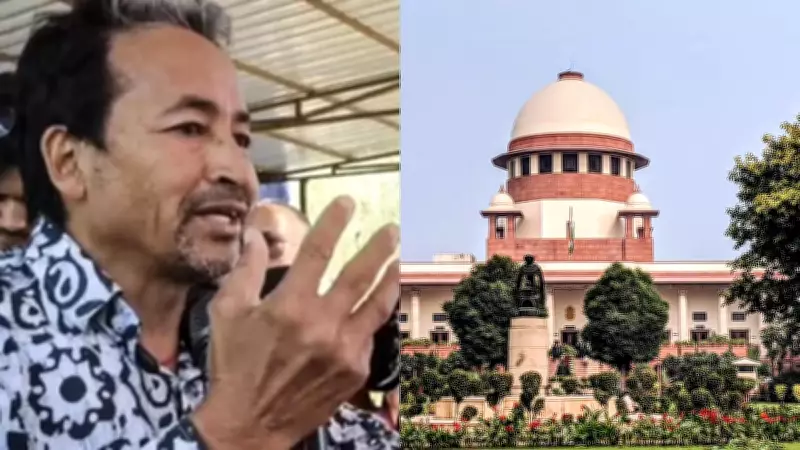
The Indian government has made serious allegations against Ladakhi activist Sonam Wangchuk in the Supreme Court, claiming he tried to instigate Generation Z for protests similar to those witnessed in Nepal and Bangladesh. This development came during a hearing before a bench comprising Justices Aravind Kumar and P V Varale.
Government's Submission in Court
Solicitor General Tushar Mehta, representing the Centre, informed the court that Wangchuk's actions went beyond mere advocacy. According to Mehta, the activist even referenced the 'Arab Spring' phenomenon, a series of anti-government protests and uprisings that spread across much of the Arab world in the early 2010s, leading to the overthrow of multiple governments.
Context of the Allegations
The government's statement suggests that Wangchuk was attempting to mobilize young people in a manner comparable to recent youth-led movements in neighboring countries. Nepal has seen significant student and youth activism in recent years, while Bangladesh has experienced various protest movements involving younger demographics.
The Arab Spring comparison is particularly significant, as those movements demonstrated how sustained public protests could lead to substantial political changes in several Arab nations. By invoking this comparison, the Centre appears to be suggesting that Wangchuk's activities could have similar destabilizing potential.
Legal Proceedings and Implications
The Supreme Court hearing represents a crucial moment in the ongoing legal scrutiny of activism in Ladakh. Wangchuk, an engineer and education reformist, has been a prominent voice advocating for greater autonomy and environmental protection in the region.
The government's allegations raise important questions about:
- The boundaries between legitimate protest and unlawful instigation
- How authorities interpret references to international protest movements
- The legal framework governing political activism in India
This case comes at a time when youth activism is gaining prominence globally, with Generation Z increasingly involved in political and social movements. The government's characterization of Wangchuk's activities as attempts to 'instigate' protests suggests concerns about the potential scale and nature of mobilization efforts.
The Supreme Court will need to consider these allegations within the context of constitutional protections for free speech and assembly, while also weighing the government's concerns about maintaining public order and national stability.