Chandigarh Schools Grapple with Bomb Threat Hoax, Revealing Alarming Safety Deficiencies
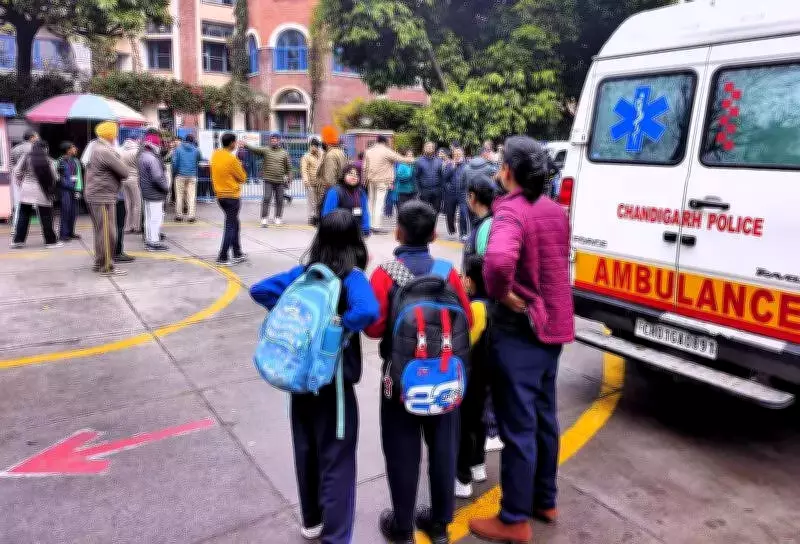
A series of bomb threat emails targeting approximately thirty educational institutions across Chandigarh on Wednesday morning triggered widespread panic among students, parents, and staff members. The alarming situation has drawn severe criticism from the Chandigarh Parents' Association (CPA), which asserts that the incident starkly highlighted dangerous vulnerabilities within the city's school safety and emergency preparedness frameworks.
Systemic Communication Failures and Delayed Responses
Although law enforcement authorities later confirmed that all threats were hoaxes, CPA President Nitin Goyal emphasized that the chaotic response exposed a systemic failure in communication and crisis management protocols. "Today functioned as an unplanned, real-time stress test for our school safety systems, and Chandigarh unequivocally failed. It was sheer luck that protected our children today, not established procedures or protocols," Goyal stated. He characterized the event not as a mere prank but as an act of psychological terror directed at children.
According to the CPA's assessment, several schools received threatening emails as early as 8:00 AM. However, evacuation decisions in numerous institutions were inexplicably delayed by one to two critical hours. "In any potential disaster scenario, the initial golden hour is absolutely vital. Yet, children remained seated in their classrooms while school management teams debated the authenticity of the threats," the association reported. This hesitation, they argue, could have had catastrophic consequences in a genuine emergency.

Parental Anguish and Information Blackout
The association further alleged that parents were consistently the last to be informed, with some schools issuing vague circulars citing "unforeseen circumstances" rather than transparently disclosing the bomb threat. "Concealing the truth does not prevent panic; it actively fuels rumors and exacerbates anxiety," Goyal remarked. One anonymous parent shared a distressing account: her daughter was instructed to remain in her classroom for nearly two hours after the school had received the threat information. "While junior classes were permitted to leave, senior students were compelled to stay. The experience was profoundly stressful for everyone involved," the parent recounted.
Dr. Ashish Sharma, a parent with children attending a local high school, described a complete lack of clarity from the school administration regarding the evolving situation. "Just as I was preparing to leave for work, I received a message instructing me to retrieve my child. My primary concern was the potential chaos if children were gathered outside with no secure location, particularly in households where both parents are employed. The risk of stampedes or children departing with unauthorized individuals felt more perilous than the threat itself," Dr. Sharma explained.
Criticism of Chaotic Dispersal and Official Advisory
Another parent, who also requested anonymity, revealed receiving a notice at 10:12 AM asking for their child to be picked up by 10:30 AM, creating an impractical and rushed timeline. The CPA strongly criticized the practice of instructing parents to immediately rush to schools, warning that such actions could obstruct access for emergency responders like ambulances and fire tenders. "If thousands of vehicles converge simultaneously, critical emergency services could be trapped in gridlock. Moreover, the ensuing chaos heightens the risk of children leaving with the wrong person," the association's statement cautioned.
In response, the CPA has formally demanded that the UT Administration implement a Standardized Reunification Protocol. This protocol would include pre-designated safe zones located away from school premises, utilizing school buses for organized dispersal, and providing clear, consistent communication advising parents to wait until areas are fully secured.

Education Department's Advisory Deemed Inadequate
Amid the morning's panic, the education department issued an advisory urging schools to "maintain calm and avoid creating unnecessary panic." It instructed institutions to report threats to the police and "refrain from declaring holidays without verified basis," while encouraging them to remain vigilant and continue regular academic operations. The CPA labeled this guidance as "bureaucratic and dangerously out of touch." "How can a school principal be expected to independently verify a bomb threat in real-time? Verification processes can take hours, whereas an explosion occurs in seconds. Precautionary measures must always take precedence over rigid protocol," Goyal asserted.
This unsettling episode has ignited a crucial conversation about the urgent need for comprehensive, well-rehearsed emergency response plans in educational institutions across Chandigarh. Parents and community leaders are now calling for immediate action to fortify school safety measures, ensuring that future threats are met with coordinated, efficient, and transparent responses that prioritize child safety above all else.