

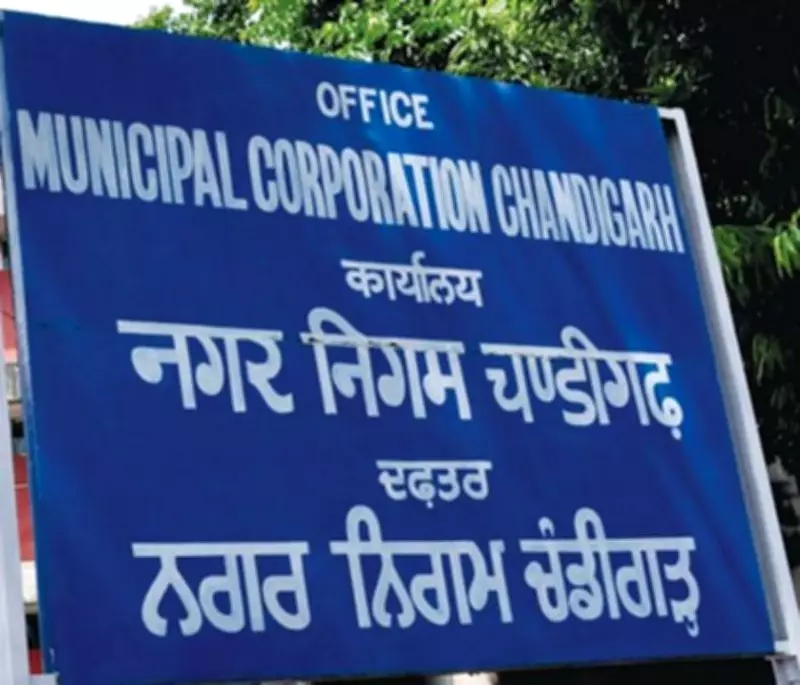
Chandigarh Municipal Corporation Takes Action in Rs 116 Crore Fraud Scandal
The Municipal Corporation (MC) of Chandigarh has taken decisive steps in response to a massive financial fraud case, suspending two of its employees and recommending disciplinary action against a senior official from the Chandigarh Administration. This move comes in the wake of an alleged scam involving over Rs 116 crores linked to IDFC First Bank, highlighting significant lapses in financial oversight within the civic body.
Suspensions and Disciplinary Recommendations
In a swift response to internal inquiry findings, the MC has placed superintendent Rajni and accountant Haransh, both from the accounts department, under suspension. Additionally, disciplinary action has been recommended against a senior officer of the UT accounts department who was deputed to the MC during the transfer of assets, records, and financial matters from the Chandigarh Smart City Limited (CSCL) to the civic body. The inquiry revealed critical lapses during the transfer of over Rs 116 crore from CSCL, which was closed in March 2025. CSCL had maintained multiple bank accounts with IDFC First Bank for operational transactions, and it was recently discovered that fixed deposit receipts (FDRs) were fake and not appearing in the bank's system.
Police Investigation and Production Warrants
In a related development, Chandigarh Police have secured court approval to bring three accused individuals—Ribhav Rishi, Abhay Kumar, and Seema Dhiman—from Ambala Jail on a production warrant for interrogation. These individuals are implicated in fraud cases totaling over Rs 200 crores, involving accounts of both the Chandigarh MC and the Chandigarh Renewable Energy and Science & Technology Promotion Society (CREST). The Haryana Vigilance and Anti-Corruption Bureau had previously arrested these three among 11 persons in a separate Rs 590-crore fraud case, with the probe initiating on February 24 after the scam surfaced in the state.

Following separate complaints from MC and CREST officials, the UT police registered two cases. MC officials suspected a scam exceeding Rs 116 crores, while CREST officials reported irregularities of around Rs 75 crores. Police investigations uncovered over 277 unauthorized withdrawal and deposit transactions during the reconciliation of CREST's financial records with original bank statements. Although both organizations have recovered their funds, authorities are actively investigating the siphoning of money from bank accounts, allegedly involving bank employees in a conspiracy.
Broader Implications and Ongoing Probe
The police have emphasized the need to trace the money trail of the cheated amounts, with applications for production warrants indicating that payments were made to firms connected to the Haryana scam. This case underscores vulnerabilities in financial management systems and raises concerns about corruption in public sector transactions. As the investigation continues, focus remains on ensuring accountability and preventing future frauds in municipal and smart city projects.






