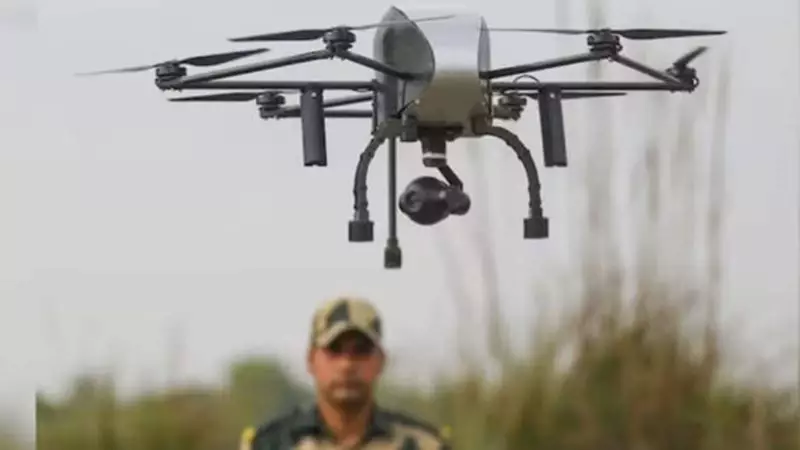
The Chandigarh administration has imposed a complete ban on the flying of drones and unmanned aerial vehicles (UAVs) across the entire Union Territory for a period of three days. This decisive security measure comes into effect from the start of December 18 and will remain until the end of December 20, 2025.
Security Threats Prompt Preemptive Action
The order, issued by District Magistrate Nishant Kumar Yadav on Wednesday, December 17, cites emerging security threats as the primary reason. The administration specifically referenced recent incidents where anti-national elements used drones fitted with improvised explosive devices (IEDs). The scheduled movement of a VVIP (Very Very Important Person) in the region further necessitated this high-alert status to ensure the safety of both the dignitary and the general public.
Legal Framework and Exemptions
The prohibition has been formally enacted under Section 163 of the Bhartiya Nagrik Suraksha Sanhita, 2023. However, the ban is not absolute for all entities. Key exemptions have been granted to law enforcement and security agencies. This includes the police, paramilitary forces, the Indian Air Force, and the Special Protection Group (SPG). Any other agency or individual can operate drones during this period only if they obtain specific authorization from the competent government authority.
Violation of this order is a serious offence. The district magistrate has warned that offenders will face penal action under Section 223 of the Bhartiya Nyaya Sanhita, 2023, along with other relevant legal provisions.
Promulgation and Public Awareness
Given the urgent nature of the security concern, the order was issued ex parte, meaning it was enacted without prior notice to the public to address the immediate threat. To ensure widespread awareness, copies of the order will be displayed on notice boards at the district magistrate's office and the district courts. Furthermore, the Director of Public Relations for UT Chandigarh will facilitate its publication in local newspapers.
This three-day no-fly zone for drones underscores the administration's proactive approach to countering modern aerial-based security challenges. It highlights the evolving nature of security protocols in an era where technology can be misused, prompting authorities to implement strict, temporary controls to safeguard critical movements and public spaces.