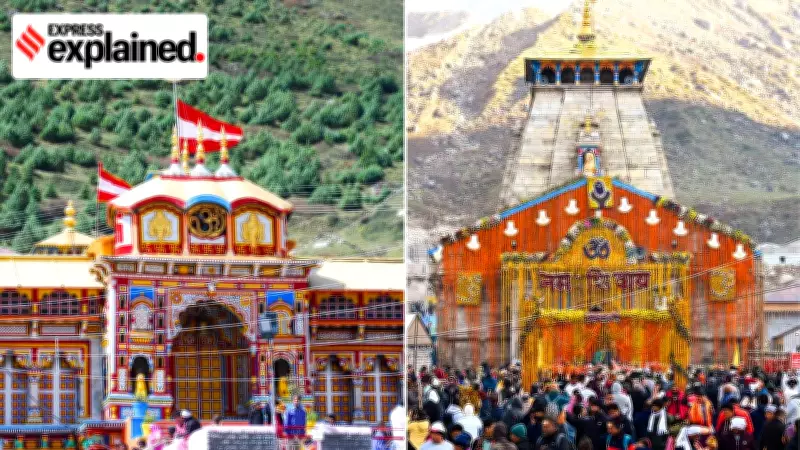
Uttarakhand's Sacred Shrines Consider Controversial Entry Restrictions
In a development that has sparked nationwide debate, the temple committees governing the revered Char Dham shrines in Uttarakhand are deliberating a proposal to prohibit non-Hindus from entering their sacred premises. The four temples at the heart of this discussion—Gangotri, Yamunotri, Kedarnath, and Badrinath—represent some of Hinduism's most significant pilgrimage sites, attracting millions of devotees annually.
The Proposal and Its Proponents
Last week, Hemant Dwivedi, president of the Badrinath-Kedarnath Temple Committee (BKTC), announced that local priests have demanded this restriction, prompting formal consideration. The heads of Gangotri and Yamunotri Dham committees have indicated they will examine similar proposals in upcoming board meetings. Dwivedi has invoked Articles 25 and 26 of the Indian Constitution, which guarantee freedom of religion and the right to manage religious affairs, as the legal foundation for this potential ban.
"This is not a divisive move," Dwivedi emphasized. "Anyone who respects and worships Baba Kedar, Badri, Maa Ganga, and Yamuna can visit the temples. We have consulted stakeholders from all 47 temples under our committee, and everyone supports this initiative." He further clarified that Article 25(2)(b) includes Sikhs, Buddhists, and Jains under Hinduism's constitutional definition, suggesting they would not be affected.
Legal Challenges and Constitutional Questions
However, legal experts have raised significant concerns about the proposal's constitutionality. Dr. Kartikeya Hari Gupta, an advocate at the Uttarakhand High Court, argues that such a ban would violate Article 19(1)(d), which guarantees all citizens the right to move freely throughout India's territory. "The government can only restrict freedom of movement for public interest or protection of scheduled tribes' interests," Gupta explained. "A health emergency like COVID-19 qualifies, but restrictions for a specific community's interests do not."
Gupta also challenged the committee's reliance on Article 25, noting its application is not absolute but conditional. "The Supreme Court has established an essential religious practices doctrine test," he stated. "If any religious group wants to protect an activity, they must prove it's so essential to their religion that removing it would make practitioners cease belonging to that religion. The committees must establish that prohibiting Muslims from entering makes these temples essential Hindu institutions."
Historical Context and Administrative Framework
The Badrinath-Kedarnath Temple Committee operates under The United Provinces Shri Badrinath [and Kedarnath] Temples Act of 1939, amended in 1948. This legislation vests temple administration and fund management in the BKTC, with ownership technically belonging to the deities. The committee's composition has evolved, originally including legislators elected by Hindu members of the Uttar Pradesh Legislative Assembly and Council, later transitioning to Uttarakhand's legislative bodies after state formation.
Today, the state government nominates the committee president and seven members, while the committee appoints head priests (Rawals) and assistant priests (Naib-Rawals). Crucially, the government retains authority to supersede committee decisions, appoint auditors, and require administrative reports, creating a complex governance structure where religious autonomy intersects with state oversight.
Precedents and Parallel Developments
This proposal follows similar discussions at other Hindu sites. In January 2024, the Madurai Bench of the Madras High Court directed temple authorities in Tamil Nadu to install signs prohibiting non-Hindus beyond flagpoles (kodimaram), responding to a petition about non-Hindus treating temples as tourist spots and allegedly disrespecting sanctity. The Tamil Nadu government had argued such restrictions might violate non-Hindus' constitutional rights, but the court prioritized protecting Hindu religious practices.
Previously, the idea of barring non-Hindus was raised for Har ki Pauri ghat in Haridwar and the upcoming 2027 Ardh Kumbh Mela, though practicality concerns emerged given Haridwar's 3.49 crore visitors in 2024, including foreign tourists.
Political Reactions and Broader Implications
The Congress party has criticized the proposal, noting it would prevent constitutional heads of state like Governor Lt Gen Gurmit Singh from visiting temples if implemented. This controversy also revisits the 2019 Uttarakhand Char Dham Devasthanam Management Act, which allowed state takeover of temple management but was scrapped after opposition from right-wing Hindu groups, despite High Court approval.
The 2018 Sabarimala temple judgment looms large in this debate, where the Supreme Court's majority opinion held that barring women of certain ages was not an essential religious practice, setting a precedent for evaluating religious restrictions through constitutional lenses.
As temple committees prepare for deliberations with state authorities, this proposal touches fundamental questions about religious autonomy, constitutional rights, and India's secular fabric. The outcome could establish significant precedents for how religious institutions balance tradition with legal frameworks in a diverse democracy.