

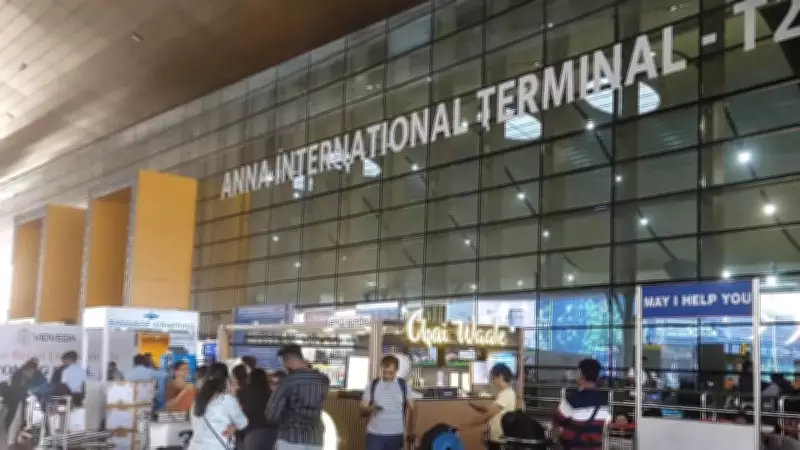
Chennai Airport Grounds 30 Flights as Iran-Israel Tensions Escalate
In a significant blow to international travel, Chennai International Airport experienced major operational disruptions on Tuesday, with at least 30 inbound and outbound flights cancelled over a 24-hour period. The cancellations were directly attributed to the escalating geopolitical conflict between Iran and Israel, which has led to widespread airspace restrictions and precautionary rerouting measures across the region.
Key Gulf Routes Severely Impacted
According to official data released by the airport on March 3, the cancellations included 15 arrivals and 15 departures to and from critical Gulf hubs. The affected destinations comprised:
- Kuwait (KWI)
- Dubai (DXB)
- Doha (DOH)
- Abu Dhabi (AUH)
These routes are vital corridors for passenger traffic, heavily utilized by migrant workers, business travelers, and families connecting between South India and West Asia. The sector's importance is underscored by the high frequency of flights operated using modern aircraft such as the Airbus A320, A321neo, and Boeing 787, which were among the models impacted by the cancellations.

Operational Chaos and Passenger Anxiety
Airport sources confirmed that the disruptions stemmed from a combination of factors directly linked to the Iran-Israel conflict. Airspace restrictions imposed by authorities, precautionary rerouting measures adopted by airlines, and general operational uncertainties have created a challenging environment for aviation operations. The uncertainty has forced airlines to cancel flights rather than risk safety or face unpredictable delays.
Travel agents in Chennai reported a noticeable surge in enquiries from anxious families awaiting relatives returning from West Asia. Many passengers were left stranded or had to alter their travel plans at short notice, leading to confusion and frustration at the airport.
Official Advisory and Future Outlook
In response to the situation, airport officials have strongly advised passengers to check with their respective airlines for real-time updates before heading to the airport. This proactive measure aims to minimize inconvenience and ensure travelers are informed of any last-minute changes or cancellations.
The ongoing tensions between Iran and Israel continue to pose a threat to regional stability and international travel. As the conflict evolves, further disruptions to flight schedules cannot be ruled out, potentially affecting more routes and passengers in the coming days. The aviation industry remains on high alert, monitoring developments closely to adapt operations as needed.






