

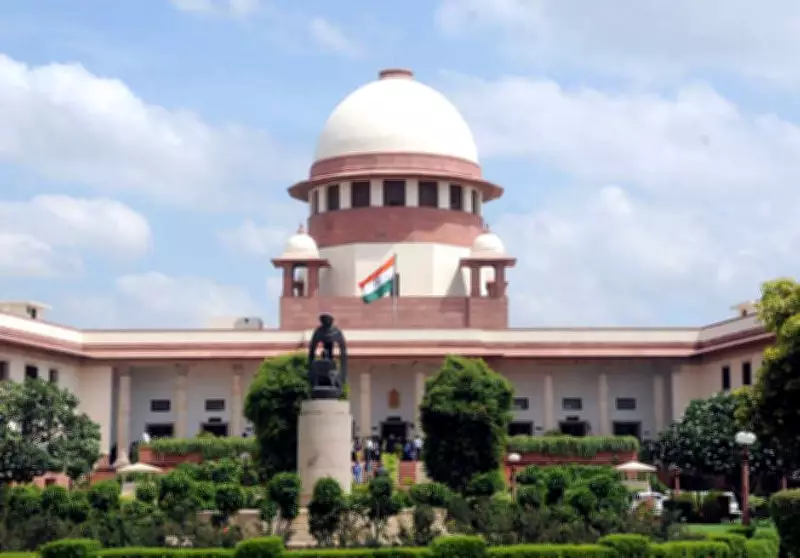
CJI Surya Kant Steps Aside from PILs Challenging Election Commissioner Appointment Law
In a significant development at the Supreme Court of India, Chief Justice Surya Kant recused himself on Friday from hearing Public Interest Litigations (PILs) that challenge the 2023 law governing the appointment of the Chief Election Commissioner (CEC) and Election Commissioners (ECs). The law, enacted in December 2023, replaced the Chief Justice of India with a Union Cabinet Minister in the three-member selection panel, sparking legal disputes over its constitutionality.
Conflict of Interest Concerns Prompt Recusal
During the hearing before a bench comprising CJI Kant, Justice Joymalya Bagchi, and Justice Vipul M Pancholi, the Chief Justice openly questioned his involvement, stating, "Should I hear this matter? Somebody may accuse me of conflict of interest." This remark highlighted the sensitive nature of the case, as it directly impacts the judiciary's role in electoral appointments.
Advocate Prashant Bhushan, representing one of the petitioners, responded by suggesting that the matter be referred to a bench without a prospective Chief Justice. He pointed out that both Justice Bagchi and Justice Pancholi are in line to become CJI, which could raise similar concerns. The CJI agreed, noting, "This is what was in my mind. I should mark the matter for a bench where the judge is not in line to become CJI. Then nobody can say anything." Consequently, the case has been listed for April 7 before a separately earmarked bench.

Background of the 2023 Law and Supreme Court's Previous Ruling
The controversy stems from a landmark Supreme Court verdict on March 2, 2023, where a five-judge Constitution Bench, led by Justice KM Joseph (since retired), unanimously ordered the creation of a three-member panel for appointing CECs and ECs. This panel was to include the Prime Minister, the Leader of Opposition in the Lok Sabha (or leader of the largest opposition party), and the CJI, ending a 73-year-old system of government-led appointments. However, the court clarified that this arrangement would hold only until Parliament enacted a law on the matter.
In December 2023, Parliament passed the Chief Election Commissioner and the other Election Commissioners (Appointment, Condition of Service and Term of Office) Act, 2023, which modified the panel by substituting the CJI with a Union Cabinet Minister. This change has been challenged through PILs filed by various entities, including the Association for Democratic Reforms (ADR), Lok Prahari, PUCL, and TMC MP Mahua Moitra, who argue that it undermines the independence of the Election Commission.
Legal Proceedings and Future Implications
The Supreme Court had previously refused to stay the 2023 Act on March 21, 2024, allowing the law to remain in effect while the legal challenges are heard. The current recusal by CJI Surya Kant adds a new layer to the proceedings, emphasizing the judiciary's commitment to avoiding any perception of bias in cases involving its own powers.
This move is seen as a precautionary measure to ensure transparency and fairness in the adjudication process. As the case moves forward, it will test the balance between parliamentary sovereignty and judicial oversight in electoral matters, with potential implications for India's democratic framework.
The hearing on April 7 is eagerly awaited, as it will determine the constitutionality of the 2023 law and shape the future of Election Commission appointments in the country.






