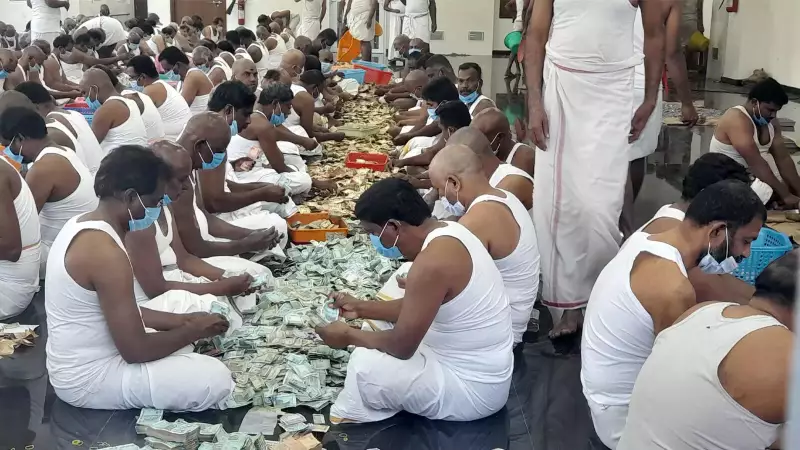
In a shocking breach of trust that spanned over three decades, a clerk entrusted with counting the daily offerings at one of India's wealthiest and most revered shrines is alleged to have orchestrated a theft amounting to a staggering ₹100 crore. The target was the Lord Venkateswara temple in Tirumala, and the accused is a man whose unassuming presence masked an audacious long-term fraud.
The Unassuming Clerk and His Sacred Duty
The story begins in the early 1990s when a young man named CV Ravi Kumar, barely in his twenties, joined the Pedda Jeeyanagar Mutt. This mutt holds the responsibility of overseeing the spiritual affairs of the famed Tirumala temple. For years, Ravi Kumar's life appeared to follow a simple, devout routine. He came to work, performed his duties, and returned home, building an image of a dedicated and reliable employee.
By 2023, at the age of 54, he was still with the Mutt, holding the position of a clerk. However, his specific role was far from ordinary. He was tasked with supervising the daily counting of donations at the Tirupati Balaji temple—a duty of immense sensitivity. The sums involved were colossal, with daily collections typically ranging between ₹4 crore and ₹6 crore. This position placed him at the very heart of the temple's financial operations, a privilege that, authorities allege, he systematically exploited.

The Facade Collapses: A Fraud Unravels
For more than 30 years, the operation continued undetected. The sheer scale and longevity of the alleged embezzlement point to a meticulously planned scheme. The daily flow of cash from millions of devotees provided a vast ocean in which, it is claimed, Ravi Kumar could discreetly divert funds. The methodical nature of the theft allowed it to remain hidden, with the clerk's long tenure and perceived trustworthiness likely discouraging suspicion.
This carefully constructed facade came crashing down in April 2023. While the specific trigger for the investigation has not been detailed in the initial reports, the discovery overnight sent shockwaves through the temple administration and the devotee community. The allegation that a single individual could allegedly siphon off such an astronomical sum—approximately ₹100 crore—from a place of worship has raised profound questions about oversight and financial security.
Aftermath and Lingering Questions
The case has exposed critical vulnerabilities in the management of donations at even the most prestigious religious institutions. The implications are severe, touching upon:
- Financial Governance: How could a scam of this magnitude go unnoticed for over three decades? It calls for an urgent audit of internal controls and monitoring systems at high-revenue temples.
- Breach of Devotee Trust: The money stolen represents the heartfelt offerings of countless devotees. This breach shakes the very foundation of faith that underpins such charitable contributions.
- Systemic Oversight: The incident highlights the potential need for more robust, technology-driven, and transparent systems to track and secure temple funds, moving beyond reliance on long-serving individuals.
The tale of CV Ravi Kumar serves as a stark cautionary tale. It demonstrates how a position of sacred trust, when coupled with lax oversight, can be manipulated for personal gain on an almost unimaginable scale. As investigations proceed, the focus will firmly be on recovering the stolen wealth and implementing foolproof measures to ensure that the sanctity of the temple is matched by the integrity of its financial management.