Coimbatore Road Widening Project Faces Major Delay After High Court Intervention
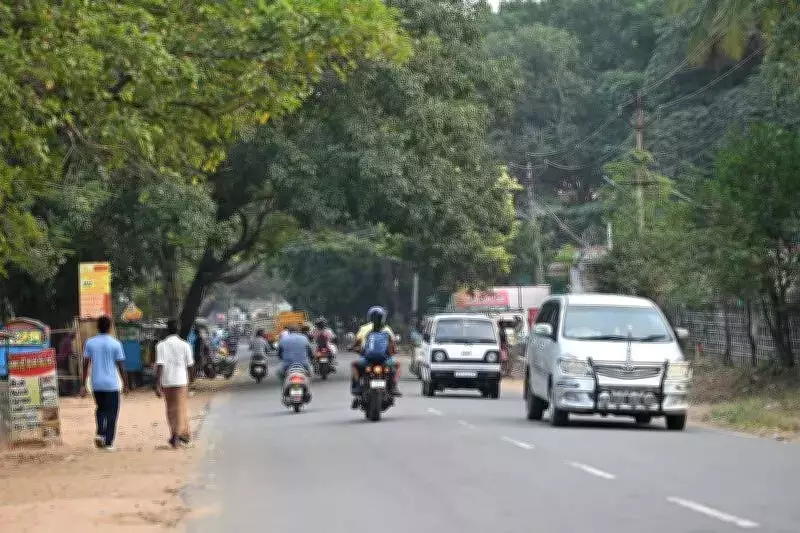
The long-awaited road widening project on the Vadavalli–Marudhamalai Road stretch in Coimbatore is now facing significant additional delays. This setback comes after the Madras High Court issued a directive to the Highways Department, explicitly prohibiting the felling of trees along this crucial corridor.
Court Order Halts Development Work to Protect Green Cover
The judicial order was passed on January 30 by a bench comprising Justice N Sathish Kumar and Justice T Bharatha Chakravarthy. The bench was hearing a public interest litigation submitted by environmental activist S Muralidharan, who raised serious concerns about the ecological impact of the proposed road expansion.
In his detailed petition, Muralidharan highlighted that the project threatened the existence of 235 documented native trees, including 19 banyan trees, 9 peepal trees, and 107 palmyra trees. He argued that these trees collectively form a vital microhabitat supporting diverse bird species, owls, small mammals, and various nocturnal wildlife populations.

Activist Proposes Alternative Plan to Balance Development and Conservation
The petitioner suggested a compromise solution, recommending that the road widening work should be limited to the stretch up to the Swamy Ayyappan Temple on Marudhamalai Road. This approach would potentially minimize environmental damage while still addressing some traffic concerns.
Muralidharan strengthened his case by submitting an official reply from the Highways Department, which confirmed that land acquisition was already underway through the Revenue Department. This process followed government approval to convert the existing two-lane road from Vadavalli to the Government Law College into a four-lane thoroughfare.
Highways Department Defends Project with Reforestation Promise
The department's response emphasized that once land acquisition was completed, the project could not be abandoned. A highways official defended the tree removal as necessary for development work, stating that regulations required planting ten times more trees in the area as compensation for those felled.
The official further indicated that the department was planning to approach the court to present their case for proceeding with the project, highlighting the balance between infrastructure development and environmental responsibility.
This legal intervention creates a complex situation where urban development needs conflict with environmental conservation priorities. The court's decision to prioritize tree protection reflects growing judicial recognition of ecological concerns in infrastructure projects, potentially setting a precedent for similar cases across Tamil Nadu and beyond.
The delay affects commuters who have been anticipating relief from traffic congestion on this important route, while environmentalists celebrate the temporary protection of mature trees that have stood for decades. The resolution of this conflict will likely influence how future infrastructure projects in Coimbatore balance development goals with environmental stewardship.