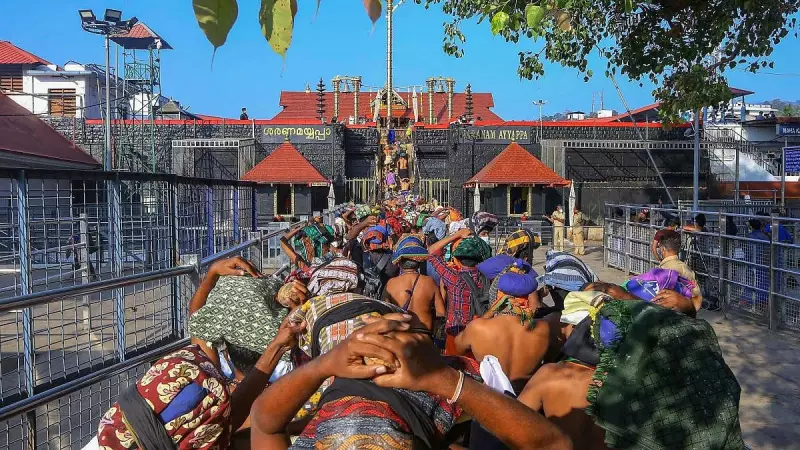
The Kerala High Court has raised serious concerns over the continued sale of synthetic kumkum to devotees at the famed Sabarimala temple, despite clear judicial orders against the practice. The court observed that this illegal activity appears to be ongoing, raising questions about enforcement and compliance at the pilgrimage site.
Court Identifies Key Distributor
A bench comprising Justices Raja Vijayaraghavan V and K V Jayakumar made a significant observation during the proceedings. The judges noted that, based on initial evidence, the principal entity behind the distribution of the synthetic vermilion appears to be a firm operating under the name 'Ideal Enterprises'. Acting on this prima facie finding, the court has formally issued a notice to this enterprise, demanding its response.
Violation of Judicial Directives
The core issue highlighted by the court is the blatant disregard for its previous orders. The sale of artificial kumkum, which may contain harmful chemicals and lacks the sanctity of the traditional offering, has been a point of contention. The court's intervention underscores a failure in halting this trade, which potentially affects the health and religious sentiments of millions of pilgrims who visit the hill shrine annually.
The bench's remarks came on December 4, 2025, as it reviewed the matter. The persistence of the sale indicates a significant gap in on-ground monitoring and regulatory control at one of India's most prominent pilgrimage centers. The court's move to pinpoint and notify a specific distributor marks a crucial step towards enforcing accountability.
Implications and Next Steps
This development places direct scrutiny on the supply chain of temple offerings. The notice to Ideal Enterprises compels the firm to explain its role and compliance with existing regulations. The case also puts pressure on temple authorities and state agencies to strengthen oversight mechanisms to ensure that only safe, authentic materials are sold to devotees.
The court's proactive stance sends a strong message about upholding the rule of law and protecting religious practices from commercial exploitation. The outcome of this legal notice and subsequent hearings will be closely watched, as it could set a precedent for how similar issues are managed at major religious sites across Kerala and beyond.