MP High Court Intervenes to Protect Indore's Green Cover and Avian Residents
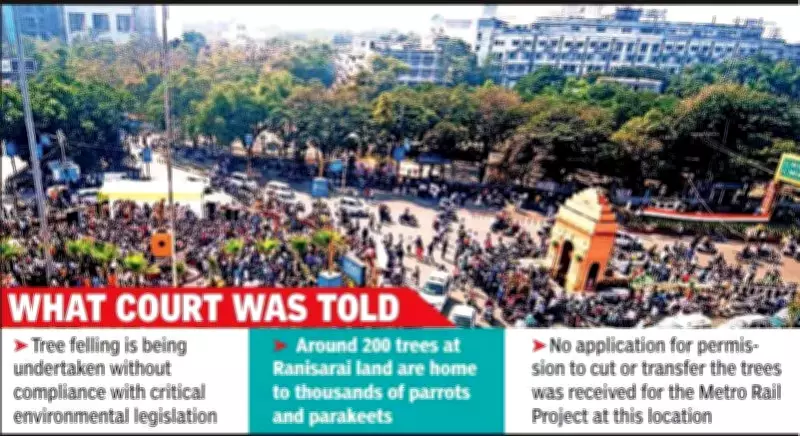
In a significant environmental ruling, the Indore bench of the Madhya Pradesh High Court has issued an interim stay on the proposed cutting or transfer of approximately 200 trees at Ranisarai Land in Indore. This decision comes amidst plans to construct a metro rail bridge at the site, which has sparked concerns over potential ecological damage and violation of statutory norms.
Judicial Bench Halts Tree Felling Citing Environmental Laws
The Bench, comprising Justice Vijay Kumar Shukla and Justice Alok Awasthi, delivered this directive while hearing a Public Interest Litigation (PIL) filed by Priyanshu Jain. The petitioner raised serious objections to the large-scale felling of trees, alleging that it was being undertaken without obtaining the necessary statutory permissions mandated by environmental legislation.
Advocate Lavesh Saraswat, representing the petitioner, presented compelling arguments highlighting the irreversible environmental consequences of the proposed action. He emphasized that the loss of green cover would not only degrade the local ecosystem but also disrupt the ecological balance, with far-reaching impacts on biodiversity and climate resilience.

Critical Habitat for Protected Bird Species at Risk
A key aspect of the petition focused on the ecological significance of the trees, which serve as a vital habitat for thousands of parrots and parakeets. The counsel pointed out that these avian species are protected under the Wildlife Protection Act, and their displacement would constitute a violation of wildlife conservation norms.
The court was informed that the trees provide essential nesting and roosting sites for these birds, making their preservation crucial for maintaining local biodiversity. This argument underscored the interconnectedness of environmental protection and wildlife conservation, reinforcing the need for stringent regulatory compliance.
Allegations of Non-Compliance with Environmental Legislation
Advocate Saraswat contended that the tree felling activities were being carried out without adherence to critical environmental laws, including the Forest Conservation Act, 1980, and the Environment (Protection) Act, 1986. He argued that such oversight not only jeopardizes ecological integrity but also sets a dangerous precedent for future infrastructure projects.
To substantiate these claims, the petitioner's counsel drew the court's attention to a letter dated January 9 from the Indore Municipal Corporation's garden officer. This document confirmed that no application for permission to cut or transfer the trees had been received for the Metro Rail Project at Ranisarai Land, highlighting a procedural lapse in the planning process.
Constitutional and Legal Implications of the Case
The Bench noted that the illegal felling of trees without valid permission from competent authorities amounts to a violation of Articles 48A and 51 of the Constitution of India. These provisions emphasize the state's duty to protect and improve the environment and safeguard wildlife, respectively.
Furthermore, the court observed that the matter involves substantial questions relating to environmental protection, which forms an integral part of Article 21 of the Constitution concerning the right to life. This interpretation reinforces the principle that a healthy environment is essential for the enjoyment of fundamental rights, including the right to clean air, water, and ecological balance.
Interim Relief and Future Proceedings
As an interim measure, the court directed that no tree shall be cut or transferred at Ranisarai Land, Regal Square, Indore, until the next hearing scheduled for February 16. This stay order provides temporary protection to the trees and their avian inhabitants, allowing for further judicial scrutiny of the project's environmental compliance.
The court also issued notices to the respondents, including the state and central governments, the MP Metro Rail Corporation, and other relevant authorities. These notices require the respondents to present their arguments and justifications for the proposed tree felling, ensuring a balanced and transparent adjudication process.

This case highlights the growing judicial emphasis on environmental accountability in infrastructure development. It underscores the need for project planners to integrate ecological considerations into their designs and obtain all necessary clearances before proceeding with activities that could harm natural resources.
The outcome of this PIL could set a precedent for similar disputes across the country, reinforcing the role of the judiciary in upholding environmental laws and constitutional mandates. As the hearing approaches, stakeholders will closely monitor the proceedings, which could influence future policies on sustainable urban development and wildlife conservation.