Court Scrutinizes Discrepancies in Sonam Wangchuk's Speech Transcript in Detention Case
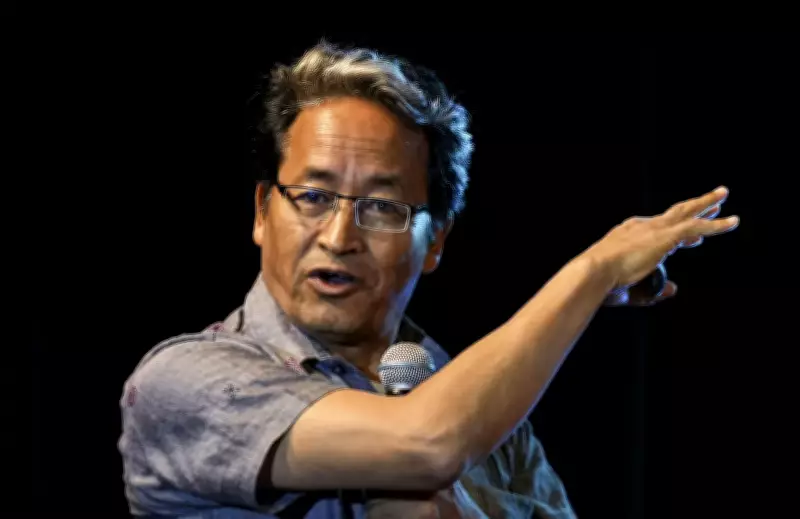
The legal proceedings concerning the detention of climate activist Sonam Wangchuk have encountered a significant hurdle, centering on the accuracy of the transcript of his speech. During a hearing on Monday, Wangchuk's wife, Gitanjali Angmo, informed the court that the alleged statements used as the basis for his detention order were never actually uttered by him. She highlighted discrepancies between Wangchuk's original speech in the Ladakhi language and the translated transcript relied upon by government authorities.
Judicial Observations on Transcript Variance
A bench comprising Justices Aravind Kumar and PB Varale expressed preliminary agreement with the allegations, noting a clear variance between the speech and its transcription. "If the speech is of 3 minutes and your transcription goes on for 7-8 minutes, there is certainly malice in that," the bench remarked. This observation underscores concerns about the integrity of the evidence presented by the detaining authority.
Senior advocate Kapil Sibal, representing Wangchuk's wife, argued that the detention was based on an incorrect transcript, rendering the authority's decision invalid due to reliance on non-existent material. He presented a comparative analysis to the bench, detailing the differences between Wangchuk's actual words and the government's translated version. After reviewing this chart, the bench addressed additional solicitor general K M Natraj, stating, "The tabular list you have filed, some of these things don't even find a place in the detention order. There should be at least the correct transcript of what he says! There should not be a variance."
Technological Solutions and Further Legal Arguments
In response to the ASG's defense that the translation was conducted by a government department, the bench suggested the use of artificial intelligence for translation, noting it could achieve at least 98% accuracy. This comment highlights the potential for technological tools to enhance transparency and accuracy in legal proceedings.
Sibal further contended that the detention was illegal because the videos cited in the detention order were not provided to Wangchuk, violating legal protocols. He informed the court that four videos of Wangchuk's speeches, referenced in the order, were absent from the pendrive handed to him on September 29, 2025.
Court Orders Evidence Production
To address these issues, the bench directed the Jodhpur jail superintendent to produce the pendrive in a sealed box for examination. "The learned senior counsel would submit that the pendrive furnished to detenu on 29th Sept 2025, is in his custody... we direct the same pendrive... shall be obtained in a sealed box...," the bench ordered. This step aims to verify the contents of the evidence and ensure a fair review of the detention's legality.
The case continues to unfold, with the court emphasizing the need for accurate evidence and adherence to legal standards in detention matters.