

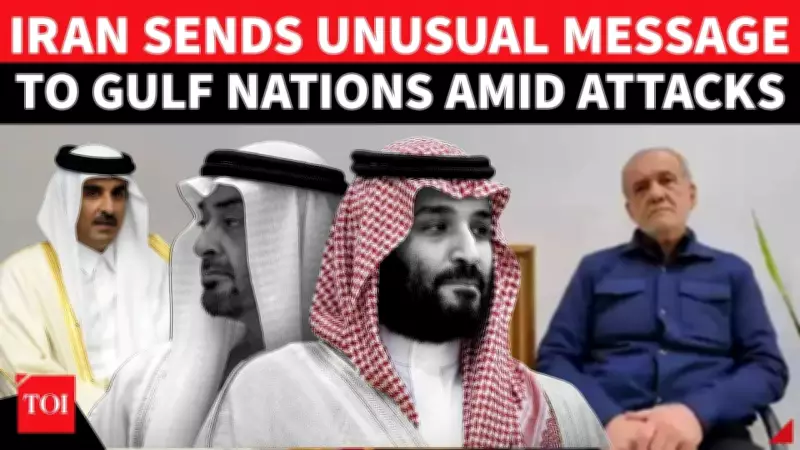
Iran's Unusual Warning to Gulf States Amid Escalating Tensions
In a significant diplomatic development, Iranian President Masoud Pezeshkian has delivered a mixed message to neighboring Gulf states, combining an apology for past attacks with a stern warning of future retaliation if provoked. This statement comes amid a backdrop of back-to-back military engagements in the region, highlighting the fragile state of Middle Eastern geopolitics.
Apology Coupled with a Clear Ultimatum
During an address broadcast by Iranian state television, President Pezeshkian expressed regret for the attacks launched by Iran during its ongoing conflicts with Israel and the United States. "I must apologise on my own behalf and on behalf of Iran to the neighbouring countries that were attacked by Iran," he stated, acknowledging the impact on regional stability.
However, the apology was swiftly followed by a firm condition. Pezeshkian asserted that Tehran has agreed, through its interim leadership council, to refrain from further strikes on neighboring nations unless those countries initiate an attack on Iran first. "The interim leadership council agreed yesterday that no more attacks will be made on neighbouring countries and no missiles will be fired unless an attack on Iran originates from those countries," he clarified, underscoring a defensive posture with clear red lines.

Context of Regional Conflict and Strategic Messaging
This unusual message emerges against a volatile regional landscape marked by recent incidents, including:
- Missile attacks on Israeli cities like Tel Aviv.
- Targeted strikes on U.S. military assets in areas such as Jordan and Kuwait.
- Heightened tensions involving non-state actors like Hezbollah.
Iran's stance appears to be a strategic move to balance diplomatic outreach with military deterrence. By apologizing, Tehran seeks to mitigate regional backlash and isolate its conflicts with Israel and the U.S., while the warning serves as a deterrent against Gulf states potentially hosting or supporting foreign bases that could threaten Iranian interests.
Implications for Gulf Diplomacy and International Relations
The warning, encapsulated in the phrase "will make you pay", signals Iran's readiness to escalate if Gulf nations are perceived as complicit in attacks. This dynamic complicates efforts for de-escalation, as it directly ties regional stability to the actions of individual states.
Moreover, this development occurs alongside other geopolitical maneuvers, such as Russia criticizing Arab nations for hosting U.S. bases and high-level communications between global powers. It reflects a broader pattern where Middle Eastern conflicts are increasingly intertwined with great-power rivalries, making local diplomacy a critical flashpoint.
In summary, President Pezeshkian's address represents a nuanced attempt by Iran to navigate complex regional tensions. While offering an olive branch through apologies, the underlying message remains one of strength and readiness to respond forcefully to any perceived threats, setting a cautious tone for future interactions in the Gulf.






