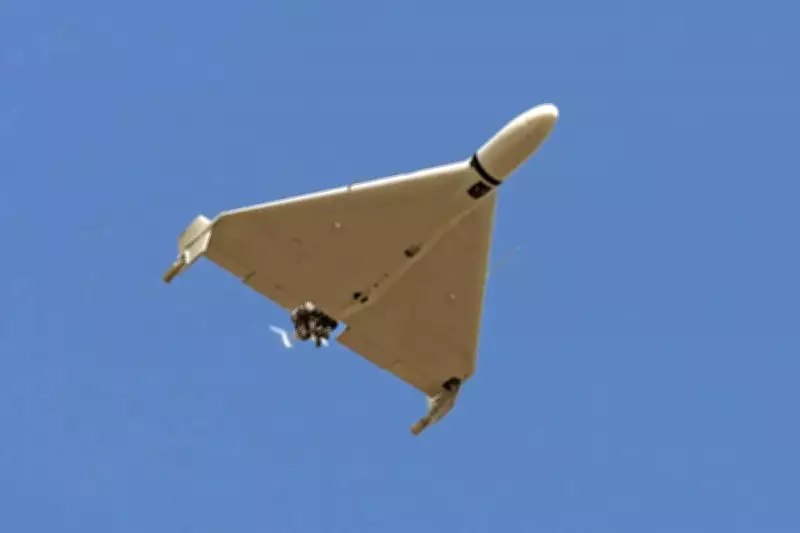
Iran's Cheap Drone Onslaught: A 72-Hour Havoc Across the Middle East
In a dramatic shift from spectacle to stamina, Iran has unleashed a relentless campaign of cheap drone attacks across the Middle East, targeting Israel and multiple Gulf states over a 72-hour period. This new strategy aims to exhaust expensive air defense systems and rattle populations, transforming the conflict into a drawn-out endurance test rather than a single event.
Driving the News: From Barrages to Sustained Pressure
According to a Financial Times report, Iran is moving away from the large, concentrated barrages used in last year's 12-day war with Israel. Instead, Tehran has adopted a steady, repeatable rhythm of launches designed to keep air-defense networks constantly activated, deplete interceptor inventories, and instill fear across the region. Since the US and Israel began striking Iran, western officials report that Tehran has responded with ballistic missiles and drones in over 25 waves, targeting a wide set that includes Israel and US partners in the Gulf.
The conflict's geographic reach is staggering, directly involving at least 11 countries and disrupting oil and gas flows while shaking global financial markets, as noted in an Axios report that described it as an "earthquake in the Gulf." In the war's opening hours, Iran unleashed waves of ballistic missiles and low-cost drones not only at Israel but also at the UAE, Bahrain, Kuwait, and Qatar, instantly widening the battlefield. By the second day, the campaign expanded to Saudi Arabia, Qatar, and Oman.

Iran had warned that any strike on its soil would prompt retaliation against Israel and US bases across the Gulf and in Iraq—a threat it quickly realized. As US President Donald Trump stated that Operation Epic Fury is expected to last four to five weeks, the window for further escalation remains wide, with Iran's reliance on cheap drones signaling a strategy to spread fear and destabilize the broader Middle East.
Why Iran is Leaning on Cheap Drones
Iran's retaliation arithmetic is lopsided by design. Bloomberg framed the dynamic with brutal simplicity: "Iran's Missile Math: $20,000 Drones Take on $4 Million Patriots." In this fight, Iran doesn't need to win the sky; it just needs to make the sky unaffordable. The Shahed-136 drone, while slow and loud, serves three critical purposes for Tehran:
- Forces defenders to spend money and burn inventory: Patriot interceptors are expensive, and advanced systems like THAAD cost even more. Gulf and US defenses have been effective, but stockpiles don't refill overnight, creating a financial strain.
- Drones scale for disruption: They can be produced in large numbers and launched in waves that don't have to be perfect to cause panic. Seth Frantzman, a drone-warfare analyst, told The New York Times that even when Shaheds underperform, they can still slip through and create disorder, giving Iran a cheap air force-like weapons system.
- Widens the war map: Drones drifting toward Gulf cities, ports, hotels, and oil infrastructure blur the line between military confrontation and everyday life, turning countries that prefer to remain mediators into unwilling participants.
The Financial Times described Iran's approach as a two-track campaign: sustained barrages toward Israel paired with intensive attacks on US partners in the Gulf, including civilian infrastructure. The drone fits both tracks because it's cheap enough to expend and politically potent enough to frighten.
What's New in Iran's Retaliation Strategy
In the last major Israel-Iran confrontation, Iran's attacks were often telegraphed and dramatic. This time, the rhythm has changed. A former Israeli security official, quoted in the Financial Times, described a deliberate shift toward attrition, calling it a "drizzle" compared to last year's attacks. The change isn't just in tempo but also in targeting and delegation:

- From spectacle to steady pressure: Instead of headline-grabbing barrages, Iran is testing whether constant, smaller attacks can stretch defenses and force hard choices about what to intercept. Some threats were deemed not dangerous enough for premium interceptors or evaded defenses in growing numbers.
- A broader strike portfolio: Hitting civilian areas in Gulf states changes the political equation. Benham Ben Taleblu of the Foundation for Defense of Democracies suggested in the Financial Times that Iran may be escalating "hard, fast and early" to create a crisis so intense that US partners pressure Washington and Israel to stop.
- A more decentralized trigger finger: Iran's foreign minister, Abbas Araghchi, described a military operating on pre-set guidance rather than real-time central control, signaling resilience and planting plausible distance between civilian leaders and unintended strikes, such as those in Oman.
The Strategic Bet: Drain Interceptors, Crack Coalitions, Buy Time
Iran's cheap drones are not a replacement for its missile force but a way to sequence it. Analysts quoted by Bloomberg suggest Iran may be using large numbers of Shaheds to conserve more damaging ballistic missiles for later phases while keeping pressure constant. Western officials in the Financial Times described retaliatory launches in over 25 waves, resembling endurance tactics.
Psychologically, the steady barrages produce an "overwhelming feeling" in Israel, as Danny Citrinowicz noted, forcing people to stay near shelters. In the Gulf, the message is that even the safest cities can be reached, raising the costs of staying out of the war. Kelly Grieco of the Stimson Center summed up the logic in Bloomberg's report: "Attrition strategy makes operational sense from Iran's perspective," calculating that defenders will exhaust interceptors and Gulf political will could fracture.
What's Next: Testing Constraints and Adaptation
Iran's cheap-drone strategy will be tested by two constraints: launcher survival and defender adaptation.
- Expect air defenses to triage harder: As Iran sends low-cost threats, pressure will increase to conserve premium interceptors for missiles and use cheaper methods against drones, such as short-range air defenses or electronic warfare.
- Watch for "phase shifts" from Tehran: If Iran believes attrition is working or fears launch infrastructure degradation, it may change the mix to fewer drones and more ballistic missiles or precise systems.
- The Gulf escalation track is accelerating: Incidents like the drone strike on the US Embassy in Riyadh, reported by Axios, increase the risk of expanded retaliation cycles and raise stakes for Gulf governments.
- The political clock matters: Attrition campaigns aim to outlast an opponent's willingness to pay financially and politically, with cheap drones making "endurance" a core strategy.
Iran's "drizzle" of drones is not a shrug but an attempt to make the war last just long enough for someone else to demand it stop, reshaping the Middle East conflict landscape.