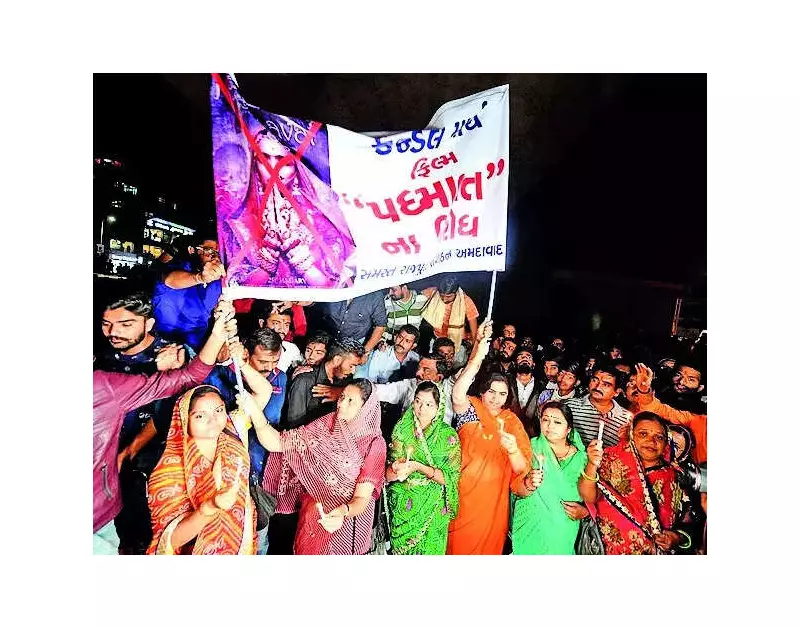
An Ahmedabad sessions court has delivered a significant verdict, rejecting the Gujarat government's application to withdraw a criminal prosecution against 19 activists of the Karni Sena. The case stems from violent protests against the release of the film 'Padmavat' back in 2018.
Court Slams 'Personal Interest' Over Public Good
In a firm order, Additional Sessions Judge Hardik Shah refused to permit the state's plea. The court observed that the alleged offences were committed "to achieve personal interest and to maintain dominance of a particular community, ignoring the public interest." This strong remark underscored the judiciary's stance against acts of vandalism disguised as protest.
The court meticulously noted that the accused had caused substantial property damage estimated at Rs 16.4 lakh during the violent incident. The judge emphasized that a court cannot merely rubber-stamp a government's request for withdrawal under Section 321 of the Code of Criminal Procedure (CrPC) without independent application of mind by the public prosecutor.

Chronology of the Violent Protest and Legal Battle
The roots of the case go back to January 23, 2018. A candle march organized by the Karni Sena in Ahmedabad to protest the Sanjay Leela Bhansali film 'Padmavat' spiraled into violence. The police subsequently booked 19 participants for a slew of serious charges.
The charges included:
- Rioting and unlawful assembly
- Arson and criminal conspiracy under the Indian Penal Code (IPC)
- Section 3(1) of the Damages to Public Property Act
- Section 135(1) of the Gujarat Police Act
After a thorough investigation, the police filed a chargesheet. The case has been pending trial in the sessions court since 2019. The state government first attempted to withdraw the case in a JMFC court in 2022, but that request was also refused.
Government's 'Emotional Youths' Argument Fails in Court
Undeterred, the state government then approached the Ahmedabad (rural) sessions court. In its submission, the government argued that the decision to withdraw the prosecution was taken in the larger public interest and would aid the administration of justice. It contended that the accused were not hardened criminals but youngsters who acted in the heat of passion and were high on emotions during the protest.
However, Judge Shah found this reasoning insufficient. The court pointed out that the public prosecutor, who is required to independently assess such requests, did not apply his mind or express a conclusive opinion on the matter. The withdrawal seemed to be solely based on the government's administrative order, which the court found legally untenable given the serious nature of the offences involving significant public property damage.
This ruling reinforces the principle that the withdrawal of prosecution is a serious judicial function, not an automatic administrative act. It ensures that cases involving substantial vandalism and violence are scrutinized thoroughly, balancing the state's prerogative with the need for accountability for acts that harm public order and property.