In a significant ruling that reinforces judicial independence, a trial court in Uttar Pradesh has firmly rejected the state government's controversial attempt to withdraw criminal prosecution against the accused in the 2015 Mohammad Akhlaq lynching case. This decision, delivered on December 23, 2025, marks a pivotal moment in a nearly decade-long struggle for justice that has exposed deep faultlines within both the executive and judicial systems of India.
The Dadri Lynching and the Long Road to Justice
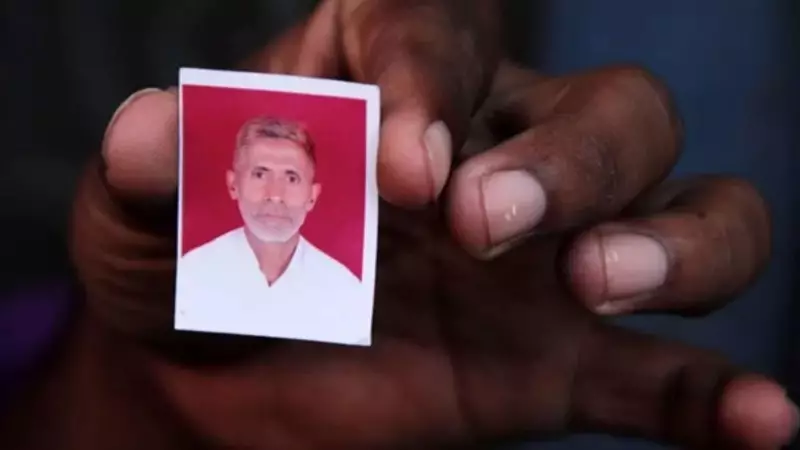
The horrific incident that sparked this legal battle occurred in September 2015 in Dadri, Uttar Pradesh. Mohammad Akhlaq, a 50-year-old Muslim man, was brutally dragged from his home and beaten to death by a mob. The violence erupted following an announcement from a local temple alleging that Akhlaq had slaughtered a cow and stored beef in his refrigerator. His son, Danish, was also attacked and left grievously injured.
This crime quickly became a national symbol of the politics surrounding cow vigilantism, highlighting a dangerous atmosphere where rumours, religious symbolism, and perceived political sanction merged into lethal force. For years, the victim's family has fought an arduous battle within a legal system often perceived as sluggish and biased.

State's Controversial Move and Judicial Pushback
In a move that alarmed legal experts and civil rights activists, the Uttar Pradesh government sought to withdraw the prosecution against the accused by invoking Section 321 of the Criminal Procedure Code. The state's application cited reasons such as alleged inconsistencies in witness statements, an absence of prior enmity, and insufficient recovery of weapons.
However, the trial court saw no merit in these arguments. In its detailed order, the court found no legal justification for abandoning prosecution in a case involving murder and communal violence. It directed that the trial must proceed expeditiously, with daily hearings and necessary protection for witnesses. This ruling stands as a stark contrast to the state's conduct, which appeared more focused on shielding the accused than securing justice for Akhlaq's grieving family.
A Pattern of Bias in the Pursuit of Justice
The court's order, while restoring some faith in the judiciary, underscores a troubling pattern in how executive power is exercised. The state's evident solicitude in this case, where the accused align with majoritarian sentiments, raises difficult questions. This is especially glaring when contrasted with the treatment of individuals from marginalised communities or political opponents who often languish in jail for years without trial based on far weaker evidence.
Observers point to other instances that reveal a similar bias:
- The 2018 Unnao rape case, where a BJP MLA was accused, saw delayed initial police action despite public allegations.
- In the 2021 Lakhimpur Kheri violence, where protesters were allegedly mowed down by a vehicle linked to a Union Minister's son, investigations proceeded slowly, with accountability emerging only after national outrage.
These examples collectively reveal a disturbing truth: the state is increasingly perceived not as a neutral prosecutor but as an entity influenced by political and ideological considerations.
The Broader Political Context and the Future of Justice
The Uttar Pradesh government's actions in the Akhlaq case cannot be viewed in isolation. They exist within a broader political landscape where cow protection has been aggressively mobilised as both a cultural and electoral tool. This environment has, at times, transformed vigilante violence into a form of ideological enforcement, where Muslim victims are routinely portrayed as suspects rather than citizens deserving equal protection under the law.
Legal analysts argue that by adopting the defence's reasoning—which relies on technicalities while ignoring the social reality of mob violence—the state effectively delegitimised the victim's experience and the broader pattern of hate crimes. Lynching thrives on collective aggression and public sanction, rarely leaving behind the neat forensic trails expected in ordinary crimes.

The December 23 court order is therefore more than a procedural victory. It represents a crucial, if belated, opportunity for India's legal system to correct its course. The final outcome of this case will determine not just the fate of one family, but the credibility of India's constitutional promise of unbiased and secular justice for all. As the case moves forward with daily hearings, the nation watches to see if genuine accountability will finally be delivered.