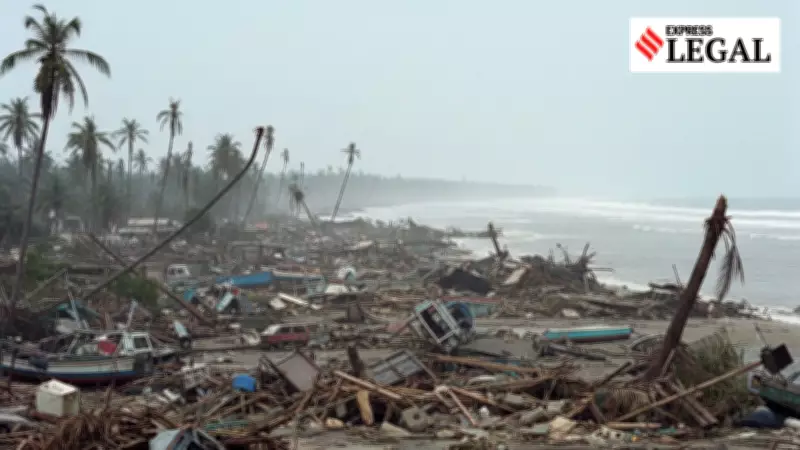
Calcutta High Court Delivers Landmark Ruling on Tsunami Compensation After Two Decades
In a significant judgment delivered nearly twenty years after the catastrophic 2004 Indian Ocean tsunami, the Calcutta High Court has ruled that administrative authorities cannot deny disaster relief compensation to entities solely based on their corporate status. The court quashed an order that had blocked compensation for a plantation company, directing the Andaman Administration to process and pay admissible compensation within twelve weeks.
Court Rejects Administration's Exclusion Argument
Justice Apurba Sinha Ray, presiding over the case on February 5, 2026, declared the administration's attempt to exclude the company from relief schemes as legally unsustainable. The administration had argued that National Disaster Management guidelines were intended strictly for "small and marginal farmers" and that corporate entities fell outside the scheme's purview.
The court firmly rejected this interpretation, observing that "if the petitioner is desirous of surrendering their possession in favour of the administration, the petitioner is entitled to claim compensation in respect of the relevant land being damaged due to a natural calamity which took place in the year 2004."

Background of the Two-Decade Legal Battle
The legal dispute originated from the devastating tsunami of December 26, 2004, which caused extensive damage to 54.85 hectares of land where the petitioner company conducted farming operations. The company claimed it was carrying out agricultural activities on the land and provided employment to more than 500 workers.
The timeline of this protracted legal struggle reveals:
- January 2005: The petitioner submitted three applications claiming damages totaling approximately Rs 11 crores for tsunami-related losses.
- Initial compensation of Rs 7.67 lakh was granted but subsequently withdrawn by the administration.
- 2012: The court first directed the administration to assess and compensate the petitioner's losses according to law.
- Multiple appeals followed, including division bench hearings and Supreme Court interventions.
- January 15, 2025: The administration issued its latest rejection order, which became the subject of the current petition.
Administration's Arguments and Court's Findings
Sumit Kumar Karmakar, counsel for the administration, presented several arguments against the compensation claim:
- The petitioners were not owners of the land nor recorded tenants
- The petitioner was merely a grantee whose grant had expired long ago
- Corporate entities should be excluded from relief schemes intended for individual farmers
The court systematically dismantled these arguments, noting that a coordinate bench had already ruled in 2012 that the petitioner, though registered as a company under the Companies Act, was effectively a farmer engaged in agricultural activities. The record showed that the administration had admitted the petitioner company's possession of the relevant land until 2014.
Critical evidence emerged from administration documents, including an inspection report that acknowledged "there existed a scientifically spaced and managed coconut and areca nut plantation on the subject land" based on photographs of standing crops and trees. The court noted that by admitting the grant expired in 2014, the administration indirectly confirmed the company's possession of the land during the 2004 tsunami.
Broader Implications for Disaster Relief Policy
This landmark judgment establishes important precedents for disaster management and corporate rights in India:

- Corporate status alone cannot disqualify entities from disaster relief compensation
- Administrative authorities must provide concrete evidence when excluding claimants from relief schemes
- The focus should remain on actual damage and need rather than legal categorizations
- Twenty-year delays in compensation resolution highlight systemic issues in disaster response mechanisms
The ruling comes at a symbolic moment, coinciding with the twentieth anniversary of one of modern history's most devastating natural disasters. It underscores the judiciary's role in ensuring equitable application of disaster relief policies, regardless of the legal structure of affected entities.