

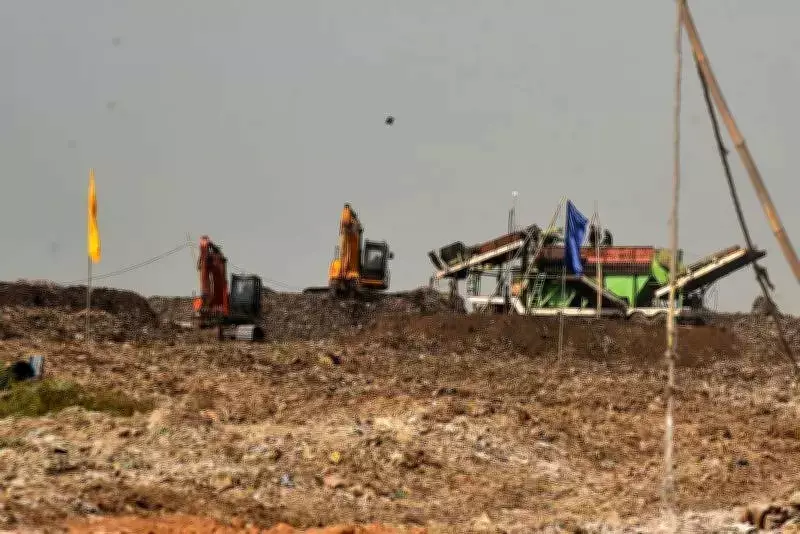
Chandigarh Administration Delays Dadumajra Dump Cleanup to May, Citing Unseasonal Rain
In a significant development, the Chandigarh administration has officially pushed back the deadline for the complete clearance of the Dadumajra dumping ground to the first week of May. This decision comes less than a month after the Union Territory informed the Punjab and Haryana High Court that the dump had been nearly cleared and would be fully cleaned by early April. The administration attributed this extension to disruptions caused by unseasonal rainfall, which has hampered ongoing cleanup operations.
High Court Hearing Reveals Allegations of Document Forgery
The division bench, comprising Chief Justice Sheel Nagu and Justice Sanjiv Berry, was presiding over a public interest litigation concerning the Dadumajra dumping site. During the proceedings, petitioner advocate Amit Sharma presented a detailed tabulated application that compiled instances of alleged forgery. This application highlighted the use of altered documents in previous court filings, including a detailed project report that had been relied upon to seek disposal of the PIL.
Senior standing counsel for the Chandigarh administration, Amit Jhanji, initially stated that they had not received a copy of this application, though it had been served to the municipal corporation. In response, Sharma clarified that the application was distributed using the same method as always and is strictly confined to presenting existing court records in a tabular format. He offered to demonstrate the material directly from the official record to substantiate the claims.

Court Directs Proper Adjudication of Serious Allegations
Chief Justice Sheel Nagu emphasized the gravity of the allegations, noting that issues relating to perjury and the submission of false documents are serious matters that require thorough adjudication. He directed that a copy of the application be furnished to all concerned parties before arguments could proceed. This step ensures that all sides have adequate opportunity to review and respond to the documented inconsistencies.
Sharma further informed the court that another application, which tabulates issues concerning false statements on affidavit, is already complete and ready for consideration. This application arises directly from the records previously placed before the court, adding another layer of scrutiny to the proceedings.
Administration Assures No Fresh Dumping, Only Cleanup Remains
During the hearing, Jhanji submitted that no fresh dumping is occurring at the Dadumajra site; only the clearing process remains. He explained that, based on recent instructions, the cleanup would be finalized by the first week of May. Jhanji requested that the matter be taken up at that time, noting that while an internal target of April 30 had been considered, a buffer period was kept in anticipation of potential disruptions.
"I have spoken to the concerned officials as recently as Thursday evening," Jhanji added, attempting to reassure the court of the administration's commitment to the timeline.
Petitioner Highlights Slow Progress and Persistent Issues
In a pointed rebuttal, Sharma highlighted the slow progress on the ground despite multiple court hearings. "For the last 10 hearings, it has been some point or the other… and the dump continues to be there," he submitted. Sharma stressed that the issues of false statements and altered documents are critical and warrant the court's immediate attention, underscoring the need for accountability beyond mere cleanup deadlines.
Court Lists Matter for May Hearing
After considering submissions from both sides, Chief Justice Sheel Nagu directed that a copy of the application detailing alleged forgeries be provided to the Chandigarh administration. The court has listed the matter for hearing in the first week of May, to be taken up after the urgent list. This scheduling allows time for all parties to prepare their responses while keeping the pressure on the administration to meet the new cleanup deadline.

The extended deadline and ongoing legal scrutiny reflect the complexities involved in addressing long-standing environmental and administrative challenges in Chandigarh. The case continues to draw attention to issues of transparency and efficiency in public projects, with the court playing a pivotal role in ensuring accountability.





