Delhi Court Acquits Accused in 2020 Northeast Delhi Riots School Arson Case
A Delhi court has acquitted a man accused of setting fire to a senior secondary school in northeast Delhi's Brijpuri area during the February 2020 communal riots. The court found that the prosecution's case was riddled with serious legal and evidentiary shortcomings that made conviction untenable.
Court Cites Multiple Infirmities in Prosecution Case
Additional Sessions Judge Parveen Kumar Singh of Karkardooma court, in his January 28 judgment, highlighted several critical flaws in the prosecution's arguments. The court noted an unexplained delay of nine days in registering the First Information Report (FIR) despite the arson occurring on February 25, 2020, with the FIR being filed only on March 5, 2020. This delay assumed particular significance because the prosecution's case rested entirely on the testimony of a single eyewitness.
The judge observed that such procedural lapses made it "highly unsafe" to sustain a conviction, thereby entitling the accused to the benefit of doubt under Indian criminal jurisprudence.

Contradictory Police Testimony Undermines Prosecution
At the heart of the court's decision was the inconsistent testimony of Constable Piyush, whose evidence formed the backbone of the prosecution's case. The court noted that the constable had taken materially different positions in two separate trials arising from the same incident.
During the current trial of Mohd Faizan, Constable Piyush claimed that he personally identified the accused because the informer who tipped him off about the arson had left the scene by the time he arrived. However, during the earlier trial of co-accused Shamim Ahmad and Mohd Kafil, the same police officer had testified that the informer identified the accused, and he merely recalled them as being part of the rioters.
The court held that this fundamental inconsistency caused the witness to "lose credibility" regarding the identification of the accused, severely damaging the prosecution's case.
Additional Evidentiary Gaps and Procedural Lapses
The judgment further identified several other deficiencies in the prosecution's presentation:
- Despite claims that Constable Piyush witnessed the incident, informed his Station House Officer, and named the accused on the same day, the court noted his delayed examination as a witness, observing that he "wasn't examined immediately" even after the FIR was registered.
- The prosecution failed to produce a duty roster proving that Constable Piyush was indeed deployed at Brijpuri Pulia on February 25, 2020.
- Six other police personnel reportedly present with the constable during the incident were not examined, leaving his testimony without corroboration—a deficiency the investigating officer failed to address.
- Further contradictions emerged regarding whether additional police force was requested, with the constable giving conflicting accounts in different trials.
Case Background and Financial Impact
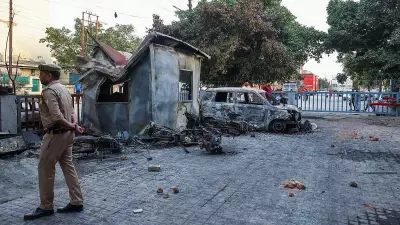
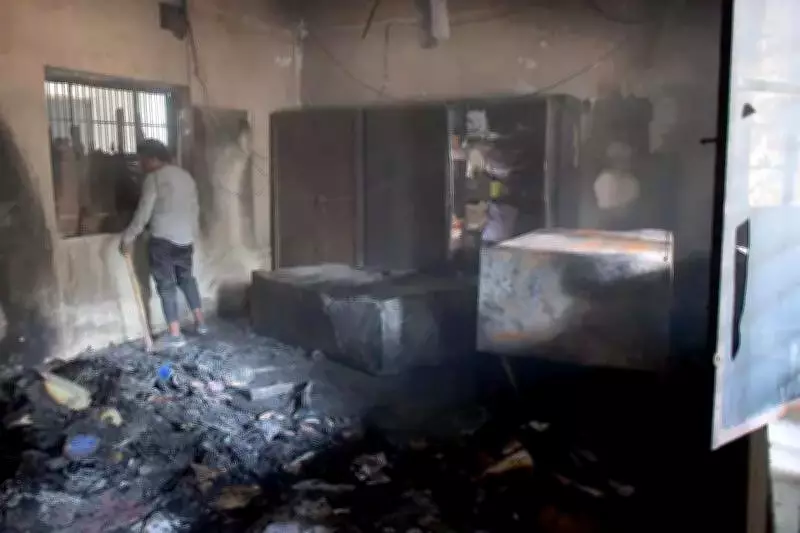
The case relates to the torching of Arun Modern Public Senior Secondary School during the February 2020 northeast Delhi riots, which caused an estimated loss of Rs 1.25 crore. Three individuals—Mohd Kafil, Shamim Ahmad, and Mohd Faizan—were named as accused in the case.
While Kafil and Ahmad were acquitted in 2025, Faizan, who absconded in 2022 before being arrested in August 2025, has now been cleared of all charges. The court's detailed judgment systematically dismantled the prosecution's evidence, highlighting how procedural irregularities and inconsistent witness testimony can undermine even serious criminal cases.
This acquittal adds to the growing list of cases from the 2020 Delhi riots where courts have found prosecution evidence insufficient, raising questions about investigation quality and evidentiary standards in riot-related prosecutions.