A Delhi court has rejected a man's plea seeking to preserve his wife's grave in the Shaheen Bagh area, stating that the Holy Quran does not explicitly address the reuse of burial spaces. The court relied on Hadith, or sayings of the Prophet Muhammad, to reach its decision.
Case Background
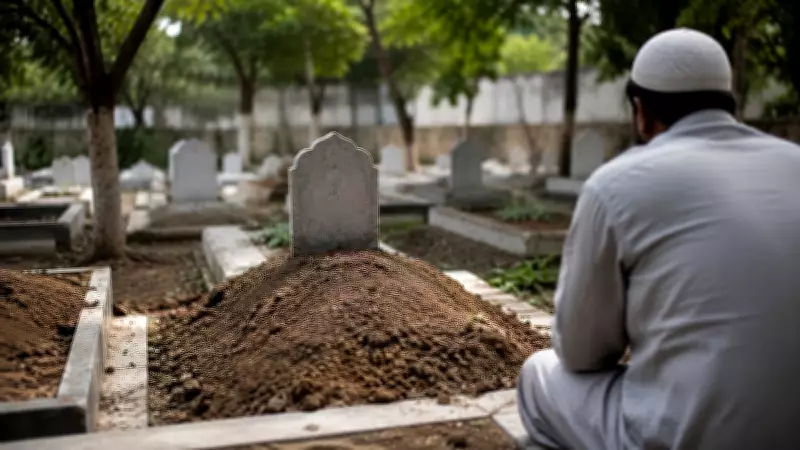
The petitioner, a resident of Shaheen Bagh, had moved the court after authorities planned to reuse the burial ground where his wife was laid to rest. He argued that the grave should remain undisturbed as a matter of religious sentiment and personal respect.
However, the judge noted that both parties agreed that the Quran is silent on the issue of reusing burial spaces. Instead, they referred to Hadith, which provides guidance on Islamic practices.

Court's Reasoning
According to the court, Islamic jurisprudence allows for the reuse of graves after a certain period, provided that the remains have decomposed. The judge emphasized that no permanent right to a grave exists under Islamic law, and the community's need for burial space must be balanced against individual sentiments.
The court further observed that the petitioner could not produce any specific religious edict or legal provision that prohibits the reuse of graves. The ruling cited scholarly interpretations that permit the recycling of burial plots to address space constraints in urban areas.
Impact and Reactions
The decision has sparked debate among religious groups and legal experts. Some argue that it aligns with practical needs in densely populated cities, while others express concern over the erosion of traditional practices.
According to the petitioner's lawyer, the family is considering an appeal. The lawyer stated, "We respect the court's decision but believe that the emotional attachment to a grave should be given more weight."
The case highlights the tension between religious customs and urban planning in India, where burial space is increasingly scarce.