Delhi High Court Permits Citizenship Application in Complex Passport Fraud Case
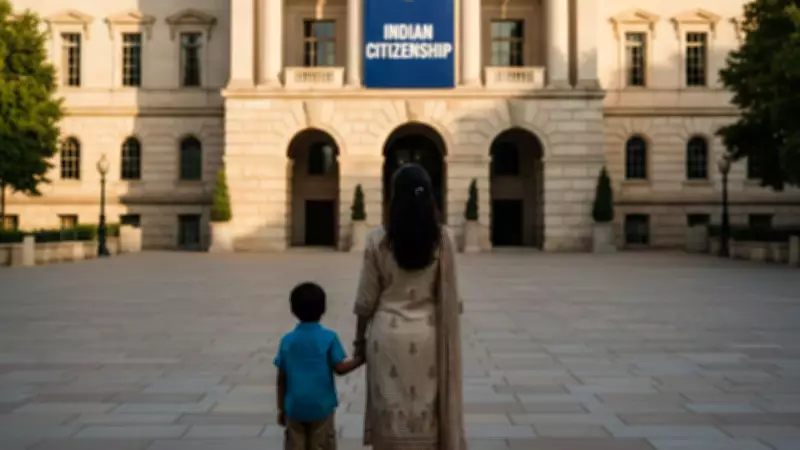
The Delhi High Court has recently issued a significant directive allowing a woman and her son to formally apply for Indian citizenship, following a plea that highlighted a distressing case of alleged passport fraud involving Pakistani documentation. Justice Purushaindra Kumar Kaurav presided over the matter, which centered on the woman's claim that her in-laws had fraudulently obtained a Pakistani passport for her under a different name after her marriage to a Pakistani national.
Background of the Legal Challenge
The woman, who originally held an Indian passport, married a Pakistani citizen. She alleged that post-marriage, her in-laws deceitfully secured a Pakistani passport for her under a new identity, creating a dual documentation crisis. Her son was born in Karachi and only possessed a Pakistani passport. After the dissolution of her marriage, both mother and son returned to India, where she sought Indian citizenship under Section 5(1)(f) of the Citizenship Act, 1955.
However, the central government rejected her application due to inconsistencies between her Pakistani passport details and her earlier Indian passport. This rejection prompted the legal challenge in the Delhi High Court, where the woman and her son contested the decision, also requesting the restoration of her original Indian passport and consideration of her son's citizenship application.

Court's Observations and Directions
Justice Kaurav noted the peculiar facts and circumstances of the case, emphasizing that travel records indicated the woman had used her original name when traveling to Pakistan. The court observed that she lacked documents in the new name listed on her Pakistani passport. During proceedings, the central government's counsel suggested that her citizenship application could be considered if filed online under her changed name, but the court allowed her to apply under her original name instead.
The court directed the petitioners to file their application under Section 5(1)(f) and/or Section 6 of the Citizenship Act, 1955, via the official online portal, submitting all necessary documents. It mandated that the state government process the application promptly and forward it to the central government for a final decision without undue delay.
Legal Implications and Protections
In its findings, the court clarified that the petitioners, having entered India with valid passports and stayed under court directions, should not be treated as illegal migrants. It also extended an earlier order preventing their repatriation until the case is conclusively decided. The court noted no other impediments to considering their citizenship application under the relevant sections of the Act.
Advocates Shimpy Arman Sharma, Kiranjeet Rajput, and Shivangi Goel represented the petitioners in this landmark case, which underscores the complexities of cross-border marital issues and citizenship laws in India.