Delhi High Court Declines to Hear Petition Over Indian Woman's Death in Nepal Unrest
The Delhi High Court on Thursday refused to entertain a petition filed by a Ghaziabad-based businessman, Rambir Singh Gola, who alleged that negligence by the central government led to the death of his wife in Kathmandu during last year's Gen-Z protests in Nepal. According to news agency PTI, the petitioner had approached the court claiming that authorities failed to assist Indian citizens during the unrest in September 2025.
Court Questions Adjudicability and Suggests Alternative Legal Avenues
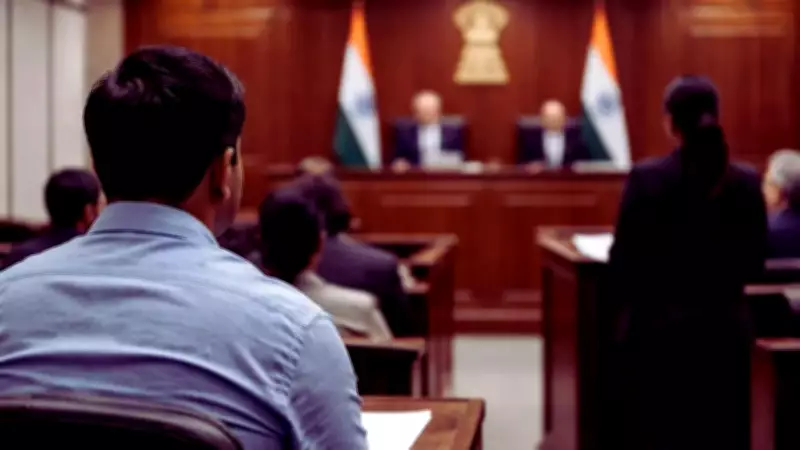
Justice Purushaindra Kumar Kaurav stated that the petition was "incapable of being adjudicated" in writ jurisdiction, as it would require examination of disputed questions of fact and law. He asked the petitioner to pursue other legal remedies. When Gola's counsel argued that the petition raised a "serious issue" and that there was material to show authorities had abandoned Indian citizens, the court responded firmly.
"For that, don't you think evidence is required? They are fully incapable of being adjudicated by the high court. Mere declaration that the fundamental right is violated is not the sole relief. It must entail some consequential relief," the judge remarked. He expressed sympathy with the petitioner and suggested that the issue of assistance to Indian citizens abroad could be raised in a broader public interest.
"PIL is a better remedy for you. The court (dealing with PIL) can look into your grievance," the court stated. Following these observations, the petitioner's counsel withdrew the plea with liberty to take appropriate recourse in law.
Background of the Case and Initial Demands
In his petition, Gola had sought:
- Compensation of Rs 25 crore from the central government
- Compensation of Rs 75 crore from Hyatt hotels for the "tragic and avoidable" death of his wife on 9 September 2025
- The constitution of a "high-level" judicial commission to investigate the incident
- A formal, public apology from the authorities and Hyatt hotels
However, during Thursday's hearing, his counsel said she was not inclined to press these prayers, restricting the relief sought to a "declaration" that his fundamental right under Article 21 of the Constitution had been violated. She also sought directions to the Centre to frame an appropriate protocol for Indians travelling to "sensitive" nations.
Details of the Incident and Allegations
Gola and his wife had travelled to Nepal on a pilgrimage and were staying at the Hyatt Regency Kathmandu in September 2025. The plea alleged that despite repeated distress calls and foreseeable danger, there was no evacuation or consular intervention by the Indian Embassy or the Ministry of External Affairs. It said authorities abdicated their constitutional duty and left the petitioner "orphaned in a foreign land."
The petition also accused the hotel management of "willful misrepresentation, fraud, and gross negligence," claiming it failed to provide an honest risk assessment or facilitate their safe departure. "Contrary to all assurances and representations, on the night of September 9, 2025, a violent mob attacked the Hyatt Regency Kathmandu, setting parts of the building ablaze," the petition detailed.
It further described how "left with no alternative between burning alive and attempting a desperate escape, the petitioner and his wife fashioned a makeshift rope by tying together bedsheets and curtains-- a pathetic testament to their utterly abandoned state. During the perilous descent, the makeshift rope either gave way or Smt. Rajesh Gola lost her grip."
Court's Earlier Stance and Procedural Developments
Earlier this month, the court had indicated that unless the reliefs sought were "modified," it would not be able to proceed with the case. This procedural nudge led to the counsel's decision to narrow the scope of the petition during the latest hearing, focusing solely on the declaration of rights violation and protocol framing, which the court ultimately found insufficient for writ jurisdiction.