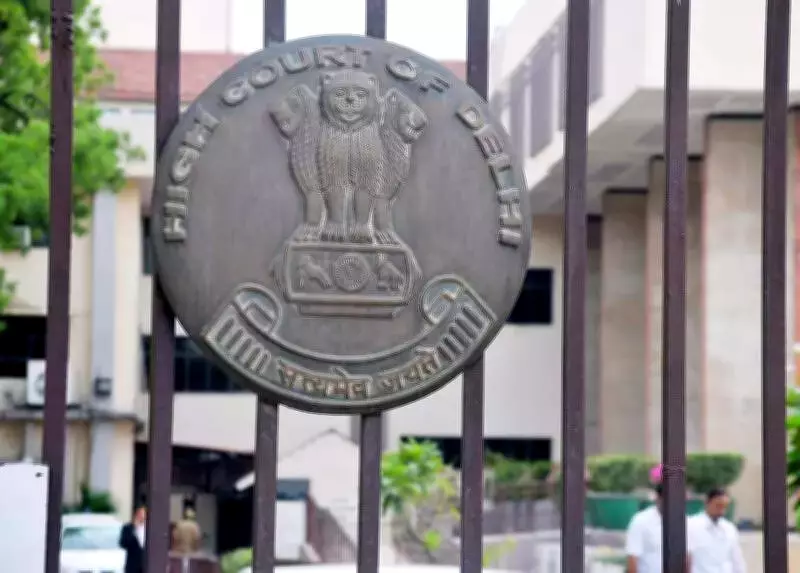
Delhi High Court Condemns 13-Year Delay in Arresting Murder Convict as Systemic Failure
The Delhi High Court has strongly criticized what it termed a "systemic failure" in the criminal justice system, highlighting an "extraordinary delay" of 13 years in apprehending a murder convict even after his appeal was dismissed back in 2012. A bench comprising Justices Navin Chawla and Ravinder Dudeja expressed deep concern that such incidents severely undermine public trust in the legal framework.
Case Details and Judicial Observations
The court noted that the convict was originally found guilty by a trial court in January 2009 and sentenced to life imprisonment. During the pendency of his appeal in the high court, his sentence was temporarily suspended for two months in December 2010. However, he absconded after this period and remained at large. Despite the high court dismissing his appeal in 2012, he was not arrested until October 13, 2025, as per a status report submitted by the jail superintendent.
"This is one of those cases where the appellant continued to enjoy the fruit of liberty for a long period of 13 years despite his appeal against conviction being dismissed by this court," the bench remarked. It emphasized that such episodes corrode the credibility of the criminal justice system, pointing to a serious lack of coordination among the trial court, jail administration, and police.
New Guidelines Issued to Prevent Future Lapses
In response to this glaring oversight, the high court has laid down comprehensive guidelines to ensure better enforcement of judicial orders. The court directed that whenever an order granting interim bail or suspension of sentence is issued, the registry must immediately communicate it to the trial court, the jail superintendent, and the jurisdictional police station.
If a sentence is suspended, the trial court is required to fix and record the date of surrender after accepting the bond. The jail superintendent has been tasked with informing the trial court whether the convict surrendered upon the expiry of the interim-bail period. In cases where the convict fails to surrender, the trial court must take appropriate action to secure his arrest and transfer to jail.
Additionally, the court mandated that if a convict's appeal is dismissed while he is on bail, or if an acquittal is overturned, the jail superintendent must promptly pass on information about the convict's surrender to the trial court. The trial court will then take necessary steps to ensure the individual is sent to prison to serve the sentence.
The bench underscored that these measures are crucial to address deficiencies in post-conviction and bail follow-up processes, aiming to restore efficiency and accountability within the system.