Delhi High Court Affirms Granddaughter's Property Rights as Legal Entitlement
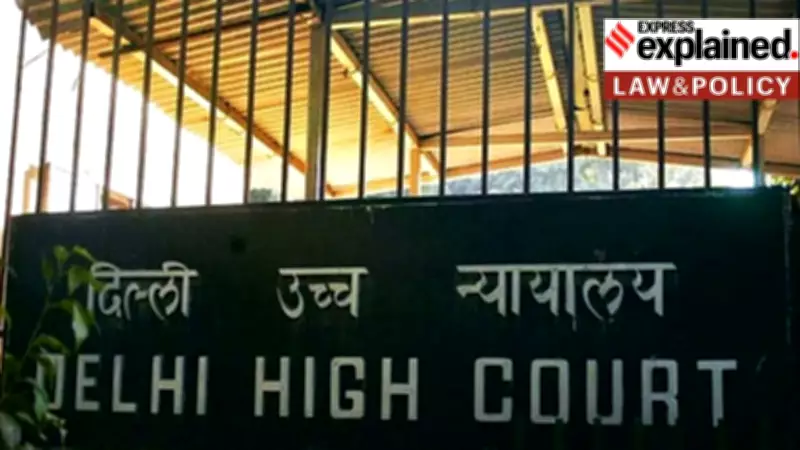
The Delhi High Court has delivered a landmark judgment, asserting that a granddaughter's right to property under the Hindu Succession Act transcends mere moral expectations, evolving into a robust legal entitlement. This ruling underscores the judiciary's commitment to interpreting property laws in a manner that upholds the rights of female heirs, particularly in cases involving maintenance obligations.
Court's Ruling on Moral vs. Legal Obligations
In a significant observation, the bench led by Justice Purushaindra Kumar Kaurav emphasized that "a moral obligation may very well assume the character of a legal obligation." This principle was central to the court's decision, which revisited the scope of property rights under the Hindu Succession Act. The court held that a granddaughter, even if granted only a life estate by her grandfather, may establish absolute ownership if the transfer is shown to stem from a pre-existing right, such as maintenance.
Background of the Property Dispute
The case originated from a property owned by the late R B Sardar Bishan Singh, who executed a gift deed in 1956 to divide the property among his descendants. Key facts include:

- The granddaughter's father had died before the transfer, making her a dependent minor.
- While the surviving sons received absolute ownership, the granddaughter was granted only a life estate, limiting her control over the property.
- She argued that her limited rights should be treated as full ownership under the Hindu Succession Act, as the gift reflected her grandfather's obligation to provide for her.
The defendants, progeny of the two sons, sought to reject the complaint without a full trial, citing that the gift deed contained no reference to maintenance and that the suit was time-barred under the Limitation Act.
Legal Framework Under the Hindu Succession Act
The court's analysis focused on Section 14(1) of the Hindu Succession Act, which states that property possessed by a female Hindu "shall be held by her as full owner thereof and not as a limited owner." This provision was enacted to eradicate traditional limited estates that restricted women's control over property. However, Section 14(2) clarifies exceptions for property obtained through instruments prescribing a restricted estate.
Courts typically engage in a structured inquiry to determine whether a restricted interest was newly created or merely recognized a pre-existing right. If the right existed earlier, Section 14(1) expands the estate to full ownership.
Court's Observations on Maintenance and Dependency
The court highlighted that maintenance is a cornerstone of this doctrine, treating a Hindu woman's right to maintenance as a legal entitlement capable of attaching to property. In this case, the plaintiff was an unmarried minor whose father had predeceased her grandfather. The court noted that the grandfather, as the nearest agnatic relation, had an obligation to maintain her, and this obligation could translate into a legal right.
Key points from the court's observations include:
- Heirs inheriting property are bound to maintain those whom the deceased was obligated to support, regardless of transfer methods like gifts or wills.
- The absence of explicit wording in the gift deed regarding maintenance is not fatal if facts, such as the plaintiff's dependency as a minor, provide a prima facie legal foundation.
- The cause of action includes the relationship between parties, the demise of the plaintiff's father, and her minority, forming a bundle of facts necessary for relief.
Rejection of Time-Barred Argument and Procedural Issues
The court dismissed the defendants' contention that the suit was time-barred under Article 58 of the Limitation Act, which allows a three-year window from when the right to sue first accrues. The court reasoned that the right to sue accrued only when the plaintiff's title was disputed in 2024, not in 1956 when the Hindu Succession Act came into force.

Additionally, the court addressed procedural defects, such as the absence of a specific prayer for title declaration, stating that the power to reject a plaint should not penalize justice seekers for minor infirmities. This reflects a broader judicial approach to ensuring substantive rights over technicalities.
Implications and Broader Context
This ruling reinforces the progressive interpretation of property laws in India, aligning with constitutional guarantees of equality under Articles 14 and 15. It sets a precedent for similar cases where female heirs, particularly dependents, seek to convert limited estates into absolute ownership based on maintenance rights. The decision underscores the judiciary's role in transforming moral obligations into enforceable legal entitlements, thereby empowering women in property disputes.
As property rights continue to evolve, this judgment serves as a critical reference for legal practitioners and families navigating inheritance issues under Hindu personal laws, emphasizing the importance of evidence and factual circumstances in establishing pre-existing rights.