

Delhi High Court Hears CBI's Challenge in Excise Policy Case, Kejriwal to Argue Personally
The Delhi High Court conducted a hearing on Monday regarding the Central Bureau of Investigation's (CBI) plea contesting the discharge of former Chief Minister Arvind Kejriwal and other individuals in the alleged excise policy case. The court has scheduled the next hearing for April 13, marking a significant development in this high-profile legal battle.
Kejriwal's Personal Appearance and Procedural Moves
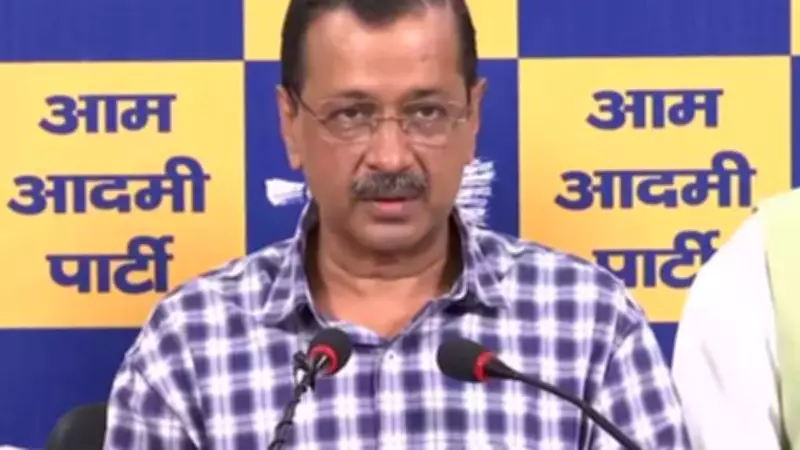
Arvind Kejriwal, accompanied by his wife, made a personal appearance in court before a bench presided over by Justice Swarana Kanta Sharma. He formally informed the bench of his intention to personally argue his recusal application, a move that immediately drew attention to procedural norms.
The bench clarified that a petitioner is permitted to argue in person only after officially discharging their legal counsel. In response to the court's inquiry, "You will argue your case yourself?" Kejriwal confirmed, "I will argue this case myself. I will avail my legal rights. As of now, I have not issued my vakalatnama to anyone."

Kejriwal further stated to the court, "I’ve filed a recusal application. Please take it on record." He explained that due to procedural constraints, as a petitioner representing himself, he was unable to e-file the application and requested the court to accept a hard copy instead. "I will argue this application myself and exercise my legal rights thereafter," he emphasized, according to reports from Bar and Bench.
Solicitor General's Objections and Institutional Concerns
Solicitor General Tushar Mehta, representing the CBI, raised strong objections to Kejriwal's plan to argue in person without formally discharging his counsel. "I have no objection to him appearing personally, but he has already engaged a lawyer. Unless he discharges his counsel, he cannot argue himself—if he chooses to appear, only he should represent the case going forward. This forum is not for theatrics," Mehta asserted.
Mehta also highlighted concerns regarding multiple recusal applications and repeated allegations against the judiciary. "Some people make a career out of making allegations. These are not just personal claims; they target an institution. This is something very serious that has happened in the capital of this country," he remarked, referencing the numerous recusal applications filed in the case.
In response, Kejriwal maintained that he was adhering to high court procedures. "I filed the recusal application as per the High Court procedure. A petitioner appearing in person cannot e-file, so your lordships may kindly take it on record," he explained.
Court's Actions and Case Background
The court has issued a notice to the CBI on Kejriwal's plea seeking the recusal of Justice Swarana Kanta Sharma. The bench clarified that any other party wishing to file a recusal application may do so, ensuring procedural fairness.
Background of the Excise Policy Case
The excise policy case centers on allegations of irregularities in Delhi's liquor licensing process during Kejriwal's tenure as chief minister. Several former officials, including Kejriwal, were initially discharged by the trial court, a decision that the CBI is now challenging in the high court.
On March 11, Kejriwal and other former accused individuals submitted a representation requesting the reassignment of the case to another judge. They cited a "grave, bona fide and reasonable apprehension" that the hearing would not be impartial, underscoring the tensions in the proceedings.
Previously, the high court had granted Kejriwal and others a final opportunity to file their stance on a plea by the Enforcement Directorate (ED). The ED sought to remove 'unwarranted remarks' made against it by the trial court during the discharge of the accused in the case, adding another layer to the complex legal narrative.






