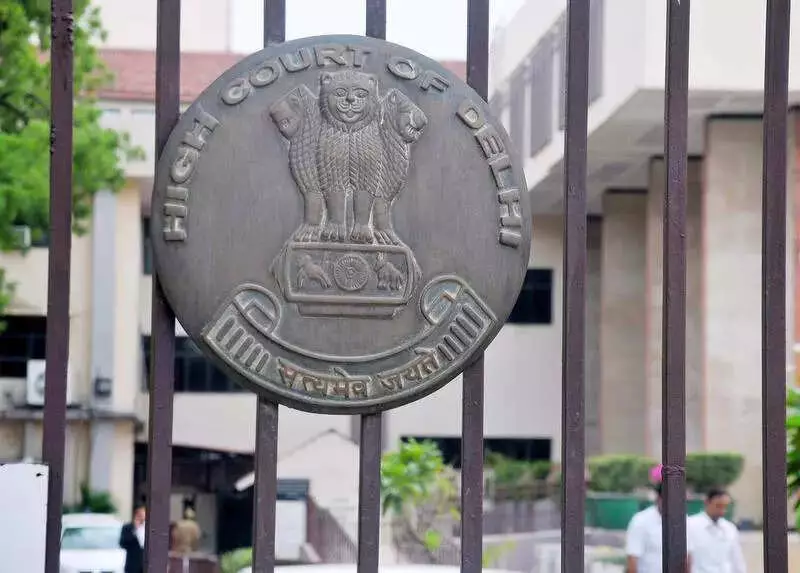
The Delhi High Court, while expressing deep concern over the capital's deteriorating air quality, made a significant observation on Wednesday, stating that improving the toxic air cannot be the government's task alone. A bench comprising Chief Justice DK Upadhyaya and Justice Tushar Rao Gedela emphasized that "each of us owns responsibility" for the environmental crisis.
Court's Stance on Parallel Proceedings
The bench was hearing a plea filed by the Greater Kailash-II Residents Welfare Association, which sought urgent measures to curb the hazardous pollution levels in the city. However, the court declined to pass any orders on this specific petition. Instead, it advised the petitioner to approach the Supreme Court, where a similar matter concerning Delhi's air quality is already under active consideration.
The judges clarified that their decision was not a dismissal of the issue's urgency but a procedural caution. "We are not saying we cannot hear the matter, but our concern is that the air quality issue in and around Delhi is engaging the attention of the Supreme Court," the bench remarked. They questioned the logic of parallel proceedings, noting that the Supreme Court has been passing directives on the matter for the past 15-20 days.

Substance Over Procedure: The Core Concern
The High Court bench reiterated that its hesitation stemmed solely from the potential for "duality of proceedings," not from any disagreement with the petition's substance. The judges stressed they were not undermining the critical nature of the air pollution emergency. They suggested it would be more effective for the petitioner to seek intervention in the ongoing Supreme Court case or request a clarification on whether the High Court could proceed independently.
The bench instructed Delhi government standing counsel Sameer Vashisht to "Convey to the Hon'ble SC our predicament." The court's primary concern was ensuring a consolidated and effective judicial approach to a problem of such public magnitude.
Health Impacts and Legal Path Forward
The original petition highlighted the sharp deterioration in Delhi's ambient air quality in recent years, with the Air Quality Index (AQI) frequently entering the 'very poor' and 'severe' categories, especially during winter months. It pointed out that this prolonged exposure to toxic air has led to persistent health problems for residents, particularly affecting children, senior citizens, and those with pre-existing illnesses.
Given these circumstances, the bench expressed a "prima facie view" that the petitioner would be better served by joining the proceedings before the top court. The petitioner's counsel informed the High Court that they would indeed move the Supreme Court either for intervention or for the necessary clarification. The matter has been adjourned and is scheduled for further hearing in January.
The court's observations underscore a critical shift in the narrative around pollution control, moving beyond solely blaming authorities to acknowledging a collective societal duty. While judicial channels are being navigated, the message on shared responsibility for Delhi's air stands clear.