

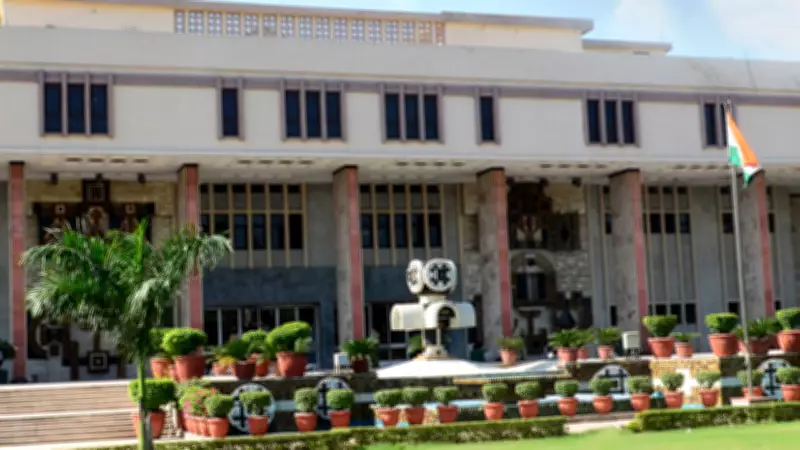
Delhi High Court Questions Legality of Blanket Ban on University Protests
The Delhi High Court on Thursday raised serious concerns over a blanket ban imposed by Delhi University and the police on processions, meetings, and demonstrations within the campus area. A bench comprising Chief Justice DK Upadhyaya and Justice Tejas Karia urged the authorities to adopt a more reasonable approach, emphasizing that such sweeping prohibitions may infringe upon fundamental rights.
Court Grants 10-Day Window for Affidavit, Declines Immediate Stay
The court has given Delhi University and the police a period of ten days to file a detailed affidavit explaining the rationale behind the ban. While declining to issue an immediate stay on the order, the bench remarked, "Since when did this order operate? Let it operate for 10 more days," highlighting the need to strike a delicate balance between maintaining public order and upholding constitutional freedoms.
Petitioner Challenges Ban as Arbitrary and Unilateral
The petition was filed by Uday Bhadoriya, a law student from the Campus Law Centre, who argued that the Delhi University proctor notified the ban on February 17 without any prior consultation or discussion with key stakeholders. These included the students' union, individual colleges, the teachers' union, the executive council, and the academic council, rendering the decision unilateral and potentially arbitrary.

The ban was reportedly instituted following two FIRs registered by the police in February, after a scuffle broke out between two student groups during a protest on campus. This incident prompted authorities to impose restrictive measures, but the court questioned whether such a broad prohibition was justified.
Bench Emphasizes Reasonable Restrictions Over Blanket Prohibitions
During the hearing, the bench pointedly asked the counsel representing the authorities, "You have to come clear. Can't have such a blanket ban. There are certain preconditions that need to be met before passing such an order. It is not only an apprehension of trouble; only if you have to prevent something that is going to happen tomorrow, such an order is issued." The court underscored that maintaining law and order is primarily the responsibility of the police, and blanket bans should be avoided.
The bench further elaborated, "Your premise is that unrestricted meetings can cause unrest. Then permit it with restrictions. Take action, but won't this type of blanket ban on meetings be an infringement of Article 19? It allows reasonable restrictions; then be reasonable. There can't be blanket prohibition." In light of these concerns, the court also issued a notice to the Central government, seeking its stance on the matter.
University Cites Police Prohibitory Order as Basis for Ban
In its defense, Delhi University stated that the proctor's decision was based on a prohibitory order issued by the Delhi Police, which restricted the assembly of five or more persons in the north campus area. However, the High Court questioned why the university felt compelled to issue a separate ban on protests when the police had already implemented prohibitory measures.
During the proceedings, police counsel revealed that the prohibitory order was initially issued for one month following intelligence reports about a potential clash between student groups. It was subsequently extended until April 25 in February. The counsel added, "It happened some time back also. They gheraoed the police station," referencing past incidents of student unrest.
Court Scrutinizes Student Conduct While Upholding Freedoms
The bench made it clear that it holds a "clear opinion" that a blanket ban cannot exist, as it potentially violates constitutional rights. However, the court also placed the conduct of students under scrutiny, reminding them to behave responsibly and not misuse the freedoms granted on campus.

"This liberty can't be misused. It is only because of Article 19 that we are interfering. You need to conduct yourself fairly. Why did this situation arise? Proctor is also an academician. No academician wants to pass such an order... We don't want to comment on the conduct of students. See what happened in the elections. Which head of an academic institution would issue such an order but for a situation created by you? Do something to ensure that you behave properly," the bench advised, linking the ban to broader issues of campus discipline.
Matter Listed for Further Hearing on March 25
The court has scheduled the next hearing for March 25, by which time Delhi University and the police are expected to submit their affidavits. This development highlights the ongoing tension between administrative authority and democratic freedoms in educational institutions, with the judiciary playing a crucial role in mediating such conflicts.





