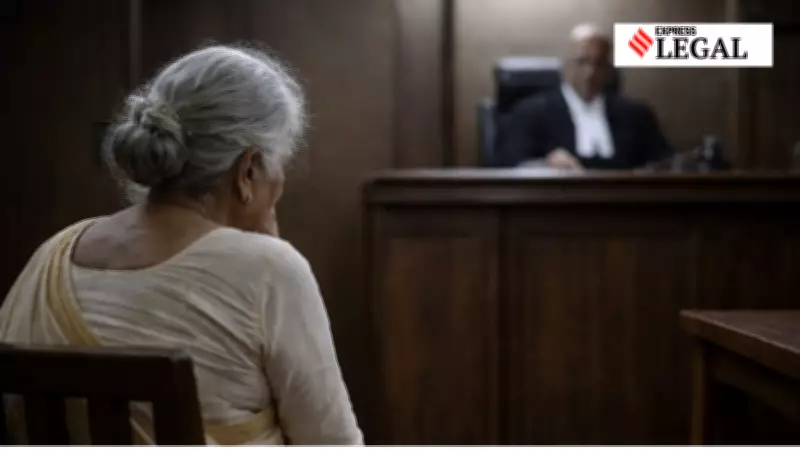
Delhi High Court Dismisses 81-Year-Old Woman's Plea for Matrimonial Home Re-Entry
The Delhi High Court has firmly rejected the plea of an 81-year-old woman seeking to re-enter her estranged husband's matrimonial home, emphasizing that restoration to a previously occupied residence is not an automatic right under the law. In a significant ruling, Justice Ravinder Dudeja highlighted concerns about potential misuse of the Protection of Women from Domestic Violence Act (DV Act), stressing that the legislation is designed for protection, not to facilitate property disputes.
Court's Observations on Voluntary Shift and Shelter
Justice Dudeja noted that the petitioner had voluntarily moved to an alternate accommodation in April 2023, belonging to her husband, where she has since settled. The court observed that she is not roofless and has access to suitable shelter, thereby negating claims of domestic violence or economic abuse. Key factors considered included the affixing of her name plate at the new residence, indicating a conscious choice rather than temporary displacement.
The court made several critical points:

- The property in question does not qualify as a "shared household" since the shift was voluntary.
- Denial of re-entry does not constitute domestic violence, as there was no forcible dispossession or coercion.
- Granting restoration would disturb the settled possession of current occupants and misuse the DV Act's intent.
- The petitioner has alternative accommodation of the same standard available, making a residence order unnecessary.
Arguments from Both Sides
Appearing for the petitioner, advocate Suhail Sehgal argued that the elderly woman had lived in the matrimonial home for 60 years and left only temporarily for surgery, intending to return. He claimed she was forcibly prevented from re-entering and is now shelterless, living with her grandson in Gurugram. Sehgal emphasized that the property should be considered a shared household, warranting restoration.
In response, advocate Sudershani Ray, representing the husband, contended that the case is a property dispute misusing the DV Act. He stated that the wife voluntarily shifted to another property owned by the husband, where she continues to reside, and there was no domestic violence. Ray alleged that the petition aims to advance the daughter's interests in an ongoing property partition suit, rather than address genuine abuse.
Background and Legal Context
The couple married in 1964 and had three children. In April 2023, the petitioner moved to her daughter's house for post-surgery care, but upon attempting to return, she was denied entry. She filed a complaint alleging emotional, mental, and economic abuse, which was dismissed by lower courts. The trial court found she resides in a property owned by her husband, offering suitable accommodation.
The court elaborated on the DV Act's objectives, noting that Section 19 allows for residence orders to prevent women from becoming roofless, but it is discretionary and equitable. The Act balances the rights of aggrieved women with those of other occupants, aiming to protect against violence within families without conferring indefeasible rights to specific properties.
Implications and Caution Against Misuse
This ruling serves as a cautionary note against the misuse of the DV Act for property gains. The court underscored that the law is meant for genuine sufferers of domestic violence, not to resolve property disputes. By dismissing the plea, the Delhi High Court reinforces that voluntary shifts to alternate accommodations can preclude restoration claims, ensuring the Act's protective intent is upheld without exploitation.