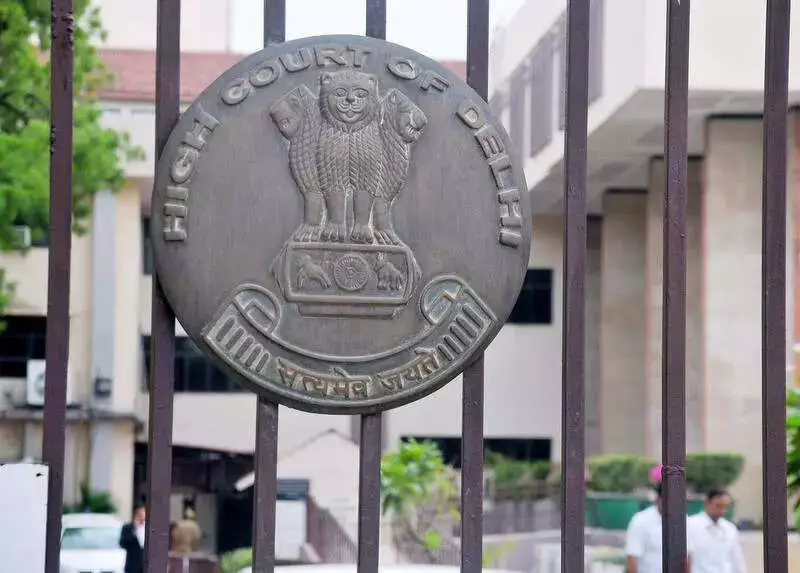
In a significant legal development, the Delhi High Court has revived a long-pending case concerning alleged pay discrimination faced by Indian employees at the Italian Embassy in New Delhi. The proceedings, initiated twelve years ago, were given a fresh lease of life as a division bench set aside a 2019 order that had earlier dismissed the complaint.
Court Overturns Earlier Dismissal, Finds Cause of Action
The bench comprising Justices Anil Kshetarpal and Renu Bhatnagar allowed an appeal filed by the Indian-origin employees. The appellants had challenged a 2019 order from a single judge who held that their complaint did not disclose a valid cause of action. The division bench disagreed, stating that the plea indeed disclosed a cause of action and must proceed to trial.
The court clarified that its ruling was on the maintainability of the plaint and not on the merits of the case. It explicitly noted that any assessment of the merits, including potential defences like limitation or jurisdiction, would require a fuller examination based on the complete record at the trial stage.

The Core of the Discrimination Allegation
The heart of the dispute lies in the claim by the Indian employees that they were paid less than their Italian counterparts for similar work, a practice they argue violates an Italian Presidential Decree from the year 2000. They have sought pay parity, equivalent benefits, and approximately Rs 2 crore in arrears from their foreign employer.
The court observed that the factual foundation presented by the appellants was "cogent." It noted that both the Indian employees and their chosen Italian comparators were locally recruited and had resided in India for at least two years prior to their employment. This, the court suggested, created a prima facie case for classifying them as a homogeneous group, opening the door to examining pay parity as a potential legal entitlement under the Italian decree.
Complex Factual Disputes Require Full Trial
The High Court pointed out that the factual matrix of the case is complex. Determining whether the employees form a homogeneous group entitled to equal pay involves nuanced interpretation of law and examination of facts related to residency, job classification, and cost of living.
"Such issues cannot be summarily decided under the provisions of the Code of Civil Procedure but require a thorough examination at the trial stage," the bench stated. It emphasized that the single judge had "misconstrued and misapplied" the law relating to the rejection of the plaint and had wrongly presumed facts to the detriment of the appellants without giving them an opportunity to prove their assertions.
The court concluded that the plaint rightly raises triable issues. The 2019 dismissal order was passed after the single judge found no provision to enforce pay parity, a stance also supported by the embassy's claim of sovereign immunity. These arguments will now be tested in a full trial as the case moves forward after a 12-year wait.