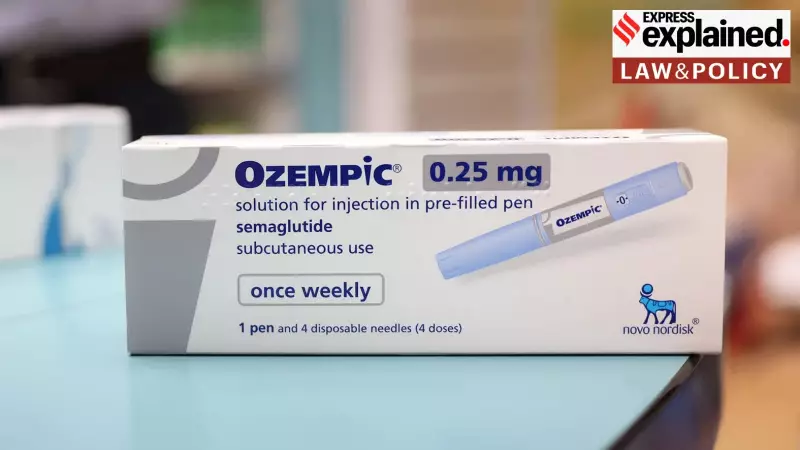
In a significant ruling with major implications for the pharmaceutical industry, the Delhi High Court on Tuesday, December 6, 2025, refused to grant an interim injunction to Danish drugmaker Novo Nordisk. The court has thereby allowed Indian pharmaceutical major Dr Reddy's Laboratories (DRL) to continue manufacturing and exporting its version of the blockbuster drug semaglutide.
The Core of the Legal Dispute
The legal battle began in May 2025 when Novo Nordisk moved the Delhi High Court against DRL. The global pharma giant sought to restrain the Indian company and its distributors from using, making, selling, or exporting the semaglutide active pharmaceutical ingredient (API) or any product derived from it. Semaglutide is the key component in revolutionary drugs for Type 2 diabetes and obesity, marketed by Novo Nordisk as Ozempic and Wegovy.
This lawsuit followed DRL's refusal to comply with a cease-and-desist notice from Novo Nordisk. Instead of halting production, DRL escalated the conflict by filing a suit seeking the revocation of the patent protection granted to Novo Nordisk for the compound in India. By rejecting the plea for a temporary injunction, the court has effectively sided with DRL at this interim stage. The court also held that DRL's challenge to the patent's validity is prima facie valid, though a final decision on the revocation petition is still pending.
A Tale of Two Patents and 'Evergreening'
The court's decision hinged on its analysis of two key Indian patents held by Novo Nordisk. The first, Indian Patent No. 275964, covered the basic composition of semaglutide. Filed in March 2006 and granted in September 2016, this patent expired naturally in September 2024.
The second, Indian Patent No. 262697, covers specific formulations and delivery devices aimed at improving the drug's stability and administration. Filed in March 2007 and granted in March 2014, it is set to expire in March 2026. Novo Nordisk argued that DRL's activities infringed upon this second, still-active patent.
However, the Delhi High Court agreed with DRL's central argument. It concluded that Novo Nordisk had essentially obtained two separate patents for the same compound, a practice known as 'evergreening'. The court noted that the company first filed a broad 'genus' patent in 2004 (2006 in India) for a class of GLP-1 derivatives. Later, in 2007, it filed a separate formulation patent for semaglutide specifically, thereby creating a new patent clock to extend its monopoly.
Evergreening, which involves making minor tweaks to an existing drug to secure a new patent and prolong market exclusivity, is prohibited under Section 3(d) of the Indian Patents Act, 1970. The court found that the changes in the second patent lacked the required 'inventive step' and novelty, as they would have been obvious to an expert in the field.
Major Implications for the Lucrative GLP-1 Market
This ruling is a substantial setback for Novo Nordisk and a victory for generic drugmakers eyeing the immensely profitable market for GLP-1 receptor agonists. Drugs like semaglutide and Eli Lilly's tirzepatide have created waves globally for treating diabetes and obesity.
The court has permitted DRL to continue its manufacturing and export activities. However, it made it clear that the drug cannot be sold in the Indian domestic market until Novo Nordisk's formulation patent expires in March 2026. DRL had begun manufacturing after India's drug regulator, the CDSCO, cleared its semaglutide injection for grant manufacturing and marketing in September, initially targeting markets like Canada.
The judgment opens the door wider for other Indian pharmaceutical companies. Firms like Mankind Pharma, Cipla, and Sun Pharma are actively contemplating launching GLP-1 products. In recent earnings calls, Cipla highlighted "big volume opportunities" in semaglutide, while Sun Pharma termed the GLP-1 market "exciting."
An IQVIA report from August 2025 noted that over 10 companies have filed to conduct Phase III studies for semaglutide in India. With Novo Nordisk's patents expiring soon in several major markets including Canada, China, Brazil, and Turkey, the entry of lower-cost generic versions could dramatically increase patient access and potentially surge demand globally.