

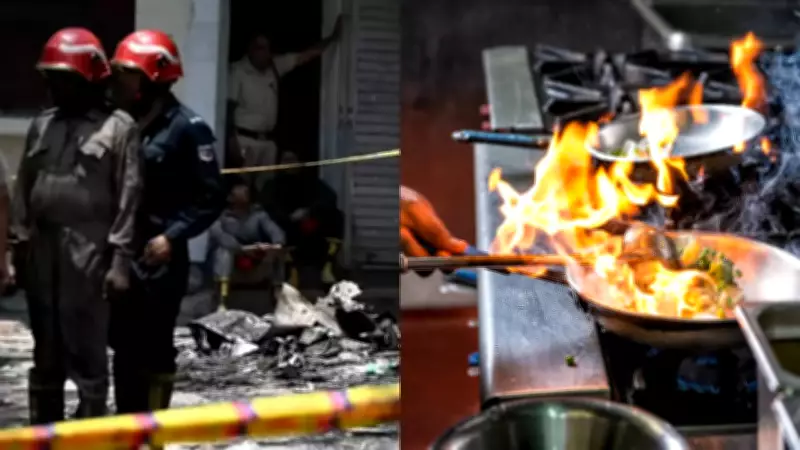
In a tragic incident, at least 20 people lost their lives after a fire broke out at a restaurant in south Delhi's Malviya Nagar area on Wednesday morning. The Delhi Fire Services (DFS) received a call about the blaze at 9:45 am and promptly dispatched multiple fire tenders to the scene. According to news agency PTI, many of those killed are foreigners. A total of 37 people were rescued from the building during the operations and were taken to hospitals in Centralised Accident and Trauma Services (CATS) ambulances. The exact cause of the fire is still unknown, but reports indicate that the blaze likely originated from the restaurant.
NFPA's Restaurant Fire Protection Basics
The National Fire Protection Association (NFPA) statistics show that for eating and drinking establishments, the majority of fires occur in the kitchen and specifically involve cooking equipment. With that in mind, NFPA has listed fire protection basics that every restaurant should follow.
General Requirements
Egress: NFPA's blog states that restaurants should have the ability for patrons to evacuate in the event of a fire. For restaurants with an occupant load of 50 or more, which classifies them as assembly occupancy, the main entrance must be sized to accommodate at least half of the total occupant load. Other exits must be provided to handle additional capacity, with the total number based on layout and maintaining acceptable travel distances. Common areas of concern regarding safe egress include the arrangement of chairs and tables reducing available aisle accessways, as well as secondary exits being locked, blocked, or obstructed by storage.

Fire Alarm: Places with an occupant load of 300 or more must have a fire alarm system. Additionally, if the building is standalone, a fire alarm is required. Where required, the system must be initiated by one or a combination of manual operation (pull stations), automatic detection, or sprinkler system waterflow. Notification of occupants must include a voice announcement and visible signals.
Sprinkler Protection: NFPA states that sprinklers have not traditionally been required for all restaurants. Beginning with the 2021 edition of NFPA 101 Life Safety Code, restaurants that are assembly occupancies of new construction will require sprinkler protection. Like fire alarms, many variables can affect the need for sprinklers, including construction type, height, and other uses of the building. For standalone buildings used only as a restaurant, classification as assembly occupancy does not require sprinkler protection for existing construction unless it can also be considered a nightclub, dance hall, or discotheque, in which case they are required for occupant loads over 100.
Kitchen Fire Protection
Wet-chemical extinguishing system: The majority of restaurant fires are caused by cooking equipment. Therefore, any cooking equipment used in processes that produce grease-laden vapors must be provided with ventilation and a fire extinguishing system. These systems must be listed to UL 300 or equivalent standards, which is currently only achieved by wet chemical extinguishing systems.
Class-K Fire Extinguisher: While the fixed extinguishing system is the primary means of extinguishment, at least one portable fire extinguisher is also required in the kitchen area. Extinguishers in kitchens must be Class K, appropriate for use on cooking media. Signage is required near each Class K extinguisher, stating that the fire protection system must be activated before using the fire extinguisher.
Inspection and Maintenance: Routine inspection and maintenance of cooking equipment, hood and exhaust systems, and fire extinguishing equipment are vital to ensure consistent protection. Instructions must be provided to new employees upon hiring and to all employees annually on the use of portable fire extinguishers and manual actuation of the fire-extinguishing system. Hoods need to be inspected for grease buildup at a frequency typically semi-annual for most restaurants, but can vary based on the type and volume of cooking. When grease buildup is found, the hood and exhaust system must be cleaned.






