Martyr's Day Traffic Restrictions Paralyze Central Delhi, Leaving Commuters Stranded for Hours
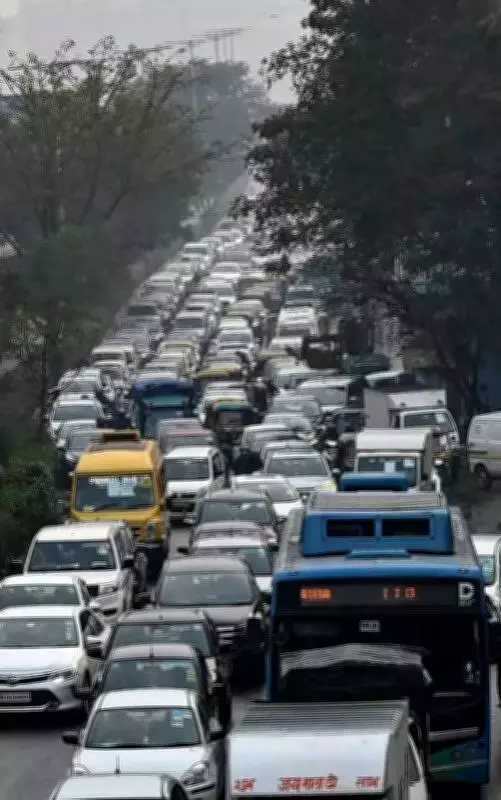
New Delhi witnessed unprecedented traffic chaos on Friday morning as Martyr's Day restrictions brought vehicles on Vikas Marg and roads leading to Rajghat to a complete standstill. The rush-hour traffic slammed into a wall of red signals and a sea of brake lights near ITO, creating a gridlock that lasted for hours with little information on diversions or relief for frustrated commuters.
Commuters Abandon Vehicles, Walk to Destinations Amid Complete Gridlock
Shreedhar, a daily commuter from Noida to his office in ITO, remained stranded on the ITO bridge from 10 am to 11.45 am. "People left their autos and taxis and started walking," he reported, highlighting the desperation of those trying to reach their destinations. Another commuter stuck at the ITO intersection described the situation as chaotic, stating he couldn't move an inch for two hours.
"I could have avoided the mess had the traffic constable guided me the other way. Instead, he directed me straight into the jam," the frustrated commuter told TOI. He made two calls to the police helpline but received no clear updates, with officials appearing to have "no clue" about the situation on the ground.

Late-Night Advisory, Lack of Morning Updates Worsen Congestion
Delhi Traffic Police had issued an advisory at 10.20 pm on Thursday, warning commuters that traffic would be affected in central Delhi on Friday due to a Martyr's Day event at Rajghat's Mahatma Gandhi Smriti Sthal. The advisory stated:
- Traffic diversions at ITO Chowk, Delhi Gate, Guru Nanak Chowk, Shantivan Chowk, Rajghat DTC Depot and IP Flyover
- Restrictions between 9 am and noon on multiple stretches including Bahadur Shah Zafar Marg, Asaf Ali Road, NS Marg and Ring Road bypass routes near Rajghat
- Recommendation for commuters to use public transport as far as possible
However, there was no further reminder for those who missed the late-night advisory, and no follow-up alerts were issued on Friday morning as traffic volumes peaked. The congestion quickly spilled onto numerous roads including:
- Shakarpur–Geeta Colony Road
- Pushta Road
- Tilak Bridge approaches
- Geeta Colony Flyover
- Yamuna bridge links
- Secondary areas like Daryaganj, Civil Lines, Pragati Maidan and Connaught Place
Social Media Flooded with Angry Complaints as Traffic Police Respond Slowly
As congestion in central Delhi worsened, traffic police updates followed largely in response to angry posts by commuters on social media platform X. One user wrote, "When can we expect someone from your end to clear this mess at Rajghat?" while another posted, "Please send someone and resolve the traffic nuisance at Rajghat."
A commuter stuck at ITO Bridge for over two hours reported, "No information on when it (traffic) will start moving. People desperate to catch trains and reach offices are walking. Some bikers are on the kerbs to find a way out." Another user revealed he had already missed the 11.25 am Rajdhani Express to Dibrugarh because of what he called "Delhi's famous jam."
Traffic Police Acknowledge Protocol Issues, Defend Ground Presence
A senior traffic police officer, speaking on condition of anonymity, explained that advisories are sometimes issued late in the day only after information about pending congestion is received, or when restrictions are imposed suddenly. The officer noted that standard protocol allows light vehicles to ply until about 10 minutes before VIP movements begin.
"However, if commuters were stopped earlier than necessary on Friday, that needs to be looked into," the officer admitted. "Most of our cops were on the ground, doing their duty. Some things cannot be avoided." Despite the large number of Variable Message Sign (VMS) screens installed across the city, they are rarely used to highlight traffic restrictions, contributing to the information gap that left thousands of commuters stranded during the morning rush hour.