Delhi's Anti-Human Trafficking Unit: The Digital Hunt for the Missing
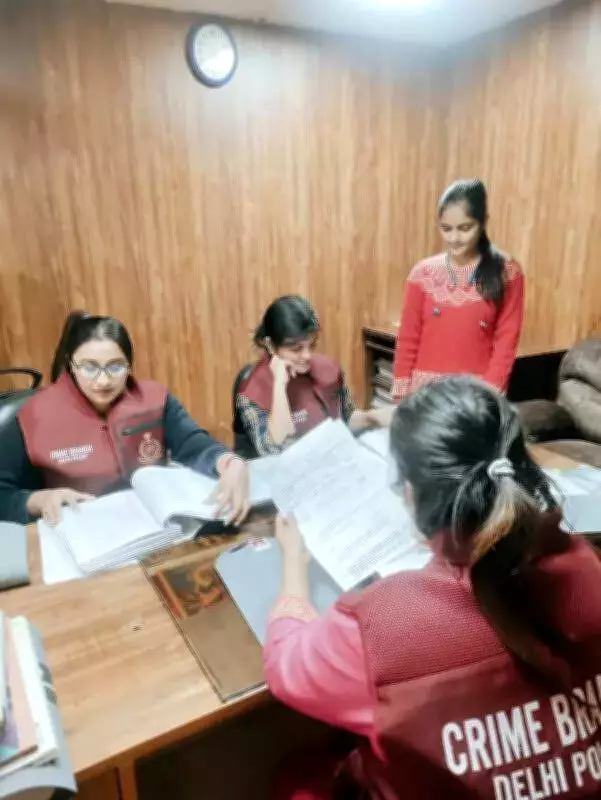
In the nodal headquarters of Delhi's Anti-Human Trafficking Unit (AHTU) in Rohini, head constables Amit and Upender sit before a computer monitor, their eyes fixed on a grainy photograph of a teenager who disappeared from a bus terminal three years ago. For these officers, this is not merely another file in an overwhelming stack of paperwork; it represents a complex national puzzle demanding resolution.
A Sophisticated Network Born from Necessity
Over their two-year tenure, Amit and Upender have cultivated an almost instinctual ability to detect digital breadcrumbs left by missing individuals. They navigate seamlessly between the ZIPNet portal and the Vatsalya database, cross-referencing blurred CCTV footage with records from child care institutions across states like West Bengal and Odisha. They are integral members of the AHTU under the Delhi Police crime branch, a specialized force that has transformed the desperate search for the lost into a precise, data-driven science of reunion.
The genesis of this elite unit traces back to 2014, following a directive from the Union Home Ministry to establish a robust defense against human exploitation. What originated as a focused response to trafficking has evolved into an extensive 18-unit network covering the entire National Capital Territory of Delhi. From the bustling corridors of Indira Gandhi International Airport to the sprawling railway terminals, the AHTU operates with a comprehensive mandate addressing the darkest facets of urban life: kidnapping, abduction, child labour, sexual abuse, and the rescue of those coerced into begging.

The Central Nervous System at Sector 16, Rohini
Stationed at Sector 16 in Rohini, the AHTU functions as the central nervous system for these critical operations. It coordinates meticulously with district units and non-governmental organizations to ensure no child slips through the cracks of a fragmented bureaucratic system. For Police Commissioner Satish Golcha and Special CP (Crime) Devesh Srivastava, the AHTU represents a high-priority unit operating with a lean yet elite force of inspectors, sub-inspectors, and subordinate staff. These professionals treat every missing person report not as a mere statistic, but as a ticking clock demanding immediate action.
The AHTU's methodology is a sophisticated blend of rigorous legal enforcement and empathetic social intervention. When a minor is reported missing in Delhi, the unit's machinery activates within minutes. While the law mandates the immediate registration of a First Information Report (FIR), the AHTU's internal protocols extend further. Within 24 hours, details of the missing child are disseminated across the ZIPNet and Vatsalya portals, making the information instantly accessible to every police station in the city. This digital net is cast widely, involving the State Crime Records Bureau, the National Crime Records Bureau, and the Central Bureau of Investigation when necessary.
Ground Operations and Legal Framework
However, the most impactful work often occurs on the ground. Officers like Assistant Sub-Inspector Gopal Krishan, with seven years of service in the unit, understand that the digital trail constitutes only half the battle. Krishan has personally traced more than 750 missing or kidnapped individuals, frequently traveling to remote villages in Bihar or Rajasthan to pursue leads. His dedication has earned him six Asadharan Karya Puraskar (AKP) awards. His colleagues, Head Constables Sukanya and Seema Tyagi, are similarly celebrated for their contributions in this domain.
The legal framework guiding these officers has recently transitioned to the provisions of the Bharatiya Nyaya Sanhita, specifically sections addressing kidnapping and trafficking, alongside the Juvenile Justice Act and the Protection of Children from Sexual Offences (POCSO) Act. This comprehensive legal arsenal empowers the AHTU not only to locate the missing but also to dismantle the syndicates profiting from their absence. The unit's investigations are routinely monitored by high-level bodies such as the National Human Rights Commission and the Delhi Commission for Women, ensuring a victim-centric approach remains paramount.

High-Stakes Operations and Strategic Campaigns
"This is particularly crucial in habeas corpus petitions assigned by the Delhi High Court, where the AHTU is tasked by the judiciary to produce a missing individual who may have been held against their will for years," explained an officer. The success rate in such cases is a point of immense pride for the unit, reflecting exceptional inter-agency coordination.
One of the most effective strategies in the AHTU's toolkit is the implementation of focused campaigns like Operation Muskan and Operation Milap. These month-long drives are designed to intensify search efforts, concentrating specifically on children housed in Child Care Institutions (CCIs) who may be unable to communicate their origins. During these operations, officers transform into detectives of identity, utilizing old photographs, half-remembered village names, or even distinct scars to link "unclaimed" children with "missing" reports.
Special emphasis is placed on children under 14, as they are at the highest risk of being absorbed into labour or trafficking rings. The effectiveness of these drives was vividly demonstrated in December 2025, when a special campaign ordered by Special CP (Crime) Devesh Srivastava led to the tracing of a staggering 795 missing persons and children within a single month.
Prevention, Certification, and Human Impact
The AHTU's work also extends proactively into prevention, with awareness campaigns conducted in slums and schools, sensitizing Resident Welfare Associations (RWAs) to safety measures that can prevent abductions. Between 2020 and July 2025, the unit successfully traced over 1,100 minor children, according to a DCP-rank officer. A significant portion of these were adolescent girls, a demographic facing unique and severe perils. Tracing these individuals often requires the AHTU to navigate complex social realities, including monitoring placement agencies that supply domestic help, which can sometimes serve as fronts for exploitation.
To maintain the highest operational standards, in early 2025, the AHTU sought and achieved the IS/ISO 9001:2015 certification from the Bureau of Indian Standards. "This certification is more than a badge of honour; it is a validation of the unit's transparency and quality-driven framework, making it a rare example of a police unit operating with the administrative precision of a high-end corporation," said Special CP Srivastava.
Ultimately, the true story of the AHTU is not encapsulated in ISO certificates or technical portals, but in the profound moments of reunion that occur within the quiet corners of the Rohini office. It is found in the overwhelming emotion on a mother's face when she is reunited with a child she feared lost forever, and in the deep satisfaction of officers like Sukanya or Gopal Krishan as they finally close a case file that has remained open for years. Their relentless work ensures that in the vast, chaotic landscape of the national capital, no one stays missing forever.