

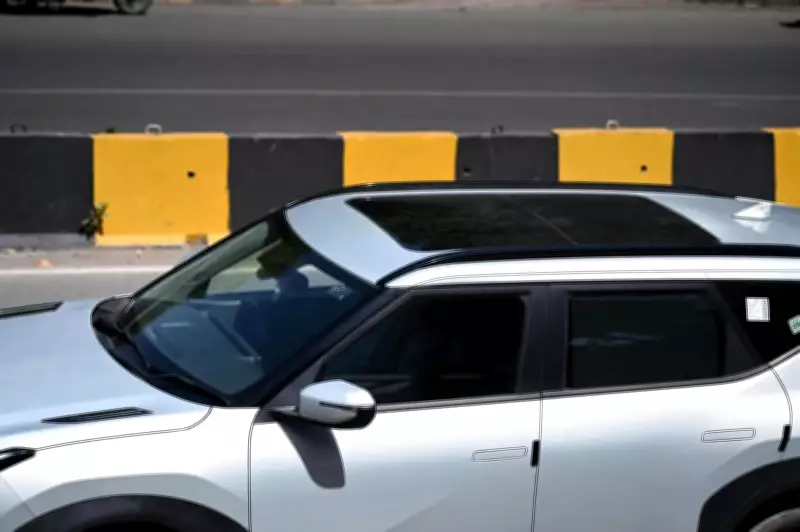
Delhi Motorists Turn to Remote-Controlled Smart Window Films to Beat Heat and Evade Police
As temperatures soar in the national capital, making daily commutes on Delhi's roads increasingly uncomfortable, a growing number of vehicle owners are seeking refuge through innovative window solutions. The traditional use of shades and tinted films has evolved dramatically this year, with remote-operated electronic tints emerging as the latest trend. These 'smart films' are not only dominating local markets but also gaining viral attention on social media platforms like Instagram, where their digital functionality is showcased to potential buyers.
The Digital Loophole: How Smart Films Work
What makes these films particularly appealing—and controversial—is their ability to help motorists circumvent traffic regulations with technological flair. At the simple click of a button, the windows can transition instantly from pitch-black opacity to full transparency. This feature allows drivers to maintain a dark, shaded interior for privacy and comfort while driving, then quickly switch to a legally compliant transparent state when approaching police checkpoints or traffic enforcement zones.
From luxury SUVs to economical hatchbacks, vehicles across Delhi are being fitted with these advanced films alongside magnetic sunshades, creating a significant challenge for traffic authorities. Manufacturers are actively marketing this technology as a means to evade police detection and surveillance, promoting the ability to maintain what they call a 'VIP look' in shadowy lanes while remaining technically legal when necessary.

Legal Framework and Enforcement Challenges
A traffic police officer emphasized that the use of tinted or 'smart' films and sun-blocking shades constitutes a punishable offense under the Motor Vehicles Act. Current regulations mandate 70% visibility for front and rear windscreens and 50% for side windows. The law explicitly prohibits any external film or removable shade that obstructs the view inside the vehicle, regardless of its technological sophistication.
Delhi Police provided enforcement statistics revealing the scale of the issue. On Wednesday, authorities confirmed that 4,831 challans have been issued so far this year specifically for the use of tinted glass in vehicles. This follows 24,758 challans issued last year and 25,635 prosecutions in 2024, indicating a persistent problem despite regulatory efforts.
Market Dynamics and Regulatory Impact
Vinay Narang, president of the Automotive Parts Merchants' Association, noted that the ban on black tinted glass has reduced overall demand for shading products. However, lighter variants—particularly light-green tinted glass—continue to experience steady demand as they are generally considered compliant with existing regulations. Narang explained that demand typically peaks during summer months as motorists seek relief from intense heat.
A tinted glass trader operating in Kashmere Gate provided additional market insights, revealing that the light-green variant is now commonly factory-fitted in most vehicles, reducing demand for aftermarket installations. Fewer customers now visit markets specifically for such fittings compared to previous years. The trader acknowledged, however, that while compliant, these lighter tints are less effective at keeping vehicle interiors cool compared to the once-popular black tints.
Safety Concerns and Police Response
A senior police officer highlighted serious safety concerns associated with tinted windows, noting they significantly reduce visibility during nighttime driving while providing anonymity that criminals operating vehicles often seek. To address these risks, enforcement is being carried out through both routine checks and special targeted drives.
Ground teams are stopping vehicles, issuing challans, and ensuring on-the-spot removal of illegal films. "Delhi Traffic Police recently conducted a targeted operation in the western range," another officer detailed. "On March 25, a special drive was launched in Najafgarh traffic circle against illegal tinted films, leading to the prosecution of 154 vehicles under Sections 100.2/177 of Central Motor Vehicles Rules, 1989."

During this operation, four vehicles were impounded for multiple violations, including the use of tinted glasses. To ensure immediate compliance and deter other commuters, black films were removed directly at the scene. Police authorities confirmed that such enforcement drives will continue across Delhi to ensure public safety is not compromised for what they describe as "a bit of comfort."
The technological arms race between motorists seeking comfort and privacy and authorities enforcing road safety regulations continues to intensify as summer approaches, with remote-controlled smart films representing the latest frontier in this ongoing conflict.





