

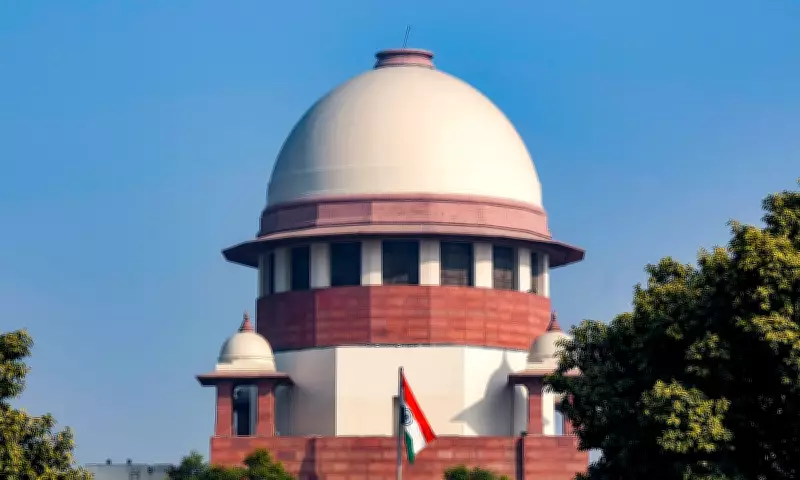
The Supreme Court of India has delivered a landmark judgment, ruling that the persistent denial of conjugal rights without reasonable cause amounts to mental cruelty under the Hindu Marriage Act. The court granted a divorce to a doctor after 18 years of separation, upholding the Rajasthan High Court's 2025 order.
Key Rulings by the Supreme Court
Denial of Conjugal Rights as Mental Cruelty
The Supreme Court emphasized that the persistent refusal of sexual intercourse without reasonable cause erodes the foundation of marriage and constitutes mental cruelty. The court stated that such denial strikes at the core of the marital relationship, making it untenable.
Marriage as a Partnership
The court highlighted that marriage is not a mere contract but a shared covenant of mutual respect, shared expectations, and equal responsibility. It stressed that both partners have equal rights and duties, and the denial of conjugal rights violates this partnership.

Irretrievable Breakdown of Marriage
Noting that the couple had been separated for over 15 years with no reconciliation attempts and separate lifestyles, the court observed that this amounted to a de facto abandonment of the marital covenant. The prolonged separation and lack of cohabitation indicated an irretrievable breakdown of the marriage.
Legal Dissolution Under Article 142
Exercising its powers under Article 142 of the Constitution, the Supreme Court dissolved the marriage, stating that continuing the union would cause further mental agony and deny both parties a fulfilling life. The court emphasized that the marriage had become a source of distress rather than companionship.
High Court Ruling Upheld
The Supreme Court upheld the Rajasthan High Court's 2025 divorce order, which had granted divorce to the doctor husband. The wife's appeal against the High Court's decision was dismissed by the apex court.
Background of the Case
The marriage lasted 18 years, but the couple cohabited for only two to three months. They had been separated for more than 15 years. The husband, a doctor, sought divorce on grounds of mental cruelty due to the wife's persistent denial of conjugal rights. The Rajasthan High Court granted divorce on January 2, 2025, and the Supreme Court delivered its judgment on June 2, 2026, dismissing the wife's appeal.
Implications of the Judgment
This ruling reinforces the legal principle that marriage is a partnership based on mutual rights and responsibilities. The Supreme Court's decision clarifies that the denial of conjugal rights without justification is a valid ground for divorce under the Hindu Marriage Act. It also underscores the court's willingness to use Article 142 to do complete justice in cases of irretrievable breakdown of marriage.






