Bangladesh's capital city, Dhaka, was plunged into chaos and violence on Friday, July 19, as widespread protests erupted following the death of a prominent opposition leader. The unrest, which saw demonstrators torch media houses and engage in fierce clashes with law enforcement, has raised serious concerns about the political stability of the nation.
Death of a Leader Sparks Nationwide Fury
The catalyst for the massive protests was the death of Sharif Osmani, a senior leader of the main opposition party, the Bangladesh Nationalist Party (BNP). Osmani, who was also the president of the party's Dhaka south unit, passed away while undergoing treatment at a hospital. While official reports cited natural causes, his party and supporters have alleged foul play, claiming his death was a result of systemic neglect and political persecution.
This incident ignited long-simmering tensions between the opposition and the ruling Awami League government led by Prime Minister Sheikh Hasina. Supporters of the BNP and its allies took to the streets in Dhaka and other parts of the country, accusing the authorities of being responsible for Osmani's demise.

Violence Escalates: Media Houses Targeted, Police Clash with Protesters
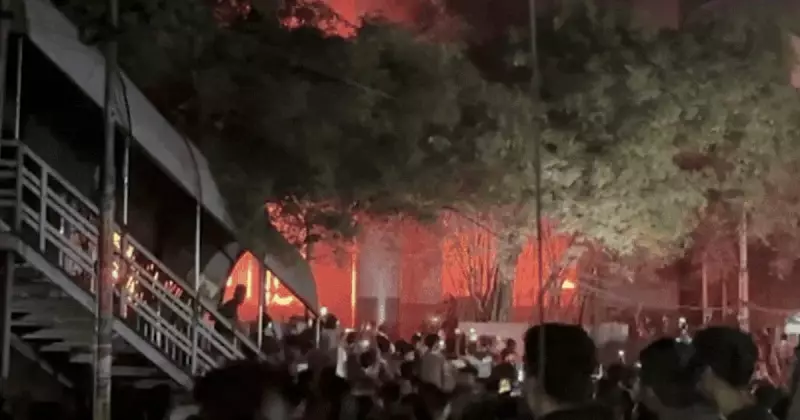
The protests quickly turned violent. In a highly alarming development, angry mobs targeted the offices of several media organizations. According to reports, the headquarters of Bangladesh's largest private television network, Channel i, was set on fire. The building suffered significant damage, and several employees had to be evacuated to safety.
Another major media house, the Daily Prothom Alo newspaper, also came under attack. Protesters vandalized its office premises, further escalating the situation. These attacks on press institutions have drawn widespread condemnation from journalist unions and civil society groups, who view them as a direct assault on freedom of expression.
Simultaneously, intense clashes broke out between protesters and police forces across Dhaka. Law enforcement officials resorted to using tear gas, rubber bullets, and water cannons to disperse the crowds. Protesters, in turn, reportedly hurled bricks and other projectiles. There were reports of injuries on both sides, though an official casualty count was not immediately available. The city's central areas, including key intersections, were brought to a standstill as the violence unfolded.
Government Response and Political Fallout
The government has condemned the violence, particularly the attacks on media houses. Authorities have labeled the protests as acts of sabotage by opposition elements aimed at destabilizing the country. Police have been placed on high alert, and security has been tightened around government buildings and key installations.
Political analysts suggest that Osmani's death and the subsequent unrest have exposed the deep political rift in Bangladesh. The BNP, which boycotted the last general election, has been demanding the resignation of the Hasina government and the formation of a neutral caretaker administration to oversee future polls. This latest episode is likely to further polarize the political landscape and complicate any potential dialogue between the major parties.
The international community is closely monitoring the situation. Neighboring India, which shares a long and porous border with Bangladesh, is particularly concerned about the potential for the unrest to spill over and impact regional security. The events of July 19 mark one of the most severe outbreaks of political violence in Bangladesh in recent years, casting a shadow over the nation's democratic process.