ED Files Prosecution Complaint in Rs 6 Crore Fraud Linked to MP Businessman's Tragic Suicide
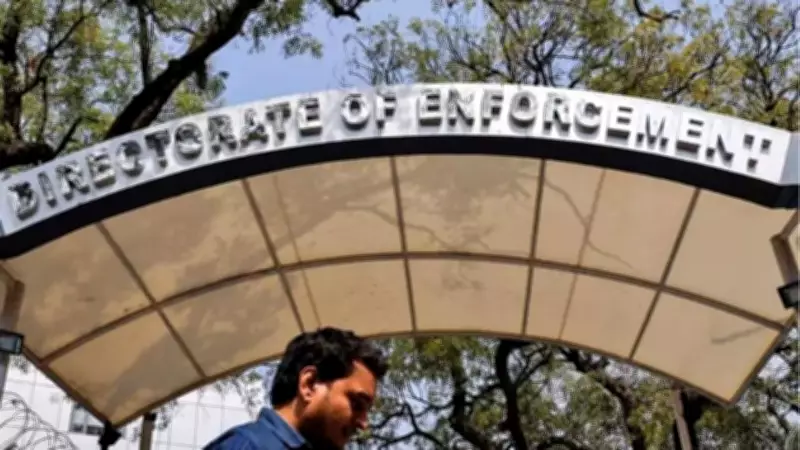
The Enforcement Directorate's Bhopal Zonal Office has taken significant legal action by filing a Prosecution Complaint on January 28, 2026, in a complex money laundering case that has been linked to the heartbreaking suicide of a Madhya Pradesh businessman and his wife. This development comes more than a year after the tragic incident that shook the local community.
The Accused and Legal Proceedings
The ED has named five individuals in its complaint, including Mark Pius Karari, who previously served as the Branch Manager of Punjab National Bank in Ashta, located in Sehore district. The complaint has been formally lodged under the stringent provisions of the Prevention of Money Laundering Act (PMLA), 2002, before the Special Court designated for PMLA cases. Following this filing, the court has promptly issued notices to all the accused parties, marking a crucial step in the judicial process.
Details of the Sophisticated Fraud Scheme
According to the ED's comprehensive investigation, the late businessman Manoj Parmar allegedly masterminded an elaborate fraud operation with the active assistance of bank officials. The probe has uncovered that in 2016, Parmar fraudulently obtained a total of 18 loans amounting to Rs 6.2 crore under two prominent government initiatives:

- The Pradhan Mantri Employment Generation Programme (PMEGP)
- The Chief Minister Yuva Udyami Yojana (CMYUY)
Investigators have determined that a staggering Rs 6.01 crore from these loans was disbursed using what they describe as "fabricated applicants, forged documents, and fabricated quotations."
Systematic Bypassing of Banking Protocols
ED officials have revealed that standard loan sanctioning procedures were systematically ignored throughout this fraudulent operation. Key protocols that were bypassed include:
- Omission of mandatory second-level approvals
- Exceeding the authorized financial limits of the branch manager
Subsequent field inspections conducted by bank officials confirmed that no actual business units were ever established using these loan funds. Furthermore, many individuals listed as supposed borrowers have categorically denied ever applying for or receiving any loans, indicating a gross misuse of government schemes specifically designed to promote self-employment and entrepreneurship.
Complex Money Layering and Diversion
The agency has alleged that the fraudulently obtained loan funds were systematically diverted into accounts of firms controlled by Manoj Parmar and his close associates. From these accounts, the money was moved through multiple interconnected entities in a deliberate attempt to conceal its original source. Significant portions of these funds were withdrawn in cash, while other amounts were used to purchase properties registered in the names of Parmar and other individuals involved in the scheme.
Firms controlled by Parmar and his network were allegedly utilized as layers to circulate the illicit funds and create an illusion of legitimate business activity. The ED has submitted that "this systematic routing, layering and cash withdrawal of government-subsidized loan funds clearly shows deliberate diversion of public money, forming Proceeds of Crime."
Property Attachments and Case Background
In a previous enforcement action, the ED had provisionally attached 12 immovable properties valued at approximately Rs 2.08 crore in Ashta and Sehore districts. All these properties are linked to Parmar and his alleged network of associates.
This case originated from a First Information Report filed by the Central Bureau of Investigation in Bhopal, which charged Parmar, Karari, and others under relevant sections of the Indian Penal Code and the Prevention of Corruption Act. The CBI's subsequent submission of a charge-sheet prompted the ED to initiate its parallel money laundering investigation.

The Tragic Human Element
These legal developments unfold against the backdrop of a profound personal tragedy. On December 13, 2024, Manoj Parmar and his wife Neha were found deceased at their residence in Sehore in what authorities determined to be an apparent suicide. The couple had returned from a temple visit in Susner with their three children the previous night. Their eldest son, Jatin, discovered their bodies the following morning and immediately alerted the authorities.
Police recovered a five-page suicide note from Parmar, though its specific contents have not been publicly disclosed. Family members had previously claimed that the couple took their own lives due to intense pressure stemming from the ongoing ED investigation. Notably, just days before the tragedy, on December 5, 2024, ED teams had conducted raids at four premises in Sehore and Indore connected to Parmar's business operations.
This case highlights the complex interplay between financial fraud investigations, banking protocols, and their profound human consequences, while underscoring the ongoing efforts to address money laundering through government welfare schemes.