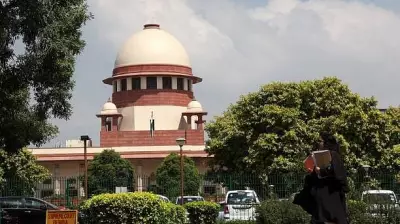
The Supreme Court of India is poised to make a crucial decision regarding a plea for passive euthanasia for Harish Rana, a 32-year-old man who has been in a persistent vegetative state for nearly 13 years. Noting a "very sad" medical report from AIIMS, the court stated it would meet the family before ruling on the father's petition. This case brings the complex and ethically charged topics of euthanasia and living wills back into sharp focus, subjects of high relevance for UPSC aspirants.
Understanding Euthanasia: Active vs Passive
Euthanasia refers to the deliberate ending of a person's life, typically to relieve suffering from an incurable or terminal condition. It is a practice that can only be administered by a physician. Crucially, Indian law distinguishes between two forms: 'active' and 'passive' euthanasia.
Active euthanasia involves a direct act, such as a lethal injection, to end life. This remains illegal in India. Passive euthanasia, on the other hand, refers to the withdrawal or withholding of life-sustaining treatment, allowing a natural death to occur. It is this form that has seen significant legal evolution in the country.
The Legal Journey in India: From Shanbaug to 2024
The landmark Aruna Ramchandra Shanbaug vs Union of India & Ors (2011) case was the first where the Supreme Court recognized passive euthanasia. The case concerned a nurse in a vegetative state since 1973. While the court did not allow euthanasia for her, it laid down the principle.
In a historic 2018 judgment, a five-judge Constitution Bench led by then Chief Justice Dipak Misra formally recognized the legality of passive euthanasia. The court held that the "right to die with dignity" is an intrinsic part of the right to life under Article 21 of the Constitution. The bench also established detailed guidelines for implementing "advance directives" or "living wills."
These guidelines were further streamlined in January 2023 by another five-judge Bench to make the process of withdrawing treatment for the terminally ill less cumbersome. Key modifications included introducing specific timelines for medical boards to decide and reducing the role of the judicial magistrate.
What is a Living Will? A Guide to Advance Directives
Similar to a will for property, a living will is a legal document that allows a person to state their wishes regarding medical treatment if they lose the capacity to make decisions in the future.
Key features of a living will in India include:
- It can be made by any person aged 18 years or older who is of sound mind.
- The document must name at least two surrogate decision-makers (from family or trusted individuals).
- It becomes legally valid when signed in the presence of an executor and two witnesses, and then attested before a notary or gazetted officer.
- An example is Justice M S Sonak of the Goa Bench, who in 2023 became the first person in Goa to register a living will.
In August 2024, the Union Health Ministry issued draft guidelines for states and hospitals, mandating the setup of Primary and Secondary Medical Boards to oversee such decisions, aligning with the Supreme Court's framework.
Global Perspective on Assisted Dying
The debate on assisted dying is global, with varying legal models. In the United Kingdom, the proposed 2024 law allows assisted death only for terminally ill adults, excluding those with disabilities or mental disorders, and requires High Court permission.
Switzerland permits assisted suicide where the individual performs the final act themselves, without self-serving motives from assistants, leading to its reputation for "death tourism." The Netherlands legalizes both euthanasia and assisted suicide under strict conditions, including assessment by two doctors.
For UPSC aspirants, understanding the ethical dimensions, legal precedents, and the fine distinction between active and passive euthanasia is critical. The ongoing Supreme Court case of Harish Rana underscores the living application of these principles, making it a vital current affairs topic for the exam.