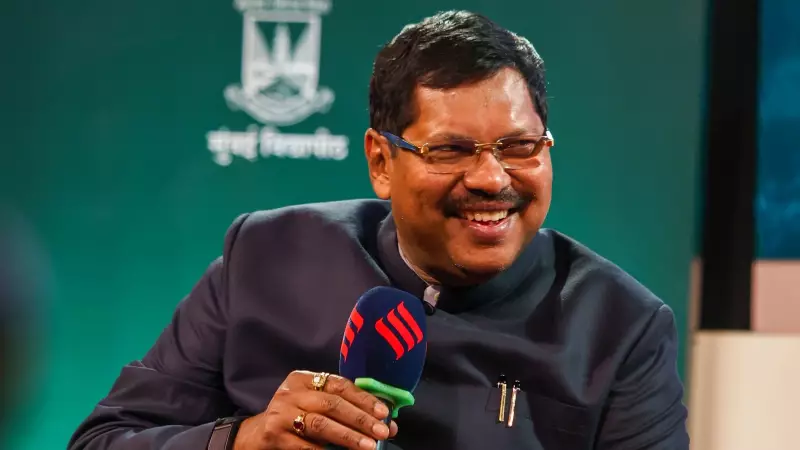
Retired Chief Justice of India (CJI) Bhushan R Gavai has broken his silence on the widespread criticism he faced for being part of a landmark Supreme Court judgment that applied the creamy layer concept to Scheduled Castes (SCs). Speaking at an event in Mumbai on Saturday, December 7, 2025, Justice Gavai stated the allegations stemmed from a basic ignorance of Constitutional provisions and posed a poignant question on equality.
The Core of the Controversial Judgment
In August 2024, a seven-judge Constitution bench of the Supreme Court, in a significant 6:1 ruling, held that Scheduled Castes can be sub-classified to exclude the privileged or 'creamy layer' among them from reservation benefits. Justice Gavai, who was on that bench, supported the majority view. This decision aimed to ensure that the benefits of affirmative action reach the most disadvantaged within the SC community, rather than being perpetually availed by those who have already progressed.
"I have been widely criticised by the people from my own community with regard to that judgment," Justice Gavai revealed. He explained that as a sitting judge, he could not comment earlier, but now in retirement, he could address the misconceptions. He was accused of having benefited from reservation to become Chief Justice and then advocating for the creamy layer principle. Justice Gavai firmly rejected these claims as uninformed.
Addressing Ignorance and Highlighting Precedent
The former CJI pointed out a critical fact missed by his critics: there is no reservation for the constitutional posts of High Court or Supreme Court judges. "Persons from these (SCs) categories have to compete with others to get appointed as HC judge or as Supreme Court judge or Chief Justice," he clarified, noting appointments are based on seniority and age criteria.
He also emphasised that he was not the originator of the concept. "It was sought to be projected that I am the first one who is trying to advocate the concept of creamy layer. But I am not," he stated. He cited the 1976 case of State of Kerala V N M Thomas, where Justice V R Krishna Iyer had referred to the idea. "We were only reiterating the law as laid down by Supreme Court. We believe in the law of precedents," Justice Gavai asserted, while acknowledging the positive role of affirmative action over the last 75 years.
The Fundamental Questions on Equality
Justice Gavai framed his defence around powerful rhetorical questions aimed at the public conscience. His central query challenged the very notion of uniform treatment: "Whether applying the same yardsticks to the son of the CJI or the Chief Secretary and a son of a labourer who studied in the gram panchayat or nagar panchayat school would satisfy the test of equality as enshrined in the trinity of Article 14, 15 and 16."
He further asked if treating the sons of a Chief Secretary and a labourer, who come from vastly different educational and social atmospheres, as equals would be just. He referenced the old legal maxim, questioning if this would amount to applying the same law for the lion and the ox, as mentioned in the 1976 Thomas case.
His final question touched on intergenerational equity: "Whether it was justified that generations after generations have availed the benefits of reservation and marched ahead while those left much behind are still asked to compete with them. Would it be in a real sense permissible under the equality clause?"
Real-World Impact of the Judgment
Justice Gavai shared an anecdote revealing the verdict's immediate personal impact. He said one of his law clerks, the son of a senior IAS officer, was always conflicted about claiming reservation benefits. After reading the creamy layer judgment, the clerk's confusion was resolved, and he decided not to avail of the reservation, Justice Gavai recounted during a conversation with Loksatta's Chief Editor Girish Kuber.
The retired judge's detailed address at the Loksatta Lecture Series 2025 in Mumbai marks a significant moment, providing a robust constitutional and moral defence for a verdict that continues to shape India's reservation policy discourse.