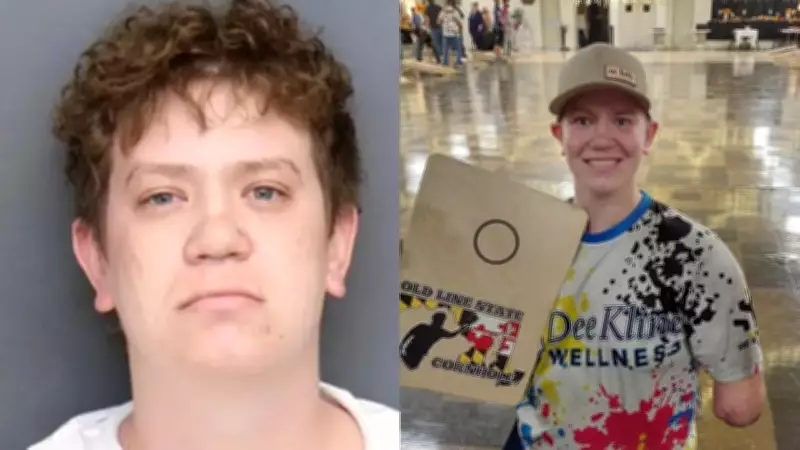
Former Cornhole Athlete Dayton Webber Faces Murder Charges in Maryland
Dayton Webber, a 27-year-old former competitor in the American Cornhole League known for playing as a quadruple amputee, has been denied bond as he awaits trial in a high-profile murder case in Maryland. The decision was handed down during his initial court appearance at Charles County District Court on Wednesday, where Webber participated via video call from jail after being extradited from Virginia earlier this week.
Details of the Alleged Incident Emerge
According to police investigators, the case dates back to March 22 when Webber was traveling in a vehicle with Brad Wells, also 27, and two other individuals in La Plata, Maryland. During the journey, a violent altercation occurred. Authorities allege that Webber shot and killed Wells during this confrontation. The two other passengers reportedly exited the vehicle and contacted emergency services by calling 911. Brad Wells was later discovered deceased in a yard located in Charlotte Hall, Maryland, where he was pronounced dead at the scene.
Prosecution Presents Key Evidence in Court
During the court proceedings, prosecutors presented significant evidence that could influence the trajectory of the case. They disclosed that a firearm recovered from inside Dayton Webber's automobile matches the weapon believed to have been utilized in the fatal shooting. Additionally, law enforcement officials in Virginia obtained authorization to review video footage captured by cameras mounted on the exterior of the vehicle, as documented in court records.

Defense Claims Self-Defense in Shooting
In stark contrast to the prosecution's narrative, Dayton Webber's defense attorney presented a markedly different account of events. The legal team asserts that Webber acted in self-defense, alleging that he feared Brad Wells prior to the shooting incident. The two passengers informed police that the men were engaged in a heated argument moments before the tragedy unfolded. Their statements indicate that the dispute involved contentious issues related to narcotics, firearms, and a woman.
The court ultimately determined that bond would not be granted at this preliminary stage, meaning Webber will remain in custody as the legal process continues to advance.
Former Girlfriend Provides Damning Testimony
As public interest in the case intensifies, additional voices have emerged to share their perspectives. Tori Mattingly, who identifies as Dayton Webber's former romantic partner, spoke openly about her past relationship with him during an interview with TMZ. Mattingly revealed that she had also been involved with Brad Wells and characterized Webber as possessing what she described as an "angry dark side."
In an extended Facebook post, Tori Mattingly strongly criticized individuals who have defended Webber's character. "Watching people say 'this doesn't sound like him' or 'he would never do that' is honestly sickening. You didn't live with him. I did," she wrote emphatically.
Mattingly elaborated further, stating, "For four years, I saw the side of him that nobody else wanted to believe existed. The anger. The control. The abuse. The kind of darkness you don't just 'mistake.'" Her candid remarks have attracted considerable attention to the case, particularly as more information surfaces regarding Dayton Webber's personal history.
From Inspirational Athlete to Murder Defendant
Dayton Webber previously shared his compelling life story with ESPN in 2023. He lost portions of all four limbs during infancy following a severe blood infection that progressed to sepsis. Despite these profound physical challenges, Webber learned to play cornhole from a young age, developing a unique technique of holding the bag between his upper arms to compete. His journey into professional sports once served as an inspiration to many observers and fans.
Now, public focus has shifted dramatically from the cornhole arena to the courtroom, where legal proceedings continue to unfold in this complex and tragic case. The denial of bond ensures that Dayton Webber will remain incarcerated as prosecutors and defense attorneys prepare for the next phases of the judicial process.