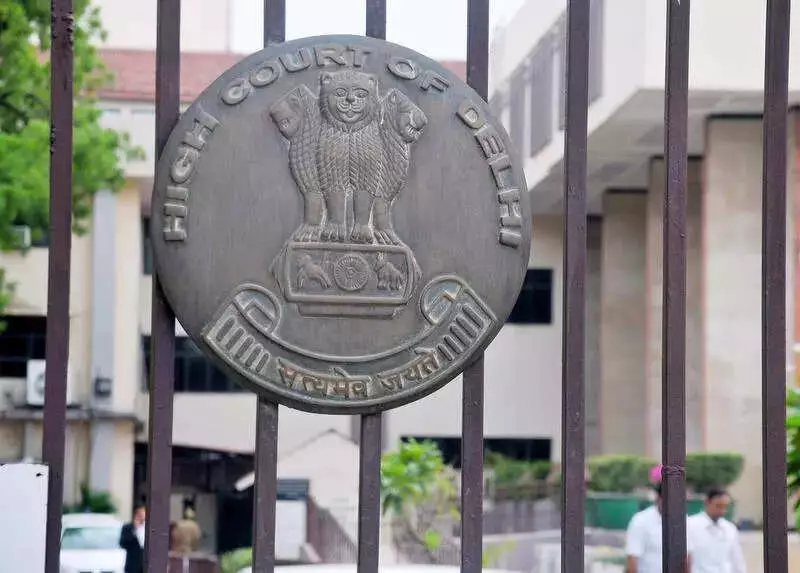
In a significant legal move, former Tihar jail administrator and ex-law officer Sunil Gupta has approached the Delhi High Court to challenge the provisions in the newly enacted criminal laws that permit keeping prisoners in solitary confinement. Drawing from his nearly four decades of experience at Tihar, Asia's largest prison complex, Gupta's public interest litigation (PIL) seeks to abolish what he terms a "colonial-era punishment."
PIL Seeks to Scrap "Draconian" Provisions
The petition specifically questions the constitutional validity of Sections 11 and 12 of the Bhartiya Nyaya Sanhita (BNS). Gupta argues that these sections mechanically import the harsh solitary confinement regime from the repealed Indian Penal Code, while completely ignoring decades of progressive Supreme Court rulings and Law Commission recommendations. The PIL asserts that the provisions were introduced without considering the apex court's observations that such practices are inhuman, irrational, and violate the Constitution.
"Solitary confinement, i.e., keeping a prisoner in a small cell with no meaningful human contact, is an assault on the human spirit and violates the ‘Golden Triangle' of Fundamental Rights—Articles 14, 19 and 21 of the Constitution," the petition states. Gupta, filing for the benefit of inmates, contends that this practice reduces prisoners to a state of forced vegetativeness and amounts to psychological torture.

Legal Gap and Unconstitutional Practices Exposed
The plea highlights a critical statutory gap revealed by a combined reading of the BNS and the Prisons Act. It claims prison authorities exploit this gap to impose illegal solitary confinement. A pointed example involves death row convicts. The petition notes that until a trial court's death sentence is confirmed by the high court—a process often taking years—the convict is technically a "prisoner subject to confirmation," not a "prisoner under sentence of death."
"However, prison regulations, including Rule 59 of the Delhi Prison Rules, are mechanically invoked to immediately segregate such prisoners upon the trial court's verdict. This constitutes a fraud on the statute and an unconstitutional deprivation of liberty," the PIL claims. It further argues that imposing solitary confinement in addition to rigorous imprisonment—especially without a judicial order—amounts to a second punishment for the same offence, as rigorous imprisonment is meant for hard labour, not isolation.
What the Petition Demands
The PIL seeks a declaration from the court that the relevant BNS provisions are invalid. It also requests several key directions from the bench, which includes Chief Justice DK Upadhyaya and Justice Tushar Rao Gedela. The bench has already tagged Gupta's plea with two other similar PILs and agreed to hear the matter next month.
The demands include:
- A direction to the Centre and Delhi government to immediately cease the practice of solitary confinement in all prisons under their jurisdiction.
- Striking down Chapter IX of the Delhi Prison Rules, 2018, to the extent it facilitates solitary confinement.
- A directive that no prisoner, including those on death row, be segregated before the final exhaustion of all judicial and executive remedies.
- Replacing the archaic practice with modern surveillance methods like 24/7 CCTV monitoring in high-security wards, allowing inmates to maintain human interaction while ensuring security.
This legal challenge brings a seasoned insider's perspective to the forefront of the debate on prison reform and human rights, pushing the judiciary to align statutory law with progressive jurisprudence.