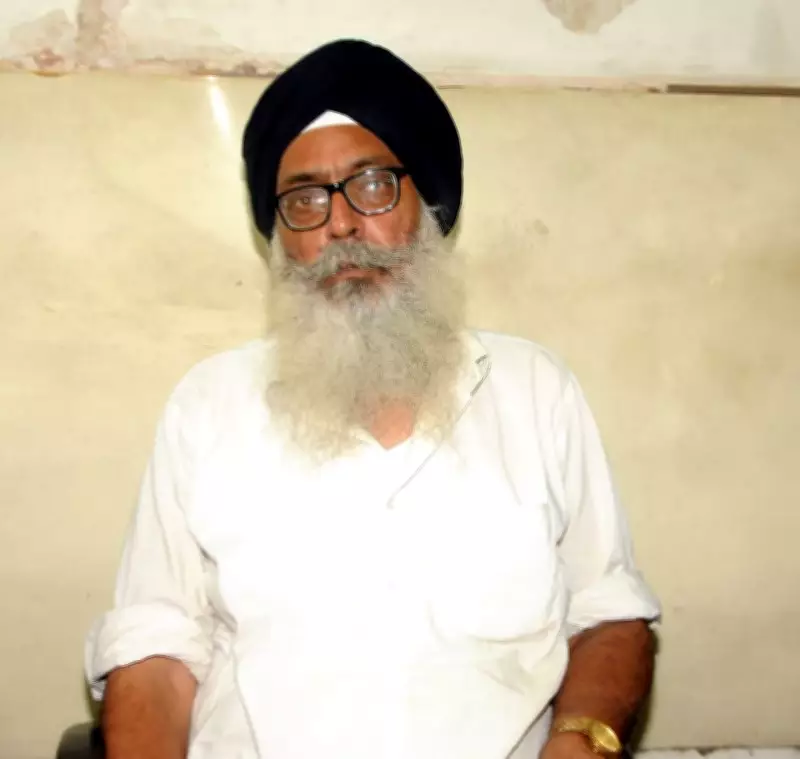
For Rajiv Singh, the morning of September 6, 1995, changed his life forever. It was the day human rights activist Jaswant Singh Khalra was abducted by Punjab Police from outside his Amritsar residence in Kabir Park.
Eyewitness Account of the Abduction
Rajiv Singh was supposed to accompany Khalra and a group of journalists from Delhi on a spot visit to the cremation grounds in Patti later that day. Instead, he became an eyewitness to the incident that would become one of the most significant human rights cases in Punjab.
Recalling the incident, similar to the tragic scene shown in the film “Satluj” based on Khalra’s life and struggle, Rajiv says he was reading a newspaper in the drawing room while Khalra was washing his car outside when a Maruti Omni van stopped outside the house.

According to him, policemen forced Khalra into the vehicle. When he rushed outside to intervene, he had a brief scuffle with them. Even after more than three decades, he says he clearly remembers the colour of the van, its registration number DNB-5969 and the faces of the policemen involved.
Background of the Activist
Rajiv Singh, who was then working as a correspondent for Punjabi Tribune from Patti, first met Khalra in 1988 when he was leading farmers under the “Sarhadi Kisan Ghol Committee” for compensation for agricultural land left beyond the India-Pakistan border fence. Their association grew stronger through several public meetings.
“We saw him working for people all the time. Khalra’s research based on records from cremation grounds in Amritsar, Tarn Taran and Patti exposed illegal cremations of unidentified youth during the militancy period. The findings made Tarn Taran SSP Ajit Singh Sandhu feel insecure and threatened. The attempts were first made to silence Khalra through warnings conveyed by a local Congress MLA and others, before he was abducted and killed,” said Rajiv Singh. He further claimed that Sandhu had allegedly warned that if Khalra continued speaking about 25,000 bodies, the count would become “25,001”.
Legal Pursuit and Legacy
Rajiv said Khalra pursued his work entirely through democratic and legal means. He referred to a handwritten note (dated March 6, 1995), which later became part of the court record. In the note, Khalra wrote: “Even if I am killed, the truth cannot be buried.” The note also mentioned the threats conveyed through a local MLA.
Looking back, Rajiv said he never imagined that the case would become high profile and one of prominent human rights cases. He credited Khalra’s wife, Paramjit Kaur Khalra, and the Khalra Mission Committee for pursuing the legal battle that eventually led to the conviction of police personnel in 2006. He also described the testimony of former Special Police Officer (SPO) Kuldeep Singh Bachhra as a crucial turning point in the case.
Broader Implications
Rajiv Singh believes the Khalra case goes beyond the Sikh case or even the human rights case. “This is about every Indian citizen’s right to democracy and the right to exist,” he said. He added that if society is to progress, it needs many more people like Jaswant Singh Khalra, who stood up for truth despite the risks.
He also urged the government to allow the release of the film “Satluj”, saying it would help preserve Khalra’s enduring legacy.
Speaking about removal of the film from OTT platform, Rajiv said that when Khalra was abducted, only a handful of people knew about the case. As the matter reached the courts, hundreds became aware of it. Books later took the story to thousands of readers and the film would have introduced it to lakhs of people. “Now that the film has been banned, it will reach crores,” he remarked.
Rajiv Singh faced several false police cases and threats while pursuing Jaswant Singh Khalra’s case. He remained underground for nearly 10 years until the final verdict in the case.