Ludhiana Court Imposes Decade-Long Sentences in Major Drug Trafficking Case
A father and son duo from Ludhiana has received severe judicial punishment for their involvement in heroin trafficking, marking a significant verdict in the ongoing battle against narcotics in Punjab. The special court delivered a decisive blow to their illicit activities, sentencing both individuals to ten years of rigorous imprisonment along with substantial financial penalties.
The Arrest and Seizure Operation
The case originated from a meticulously planned operation conducted by the Special Task Force (STF) Mohali in July 2021. Acting on confidential intelligence, law enforcement officers intercepted a black Swift sedan near Mata Gujri Park in the BRS Nagar area. The vehicle, driven by Satish Kumar with his son Suraj Kumar as passenger, was found to contain alarming evidence of drug trafficking activities.
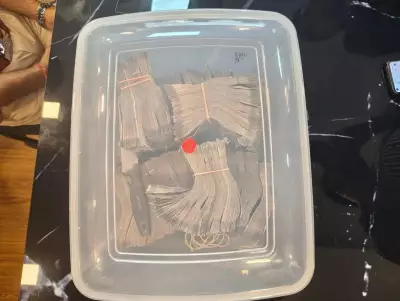
During the search operation, police recovered a substantial quantity of narcotics and related paraphernalia:

- 1.7 kilograms of high-purity heroin
- An electronic weighing scale for measuring drug quantities
- 30 securely locked pouches presumably for distribution
- Two lighters commonly associated with drug consumption
The contraband was discovered in a black polythene bag strategically placed near the vehicle's handbrake, suggesting organized concealment efforts by the accused.
Judicial Proceedings and Final Verdict
Presiding over the case, Judge Dr. Rajneesh of the special court meticulously examined all evidence and arguments before delivering the landmark judgment. The defense team's claims of false implication were systematically dismissed during the proceedings. The court imposed identical sentences on both convicts:
- Ten years of rigorous imprisonment
- A fine of ₹1 lakh each
- Additional one-year rigorous imprisonment if fines remain unpaid
In his detailed observations, Judge Dr. Rajneesh emphasized the credibility of police testimony, describing it as "consistent, cogent, and coherent" throughout the trial. The judgment reinforced the legal principle that official witnesses are presumed to act honestly unless concrete evidence proves otherwise.
Court's Rationale and Legal Precedents
The special court addressed several critical legal arguments during the proceedings. Defense lawyers had contended that the absence of independent witnesses weakened the prosecution's case. However, the court firmly rejected this argument, establishing that police testimony carries equal validity to that of private citizens in judicial proceedings.
The court noted: "No animus of the police officials with them has either been alleged or proved on record. Had any such thing happened, the accused would have filed a complaint before the higher authorities."
During cross-examination, defense counsel failed to undermine the prosecution's narrative or identify substantial inconsistencies in the evidence presented. The court observed that the testimonies provided by police officers were mutually corroborative and free from significant infirmities, eliminating any legal necessity for independent corroboration to secure conviction.
This judgment sends a powerful message about the judicial system's approach to drug-related offenses in Punjab, particularly emphasizing the weight given to properly documented police operations and testimonies in such cases.