In a controversial development, top officials of the Rajasthan forest department have initiated disciplinary proceedings against Deputy Conservator of Forests (DCF) and Public Information Officer (PIO) Gazanfar Ali Zaidi. The action stems from his decision to share inquiry-related documents under the Right to Information (RTI) Act in connection with an illegal tree-felling case in Bhilwara district.
Background of the Case
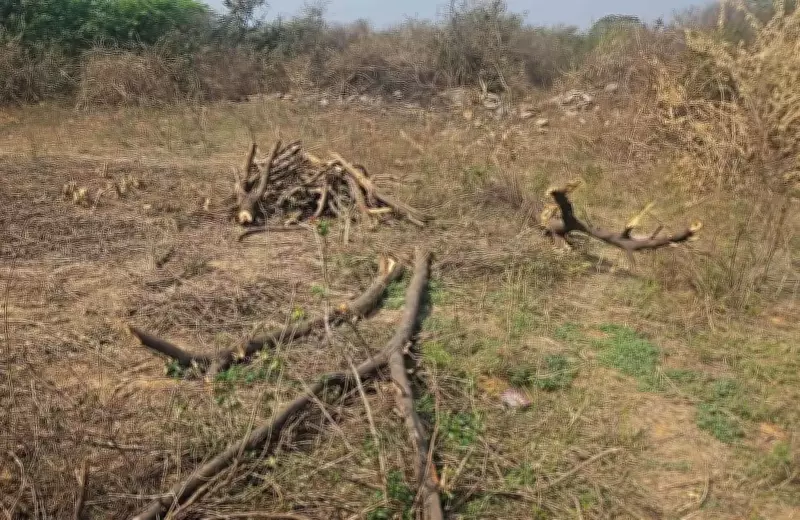
The documents disclosed by Zaidi later formed the basis of a court case. Subsequently, the National Green Tribunal (NGT) directed the recovery of approximately Rs 1.31 crore as environmental compensation from eight forest officials and a private individual. The case involves the alleged illegal removal of Prosopis juliflora from nearly 250 hectares of forest land.
Instead of fixing accountability for the illegal felling, senior officials are scrutinizing the PIO, accusing him of violating provisions meant to protect ongoing investigations. RTI activist Rajendra Tiwari criticized the move, stating, “The department is targeting dutiful officials and shielding officers involved in illegal felling. At the time when the documents were sought, the preliminary report was already filed. Why do senior officials want to hide the information, and why is there a delay in action against the guilty officials?”

Official Communications
Official communications accessed by Times of India reveal that the office of the Principal Chief Conservator of Forests (Head of Forest Force), Rajasthan, termed the disclosure “prima facie” contrary to provisions of Section 8(1)(h) of the RTI Act, which exempts disclosure of information that may impede an ongoing investigation. Consequently, the Chief Conservator of Forests (CCF) issued a show-cause notice to Zaidi, asking why disciplinary action should not be initiated against him. A reminder notice was later issued after officials claimed that no reply had been received within the stipulated period.
CCF Ram Karan Khairwa told TOI, “A show-cause notice was issued regarding furnishing information under the RTI Act, 2005, without obtaining approval from the competent authority before forwarding information related to rules or policy decisions. Also, the information was provided when the inquiry was pending.”
Preliminary Report Already Submitted
A senior official, speaking on condition of anonymity, said, “The district in-charge who was appointed for the inquiry had already submitted the preliminary report.” This contradicts the claim that the inquiry was still pending when the information was provided.
Zaidi's Defense
In his written response, Zaidi defended his decision, stating that information under the RTI Act is required to be furnished within 30 days and that the documents were provided in discharge of official duties. He further stated that the information was shared only after discussions with and directions from the then CCF, Jaipur, Rajeev Chaturvedi.
A source familiar with the matter said, “Under the RTI Act, 2005, the PIO is independently empowered to provide information. In case of any dispute or objection regarding furnishing of information, the competent authority for resolution is the Information Commission.”
The case highlights tensions within the department over transparency and accountability. While some officials argue that the RTI disclosure was lawful and necessary, others maintain that it violated rules designed to protect ongoing investigations. The outcome of the disciplinary proceedings against Zaidi could have broader implications for the implementation of the RTI Act in Rajasthan.